


Bridal Assembly Around the Approved Sample
Vowmelle supports bridal boutiques, wholesalers and private label brands with wedding dress sewing based on approved patterns, materials and construction references. This stage brings together the outer garment, lining, support components, sleeves, closures and skirt layers.
Construction decisions affect shape, comfort, appearance and production time. A structured satin bodice requires different handling from a soft chiffon dress or an illusion lace design. Confirm these requirements during sampling so bulk sewing follows a clear reference.
Match Cut Pieces Before Assembly
Before sewing, garment components need consistent style, size and material identification. Matching bodice panels, sleeves, skirt pieces and lining should remain grouped through assembly.
Notches, seam allowances and other pattern references guide alignment. Directional fabric and lace also need attention so connected panels do not show unintended changes in sheen or motif orientation.
A clear handover from fabric spreading and cutting helps reduce panel mix-ups. Pattern or material changes should be resolved before affected pieces enter sewing.
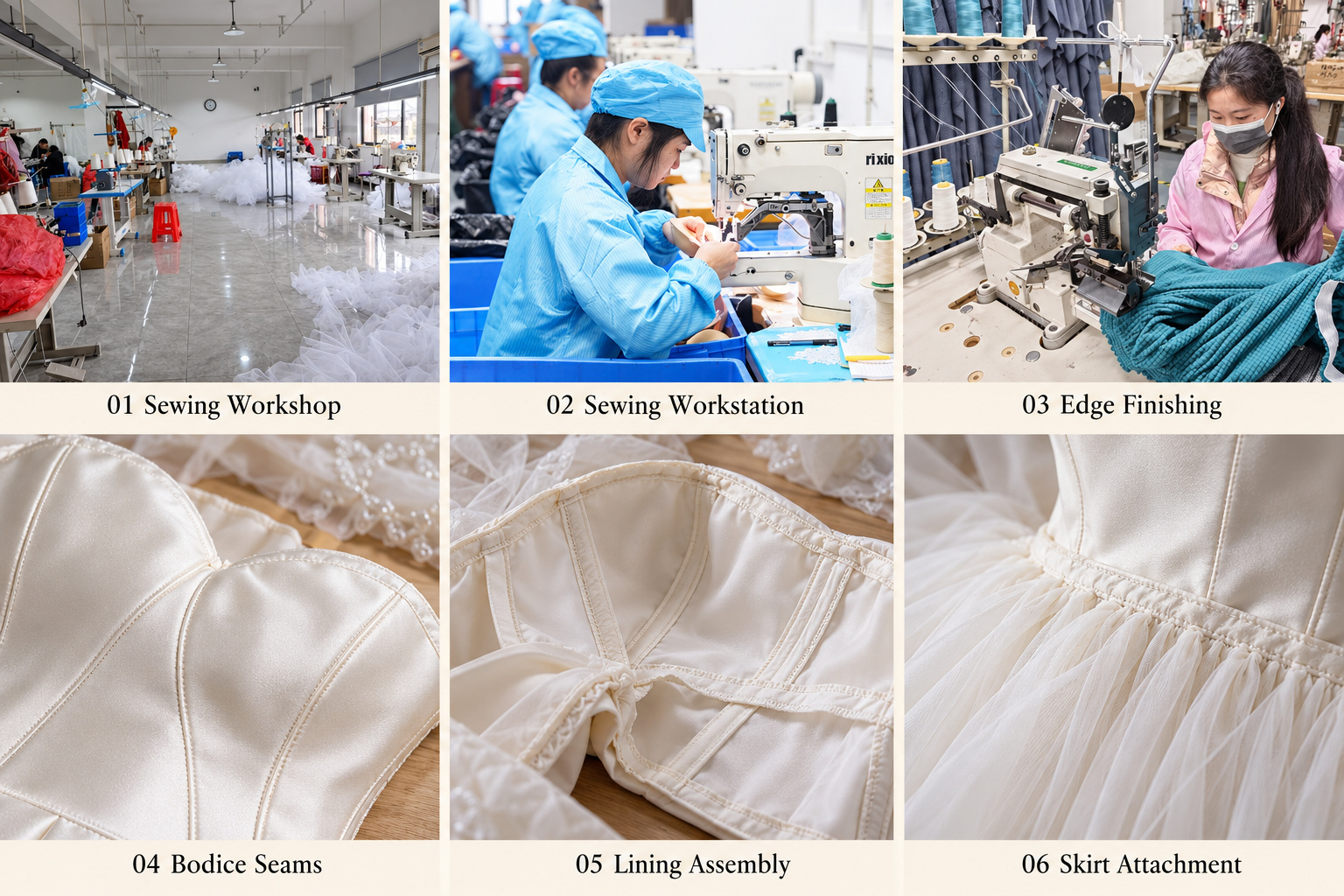 Build Bodice Shape and Support
Bodice assembly needs to preserve the approved shaping across bust, waist and neckline. Uneven seam alignment or excessive bulk can change the appearance of a fitted panel.
Cups, boning channels and internal support should work with the outer fabric and lining. Their positions need to avoid interference with closures or visible ridges on the garment surface.
Review these details through corset, boning and bodice assembly. Support requirements should be confirmed on the sample rather than inferred from exterior photographs alone.
Assemble Lining and Skirt Layers
Lining should follow the agreed coverage and dimensions without pulling against the outer garment. Sheer sections require particular attention to visible seam allowances and attachment positions.
Layered skirts need the correct sequence, fullness and length relationship. Waist attachment should distribute gathers or pleats according to the approved design, while avoiding unnecessary thickness at the bodice connection.
Train layers also need alignment. An incorrectly positioned lining or overlay can affect drape, expose an unintended edge or restrict the finished skirt.
Connect Sleeves and Install Closures
Sleeve assembly needs to match the armhole shape, fabric behavior and intended fit. Check seam alignment, sleeve orientation and any lace transitions across the connection.
Zippers, buttons, loops and hooks should be positioned without catching lining or obstructing operation. Closure construction can also affect back fit and the available adjustment.
For design modifications, coordinate the details through neckline, sleeve and train customization. Changes to these areas may require pattern revisions before sewing continues.
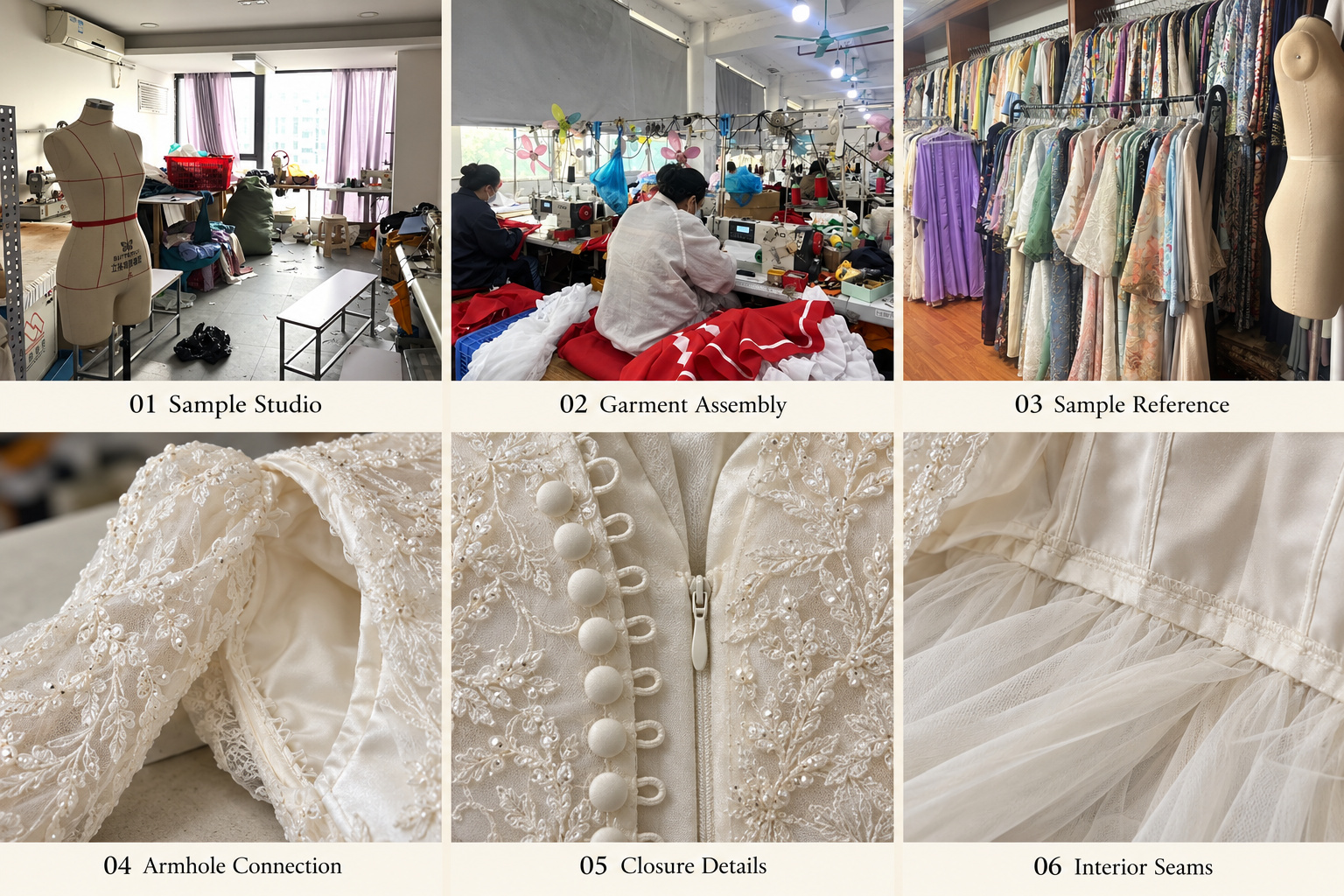 Review Workmanship During Sewing
Checks during assembly focus on seam alignment, puckering, skipped stitches, open seams, trapped lining and secure attachment. Delicate materials need suitable edge finishing without excessive stiffness or visible bulk.
Issues should be corrected while the relevant area remains accessible. Decoration and later finishing can make some seams harder to reach.
The assembled garment then proceeds to the applicable decoration, pressing and measurement and appearance inspection stages.
Confirm Construction Requirements for Your Order
Send style references, approved measurements, lining requirements, support details, closure specifications and quantities by size. Include close-up photographs or a reference sample where interior construction is important.
Fabric behavior, layered construction and detailed handwork influence sewing time and unit cost. Confirm the approved sample and any written construction conditions before agreeing to bulk production timing and packing requirements.