


Patterns Built Around Your Bridal Order
Vowmelle supports bridal boutiques, wholesalers and private label brands with pattern development for modified styles and new OEM wedding dresses. The pattern translates the approved design into garment pieces that can be sampled, revised and prepared for production.
Development starts with the intended silhouette, buyer measurements and construction requirements. A photograph can communicate appearance, but it rarely defines lining, support, seam positions or fit allowance. These details need confirmation before the first sample is assembled.
Provide Design and Measurement References
Send front and back views, detail photographs, technical drawings or a reference sample. Mark neckline depth, waist position, sleeve shape, skirt fullness and train requirements where these are important to your collection.
Provide your base sample size and distinguish body measurements from finished garment measurements. Include measuring methods and any established fit requirements.
For projects that also need design clarification, coordinate the brief through custom bridal dress development. Identify which features must remain unchanged and where construction alternatives can be reviewed.
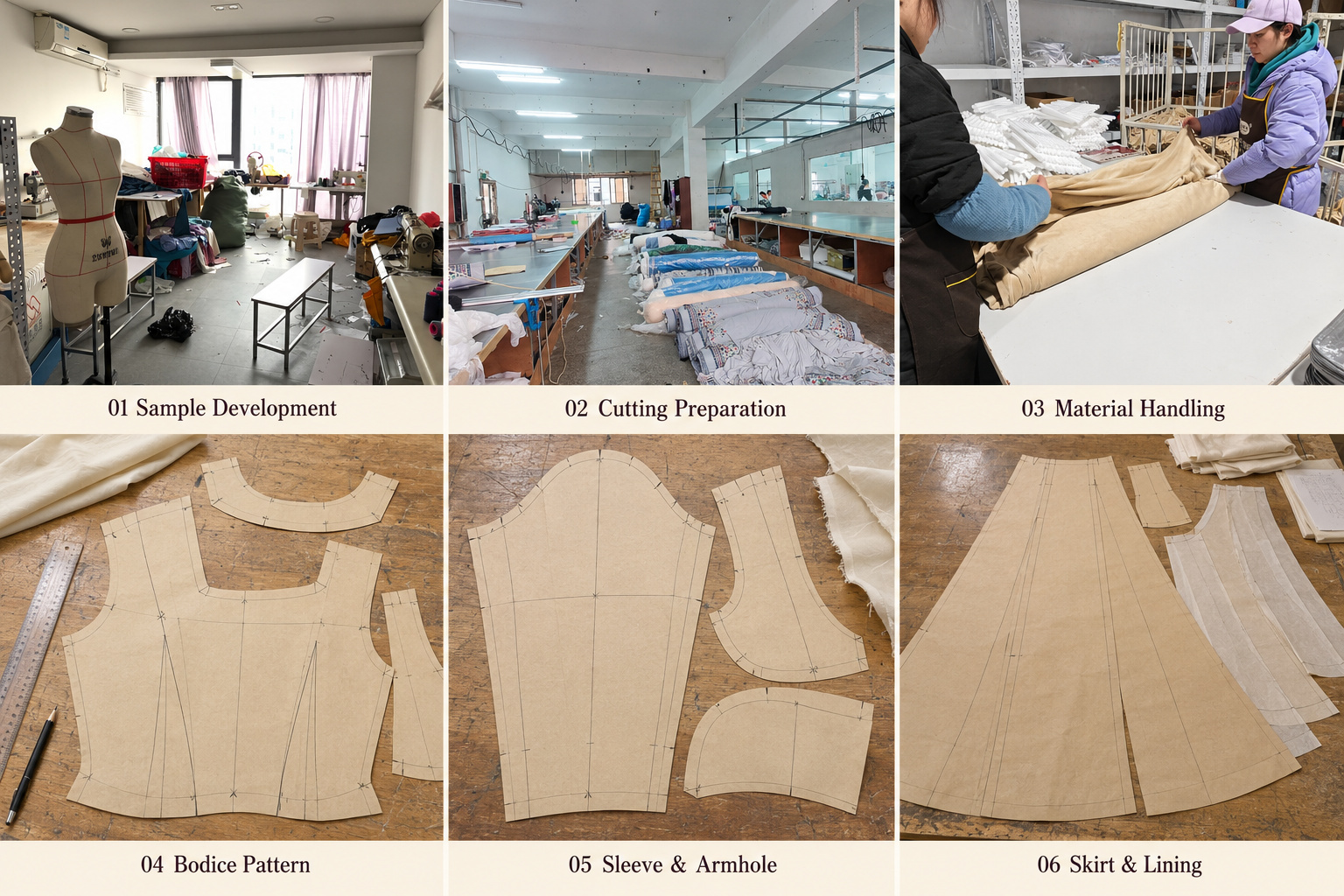 Develop Bodice Shape and Internal Support
Bodice patterns need to account for bust shaping, neckline coverage, waist position and the chosen closure. Cups, boning and lining affect how the finished garment holds its shape.
We review the relationship between outer panels and internal construction. Seam positions should support the intended silhouette without creating unnecessary bulk or interrupting important lace motifs.
Changes to neckline depth or back coverage may require adjustments beyond the visible edge. Confirm the supporting construction when reviewing these modifications.
Plan Sleeves, Skirt Layers and Train Proportions
Sleeve shape must work with the armhole and selected material. Close-fitting lace sleeves, gathered sleeves and structured fabric sleeves need different shaping and allowance.
Skirt patterns define fullness, panel arrangement and the relationship between outer fabric and lining. Layered tulle, directional lace and structured satin influence panel design and cutting layout.
Train length needs an agreed measuring point and outline. A longer train can change material consumption, weight and packing space. Review these details before finalizing the pattern.
Review the First Sample and Pattern Revisions
The first sample checks how the pattern performs in the selected materials. Compare measurements, proportions, seam positions, closure operation and construction with the development brief.
During sample development and approval, record comments by location and measurement point. Separate fit corrections from design changes so the required revision is clear.
Major changes to shape, support or materials may require another sample. Confirm the accepted sample and pattern revision together before preparing production references.
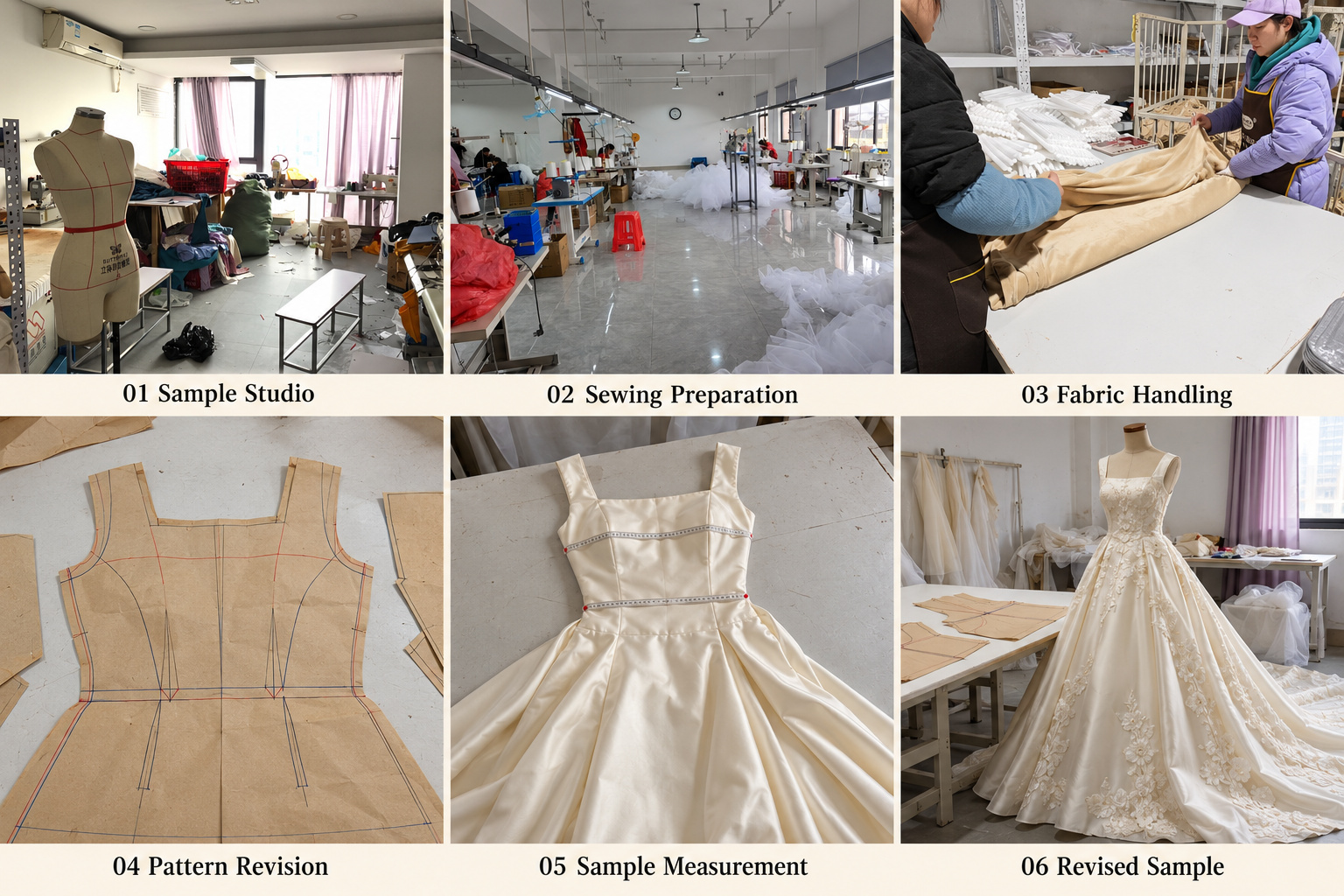 Prepare Approved Patterns for Production
Once the base size is approved, the agreed size range can be developed through buyer size chart and size grading. Grading rules should address individual measurement points rather than enlarge every piece uniformly.
Production patterns need consistent style and size identification, seam allowances, notches and material references. These details support accurate cutting and assembly. Changes after bulk cutting can create rework and additional material requirements.
Send Your Pattern Development Brief
Provide design references, the base size, measurement specifications, fabric preferences, intended size range and quantities per style/color.
Modified samples usually take 10–15 days; new development usually takes 15–25 days. Pattern complexity, material availability and revisions affect timing and cost. Include your target delivery date so sampling, approval and bulk production can be planned together.