


Material Selection for Bridal Production
Vowmelle Wedding Dresses supports bridal brands, boutiques and private label buyers with fabric and lace selection for wedding dress development and OEM orders. We review materials against the intended silhouette, construction, size range and target price before confirming the sampling requirements.
Material approval covers more than the visible outer fabric. Lining, tulle layers, lace backing and decorative components need to work together. A coordinated selection helps establish a clear reference for sample making, bulk production and subsequent orders.
Choose Fabric for the Intended Silhouette
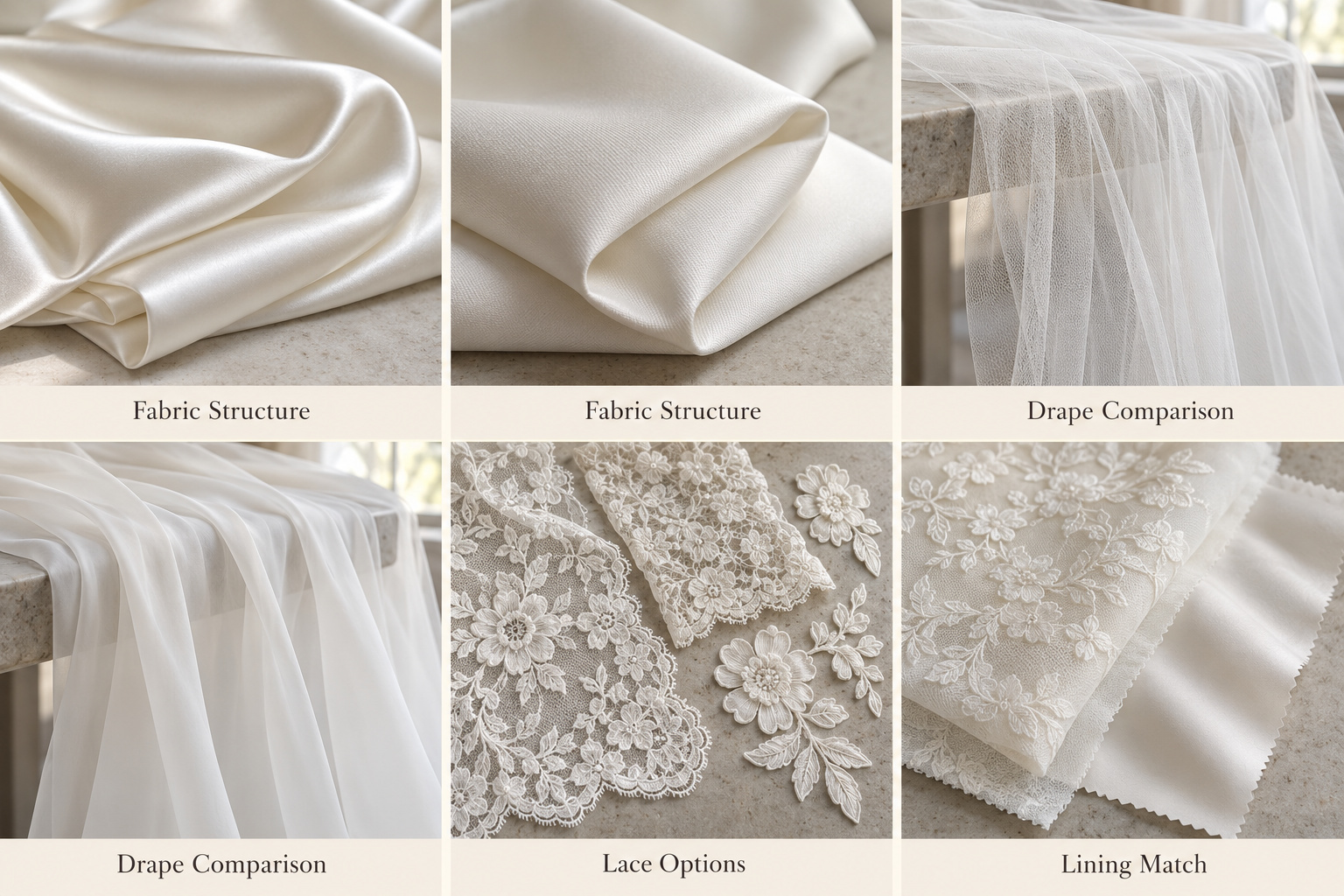
Options include satin, Mikado, tulle, organza, chiffon, crepe and mesh, depending on the design and material availability. We consider how the selected fabric supports the bodice, falls through the skirt and responds to gathers, seams and layered construction.
Buyers should identify the required appearance, weight, opacity and surface texture. Fabric names alone do not define fiber composition or performance. If a specific composition is required, include it in the specification so availability and any applicable testing can be reviewed.
For a new style, material decisions should follow the construction requirements established during custom bridal dress development.
 Review Lace Motifs and Placement
Lace selection needs to account for motif size, repeat pattern, scalloped edges and the intended placement on the garment. A lace that works across a full skirt may need a different arrangement around a narrow neckline or fitted bodice.
Confirm which areas require continuous lace, separate appliqué or a defined edge finish. Directional motifs and balanced placement can affect cutting requirements, material consumption and handwork. Beaded or pearl-decorated lace also needs review alongside the supporting fabric and attachment method.
Close-up photographs help compare patterns, while physical swatches provide a better reference for texture, softness and the relationship between lace and its backing.
Confirm Color and Layer Combinations
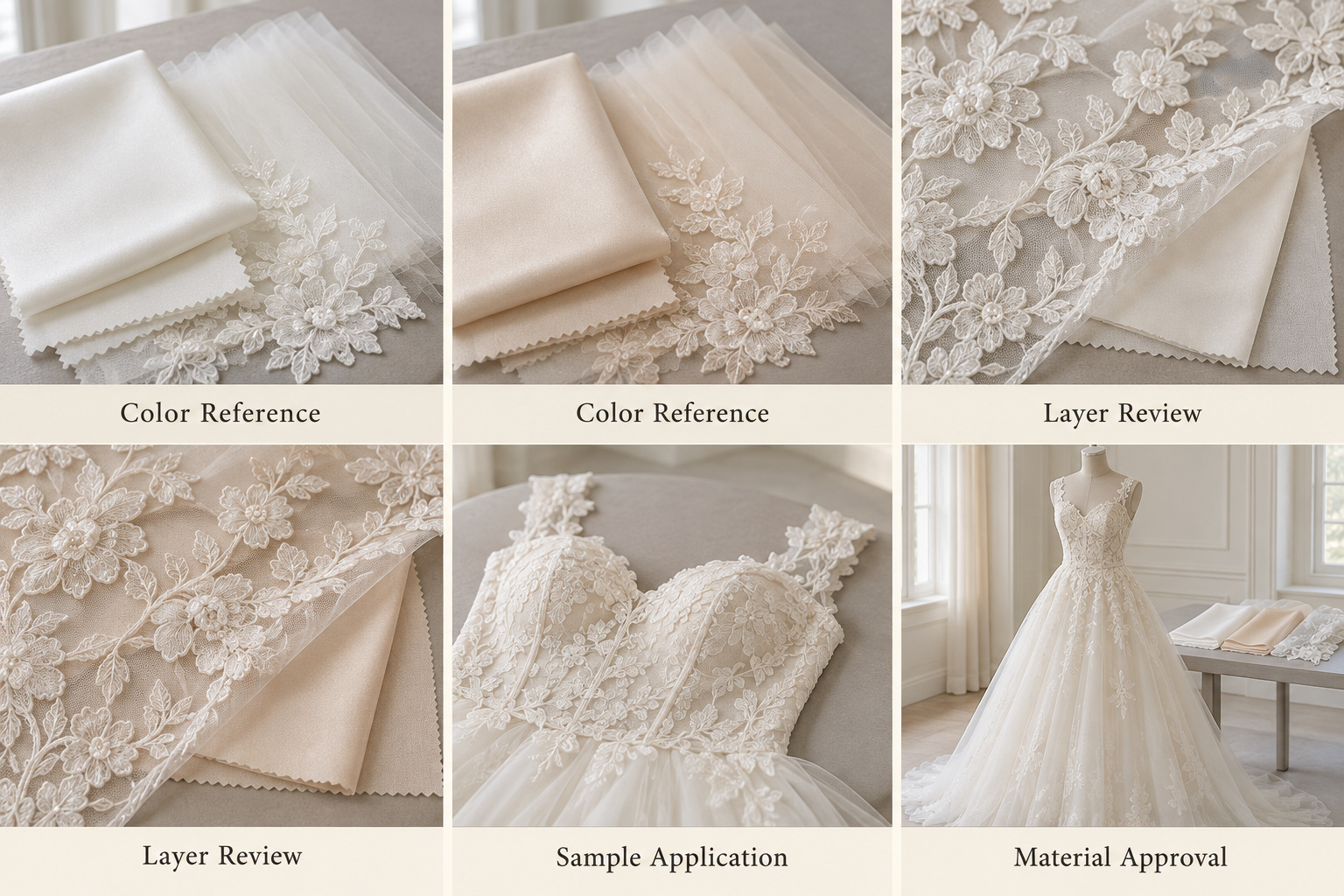
White, ivory and champagne shades should be reviewed across the outer fabric, lace and lining. Materials with different surfaces or transparency can appear different even when their color descriptions are similar.
For sheer areas, review the complete layer combination rather than approving each swatch separately. The backing can change the visible lace pattern and overall shade. Buyers should also specify whether coordinated bridesmaid or flower girl styles need a shared color direction.
Use physical references where practical. Further shade and size requirements can be coordinated through color and size customization.
 Approve Materials Before Bulk Production
Selected materials are assessed in the sample for appearance, construction and compatibility with the design. Review comments should identify the affected fabric or lace and explain the required change.
The confirmed material references and approved sample guide production checks. Incoming fabric and lace are reviewed before cutting, with attention to color, appearance and consistency with the order requirements.
A proposed substitution should be reviewed before use. Changing lace or fabric may affect the pattern, decorative layout and quotation, and can require another review through sample development and approval.
Understand Cost, Timing and Packing Effects
Material cost, lace consumption, decorative handwork and availability influence the quotation. Supplier minimums may also affect feasible quantities. Modified styles commonly start around 30–50 pieces per style and color; new OEM developments normally start around 50–100 pieces, subject to the actual specification.
Modified samples generally take about 10–15 days, while new developments commonly require 15–25 days. Material sourcing can affect these estimates. Fabric weight and embellishment also influence protective packing and shipment volume.
Send your design, material references, quantities, size range and delivery destination so we can review suitable options and their effect on the complete order.