


Bodice Construction for Bridal OEM Orders
A wedding dress bodice needs to hold its intended shape while allowing the lining, neckline and closure to sit correctly. For bridal brands, wholesalers and boutique collections, these construction details should be agreed during sampling before the same style moves into bulk production.
We develop the bodice around the buyer’s design reference, size chart and selected materials. Structured satin styles, lace overlays and sheer bodices require different support arrangements. The sample establishes which construction suits the design and what needs adjustment.
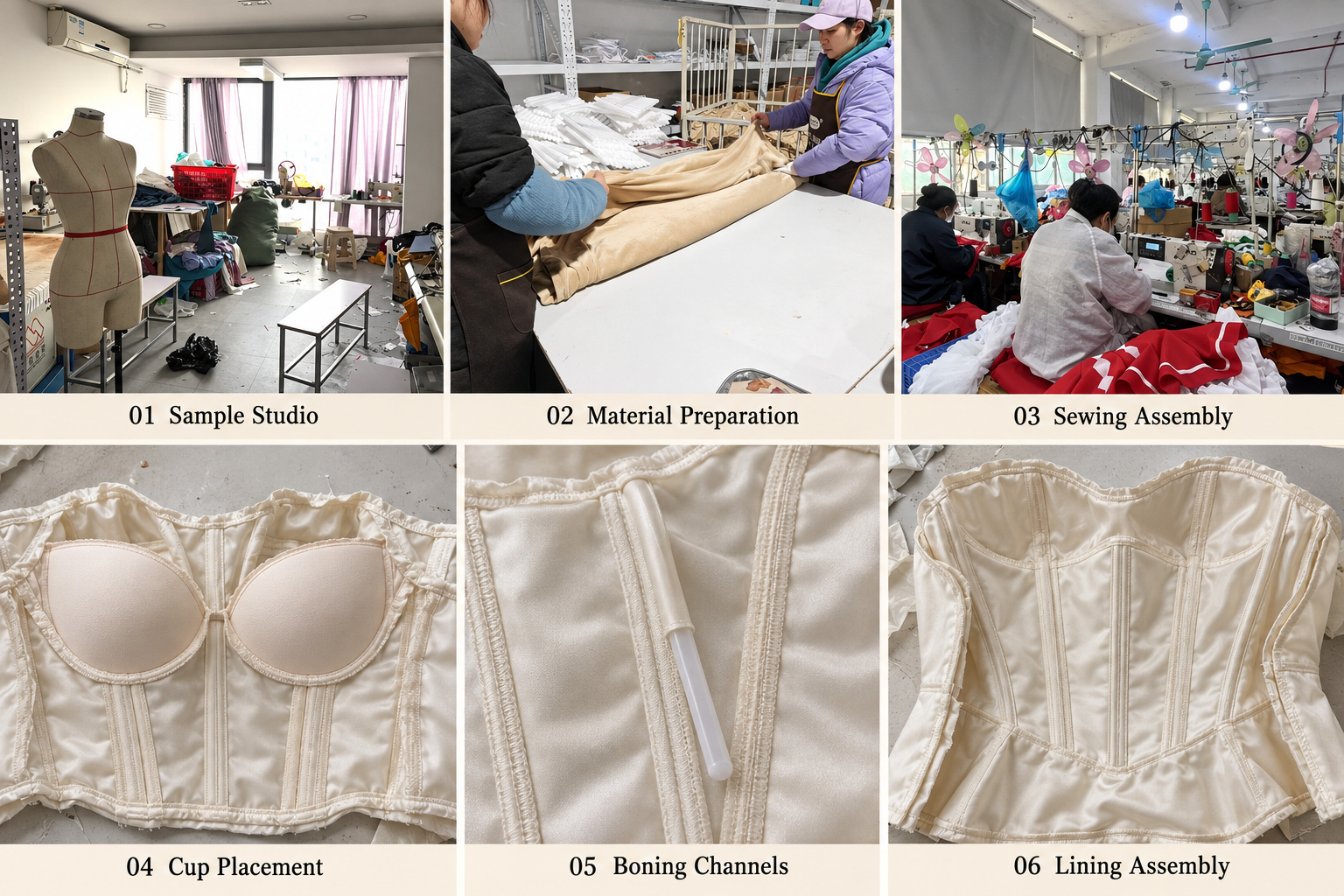 Confirm Shape, Measurements and Support
Before assembly, we review the neckline, waist position, bodice length and back opening against the approved pattern. Cup shape and placement need to work with the garment measurements; a cup label alone does not define the finished fit.
Buyers should specify whether the bodice needs sewn-in cups, boning, an internal waist stay or a softer construction. These features are assessed together with the fabric weight and design. Changes to neckline depth or back coverage may require corresponding pattern and support changes through bridal pattern development.
Select Boning and Plan Its Placement
Boning helps maintain bodice shape, but adding more does not automatically improve fit. Its type, flexibility, length and position must suit the seam layout and intended silhouette.
We confirm available boning options during development. Channels need sufficient room for insertion without allowing excessive movement. Ends should be finished and enclosed to reduce the risk of pressure points or damage to the surrounding fabric.
Sheer designs also require attention to channel visibility. Buyers should confirm whether visible support lines are part of the design or should be concealed.
Assemble Cups, Layers and Lining
Cups are positioned against the agreed bust shape and secured so they remain stable inside the bodice. Their edges should not create unintended ridges through the outer fabric.
The outer shell, supporting layers and lining are assembled with attention to seam allowance, bulk and alignment. Lace placement can affect how construction lines appear, particularly around the neckline and bust. For transparent areas, lining coverage and exposed seams need explicit sample approval.
The inside should be reviewed alongside the outside, including boning ends, cup attachment and seam finishing.
Match Support to the Back Closure
Zippers, buttons and lace-up backs place different demands on the bodice. Closure edges need suitable reinforcement, and the completed opening should align without twisting or pulling the lining.
A lace-up back requires agreement on loop placement, lacing and any modesty panel. For zipper styles, the surrounding layers should allow the zipper to operate without catching loose fabric.
Requests for neckline, sleeve and train changes should be reviewed before the bodice construction is finalized.
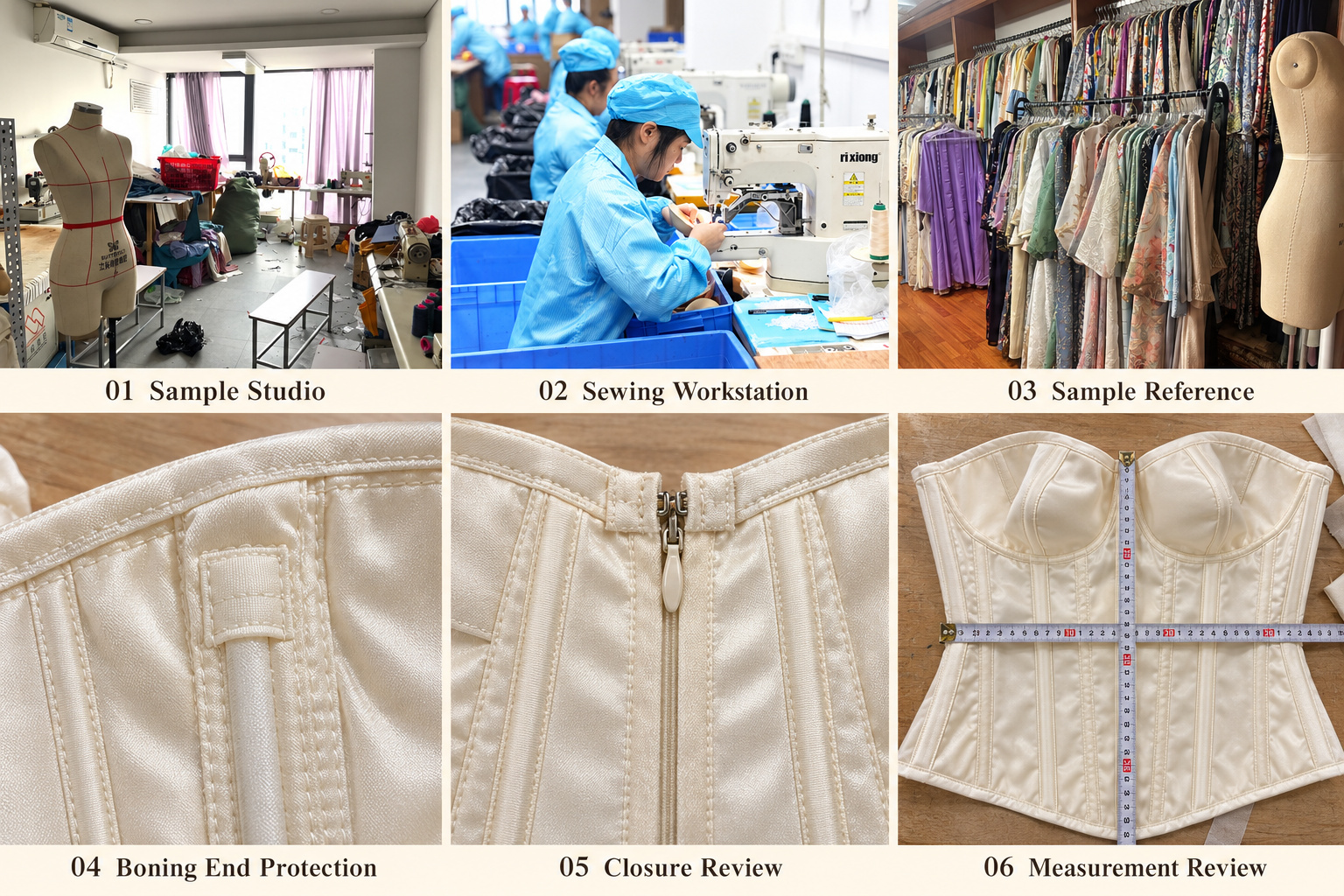 Approve the Sample Before Bulk Assembly
Sample review covers garment measurements, bodice symmetry, cup position, neckline shape, closure operation and interior finishing. Review on a dress form helps assess shape; fit approval should also use the buyer’s agreed fitting method.
Through sample development and approval, revisions are recorded before bulk assembly. Changes to cups, boning or patterns can affect material sourcing, labor and the production schedule.
Send Details for a Construction Quotation
Please provide front and back references, your size chart, fabric preferences, support requirements, closure type and quantities by size.
MOQ, sample cost and lead time are confirmed after reviewing the construction. Packing requirements should identify any support needed to protect shaped cups and the finished bodice during shipment.