


Development for Bridal Brands and Wholesale Buyers
Vowmelle Wedding Dresses develops bridal dresses for bridal brands, boutiques, wholesalers and private label buyers from Suzhou, China. We review buyer designs and proposed changes to existing styles, then establish the pattern, construction and sampling requirements.
Development focuses on creating a workable production reference for commercial orders. The intended size range, target quantity and price level help determine suitable materials and construction. This service supports B2B collections and repeat production rather than individual consumer made-to-measure orders.
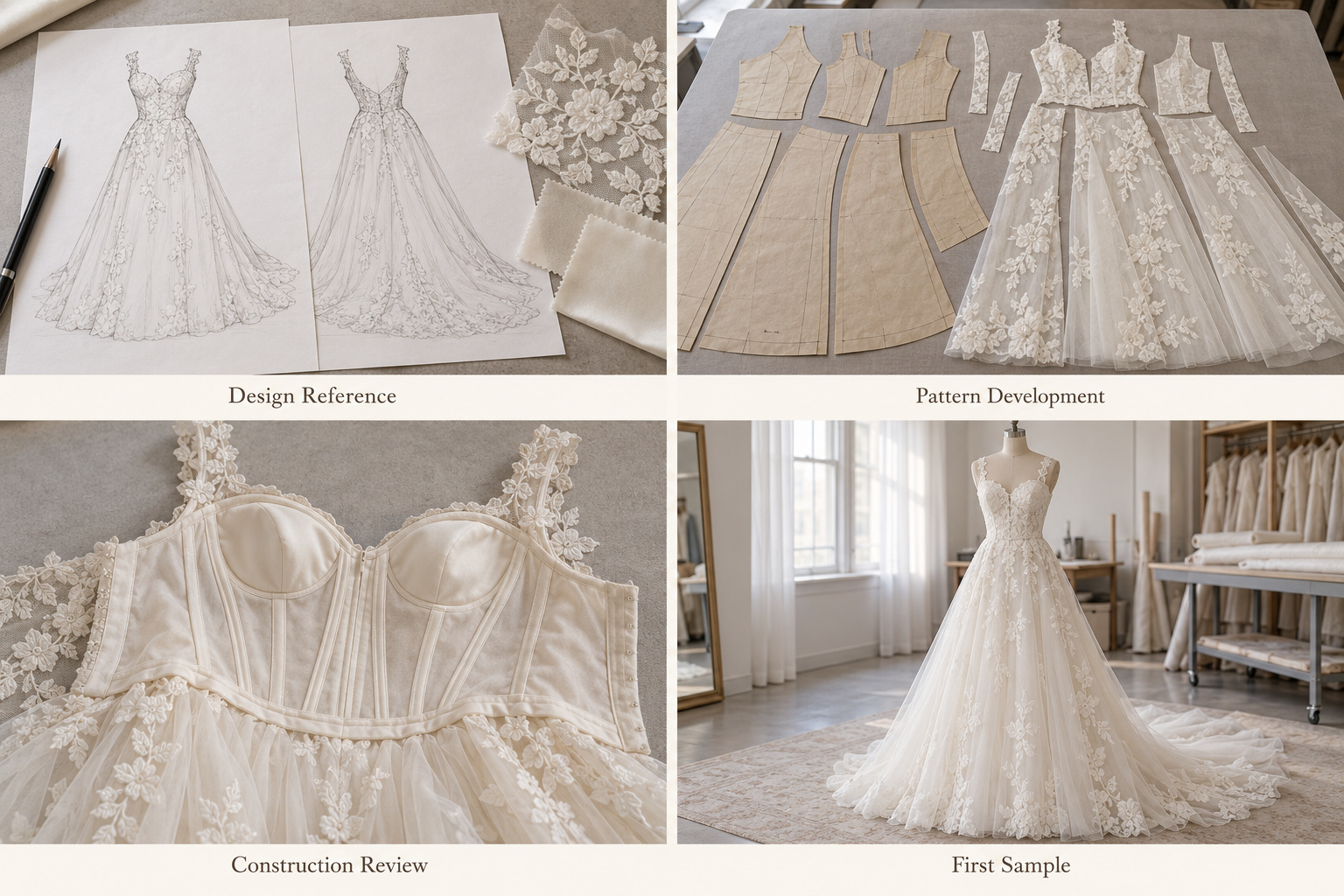
Define the Design Before Pattern Work
A tech pack, sketch, reference image or authorized physical sample gives us a starting point. Include front and back views, the intended silhouette, neckline, sleeves, closure, skirt layers and train length. Internal details such as lining coverage, cups and boning should also be identified.
Reference photographs may leave construction details unclear. We review these gaps with the buyer before sampling, including whether a feature is essential or can be adjusted to meet the target cost. Clear requirements reduce revisions caused by different interpretations of the design.
 Match Materials to the Intended Structure
Fabric and lace choices need to support the design. A structured satin gown and a layered tulle dress require different approaches to shaping, lining and seam construction. Lace motifs also affect cutting and placement around necklines, bodices and skirt panels.
We review the proposed materials alongside the pattern requirements. Substituting fabric or lace can change drape, opacity, weight and decorative layout, so alternatives should be confirmed before the sample becomes the production reference. Buyers can review fabric and lace selection when preparing material requirements.
Review the Sample for Fit and Appearance
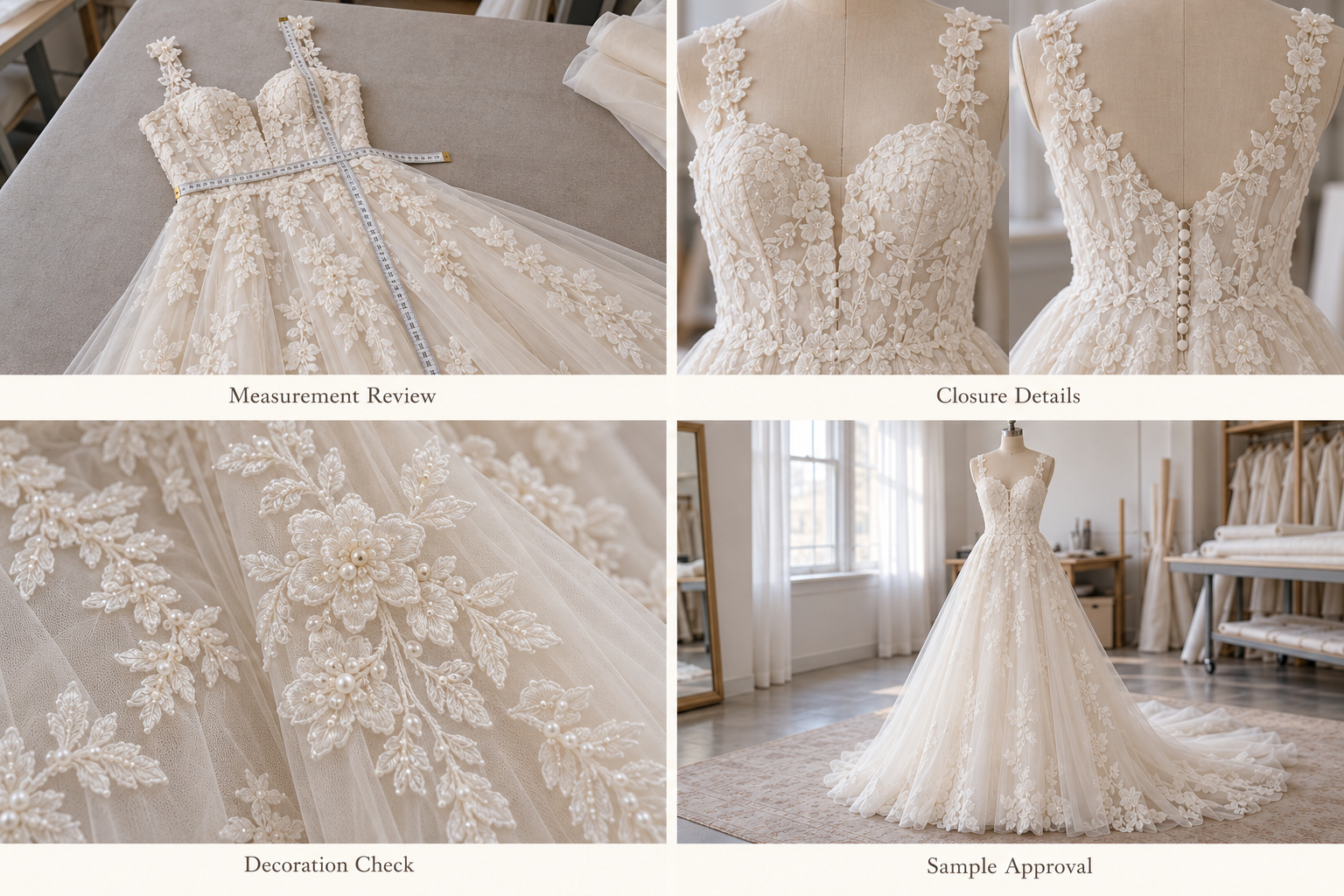
The first sample allows the buyer to assess the complete garment: silhouette, key measurements, bodice support, neckline balance, closures and train shape. Decorative details should be reviewed together with the structure, particularly where appliqué or beadwork crosses seams.
Provide revision comments with marked photographs and measurement notes. State the required adjustment clearly, such as changing neckline depth or correcting a waist measurement. A base-size sample does not establish fit across an entire collection; the buyer’s size chart and grading requirements also need review.
The sample development and approval process establishes which revisions and specifications are confirmed before bulk production.
 Establish the Reference for Bulk Production
Once approved, the sample and confirmed specifications guide material preparation, cutting, sewing and handwork. Production checks compare key measurements, construction and decorative placement with that reference.
Changes requested after approval may require further sampling or a revised quotation. Branding and packing requirements should also be confirmed before production proceeds. Structured bodices, long trains and heavy embellishment need suitable protection during packing, with garment bags and export cartons coordinated to the order.
Confirm Development Costs and Timing
New OEM or private label developments normally start around 50–100 pieces per style and color. Modified styles commonly require 30–50 pieces per style and color, depending on the changes and materials.
New development samples generally take about 15–25 days; modified samples commonly take 10–15 days. Sample costs depend on pattern work, materials, construction, embellishment and revision requirements.
OEM production commonly requires 35–45 days, while complex bridal programs may need 45–60 days. Send your design references, size requirements, quantities, target price, packaging needs and destination so development, production and shipping can be reviewed together.