


Material Checks Before Bridal Production
Vowmelle reviews fabric and lace against approved material references before preparing wedding dress orders for cutting. This helps bridal boutiques, wholesalers and private label brands confirm that incoming materials suit the agreed design and construction.
Inspection focuses on practical production concerns: visible defects, shade differences, usable width, lace motifs and the appearance of combined layers. Requirements vary with the material and dress style. The inspection scope should be agreed alongside the order specification.
Match Incoming Materials with Approved References
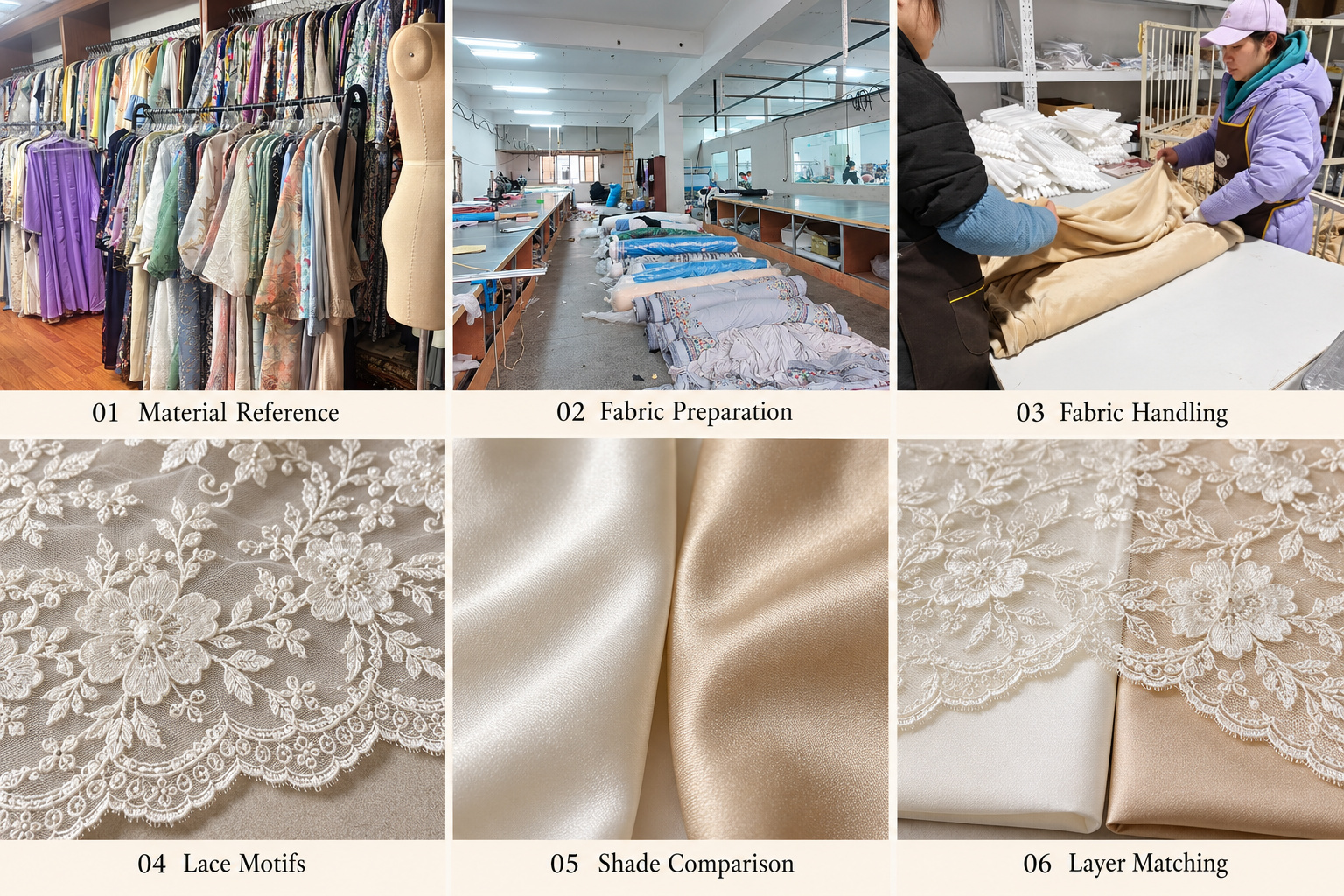
Material identification starts with the selected fabric, lace, lining and color references. Confirm the supplier reference or sample code where available, together with the intended use of each material.
A similar-looking lace may have different motif spacing, transparency or stretch. Satin can differ in surface appearance, weight and drape. These differences may affect the finished silhouette even when the color appears close.
Keep the approved references from fabric and lace selection available for comparison. Proposed substitutions require buyer approval before use.
 Review Fabric Surfaces and Usable Areas
Fabric review looks for marks, stains, holes, snags, uneven weaving and other visible irregularities. Delicate satin surfaces need careful handling, while tulle and mesh require attention to pulled threads and damaged areas.
Defect location matters as well as appearance. An affected area may interrupt a visible bodice panel or reduce the material available for a long skirt piece.
Usable width should be reviewed before cutting layouts are finalized. Material shortages or restricted cutting areas can affect consumption and scheduling.
Check Lace Motifs, Direction and Edges
Lace inspection considers motif consistency, embroidery condition, mesh integrity and scalloped edges where applicable. Loose embroidery threads, missing decorative elements or damaged motifs can affect placement.
Directional patterns need consistent orientation across garment pieces. Motif scale and repeat spacing influence how lace can be arranged around neckline edges, sleeves and seams.
For styles with prominent borders, confirm the usable edge and required placement before cutting. Material differences may require a placement review rather than a simple replacement.
Compare Shades and Layered Appearance
Compare incoming shades with the approved physical reference under consistent lighting. Photographs and screens can assist communication, but they should not be the sole basis for close color approval.
Review lace and sheer fabric over the intended lining. The combined appearance can differ from individual swatches, particularly with ivory, champagne and other light bridal colors.
Where an order uses multiple material batches, identify noticeable differences before allocating pieces. Coordinate any required review through color and size customization.
 Resolve Material Issues Before Cutting
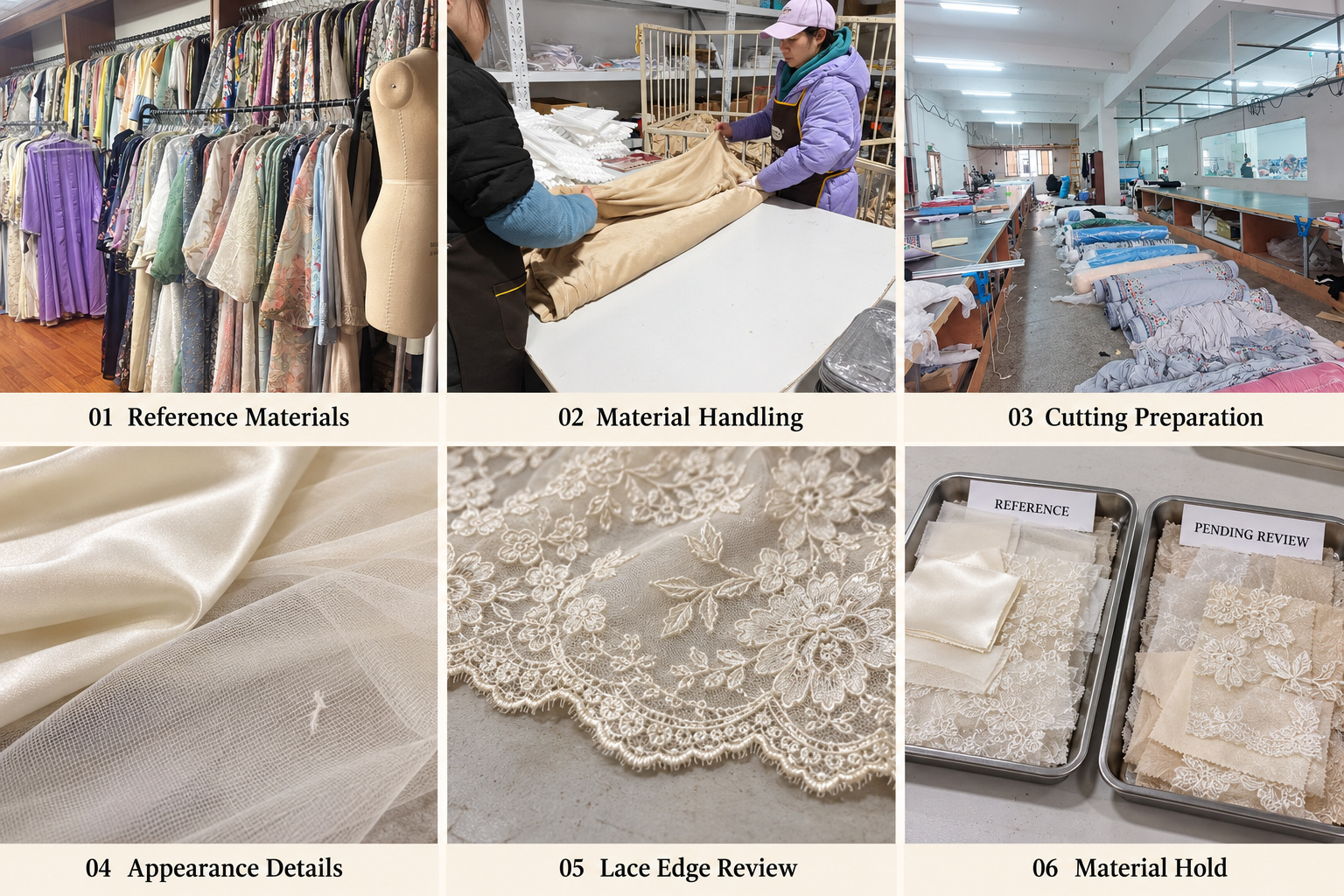
Questionable materials should be identified and kept separate while the issue is reviewed. Record the material reference, affected area and supporting photographs so the proposed action is clear.
Depending on the issue, the next step may involve replacement, revised allocation or buyer review of an alternative. Additional composition or colorfastness testing can be discussed where the order requires it; visual inspection does not establish those results.
Material decisions should be resolved before fabric spreading and cutting begins.
Define Your Order’s Inspection Requirements
Send approved material references, intended garment applications, color requirements and any specific acceptance criteria. Identify materials that must match exactly and alternatives you are willing to review.
Special testing or third-party inspection requirements need confirmation in advance. Their scope, cost and timing should be considered alongside material purchasing, sample approval and the bulk production schedule.