


Cutting Preparation for Bridal Production
Vowmelle prepares wedding dress fabrics for cutting around approved patterns, material references and order quantities. For bridal boutiques, wholesalers and OEM brands, this stage influences garment dimensions, material consumption and consistency between pieces.
Cutting requirements vary with the dress construction. Structured satin panels, sheer sleeves, layered tulle skirts and directional lace need different handling. Confirm design changes, size quantities and material decisions before bulk cutting begins.
Confirm Patterns and Material Readiness
The cutting reference should identify the style, pattern revision, size and material assigned to each piece. Outer fabric, lining and additional skirt layers need separate identification where their shapes or lengths differ.
Check that approved changes have been transferred to the production patterns. Neckline revisions, sleeve adjustments and train extensions can affect several connected pieces.
Materials should also complete the agreed fabric and lace inspection before cutting preparation. Questionable areas or unapproved substitutions need resolution before they enter the cutting layout.
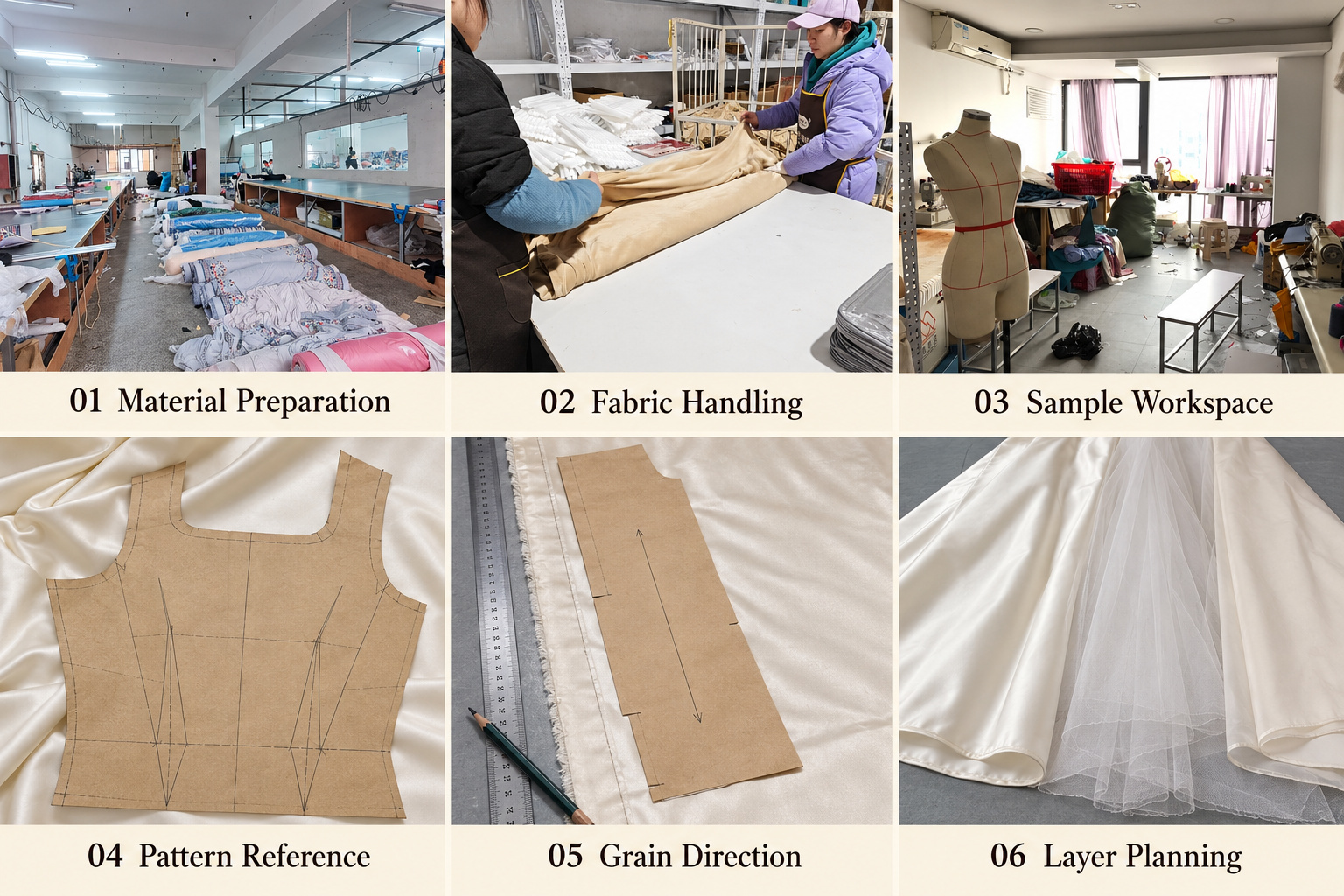 Spread Fabric Without Distorting the Panels
Fabric should lie smoothly without being pulled into an altered shape. Tension during spreading can affect the dimensions of cut pieces once the material relaxes.
Slippery fabrics need attention to alignment, while tulle and mesh require careful handling to avoid stretching or snagging. Surface-sensitive satin also needs protection from dirty work surfaces and unnecessary handling.
The spreading arrangement depends on material behavior, panel size and the required quantities. Layer count should suit cutting control rather than follow one fixed approach for every fabric.
Plan Grain, Surface Direction and Lace Motifs
Pattern placement needs to account for grain direction and any directional surface appearance. Reversing satin panels can create visible differences in sheen, even when they come from the same material.
For lace, motif direction and border position influence the layout. Important flowers or scalloped edges may need specific placement around neckline, sleeve or train pieces.
These requirements can increase material consumption. Review them alongside bridal pattern development rather than treating fabric usage as a standard allowance for every style.
Cut and Identify Garment Components
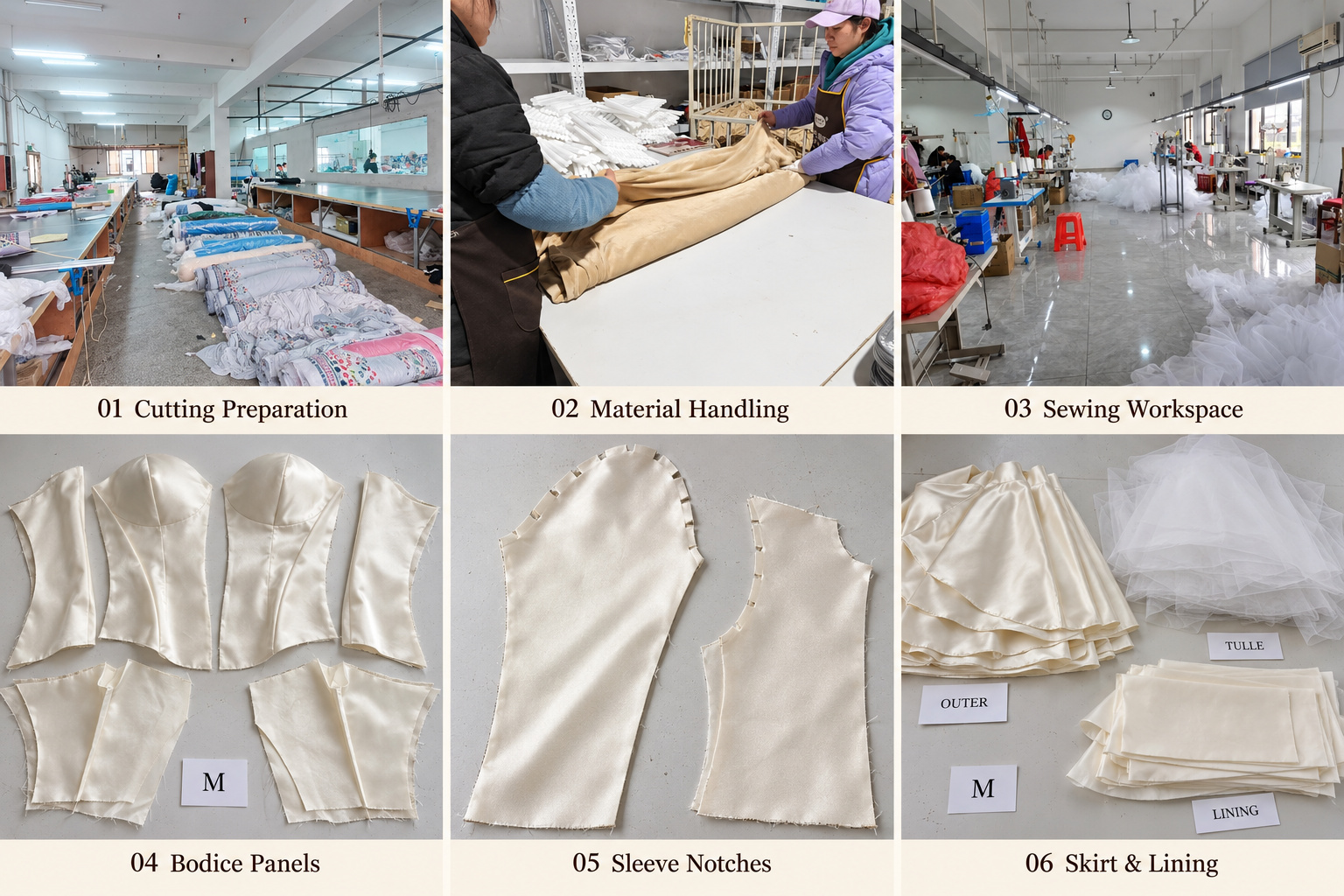
Cut pieces need clear style, size and component identification. Keep matching bodice panels, sleeves, lining and skirt layers together as they move into sewing.
Notches and other construction references help align connected pieces. Identification methods should avoid leaving visible marks or damaging delicate materials.
For layered skirts, confirm which pieces belong to each layer and how their lengths relate. Mixing similar-looking panels can change fullness, lining coverage or the finished hem.
 Review Changes and Cutting Issues Early
If material defects or layout problems affect usable pieces, review the proposed correction before continuing. Replacement panels need to match the relevant material shade, direction and size reference.
Changes requested after cutting may require new pieces and additional fabric. A longer train or revised bodice shape cannot always be achieved by adjusting an already-cut component.
Confirm the impact on costs and scheduling before accepting late revisions. Clear cutting references support a smoother handover to sewing and garment construction.
Provide Details for Production Planning
Send the approved style specification, size breakdown, fabric references, skirt-layer requirements and train dimensions. Highlight directional lace placement or other details that affect material usage.
Cutting preparation forms part of the garment production schedule. Final timing depends on pattern approval, material readiness, order complexity and quantities. Confirm these inputs before agreeing to the bulk delivery plan.