


Finishing Wedding Dresses Before Packing
Pressing and final finishing prepare an assembled wedding dress for appearance inspection and packing. For bridal brands, wholesalers and boutique collections, this stage should preserve the approved silhouette while addressing handling creases, loose threads and uneven layer alignment.
We review the finished garment against the approved sample and its material combination. Satin, tulle, lace and beaded sections require different handling. Finishing cannot correct an unsuitable pattern or a construction fault; these issues need to return to the relevant production stage.
Confirm the Method for Each Material
Before treating visible areas, we assess the response of the fabric and decorative components on a suitable offcut or sample section. Heat, moisture, contact pressure and exposure time can affect surface appearance and garment shape.
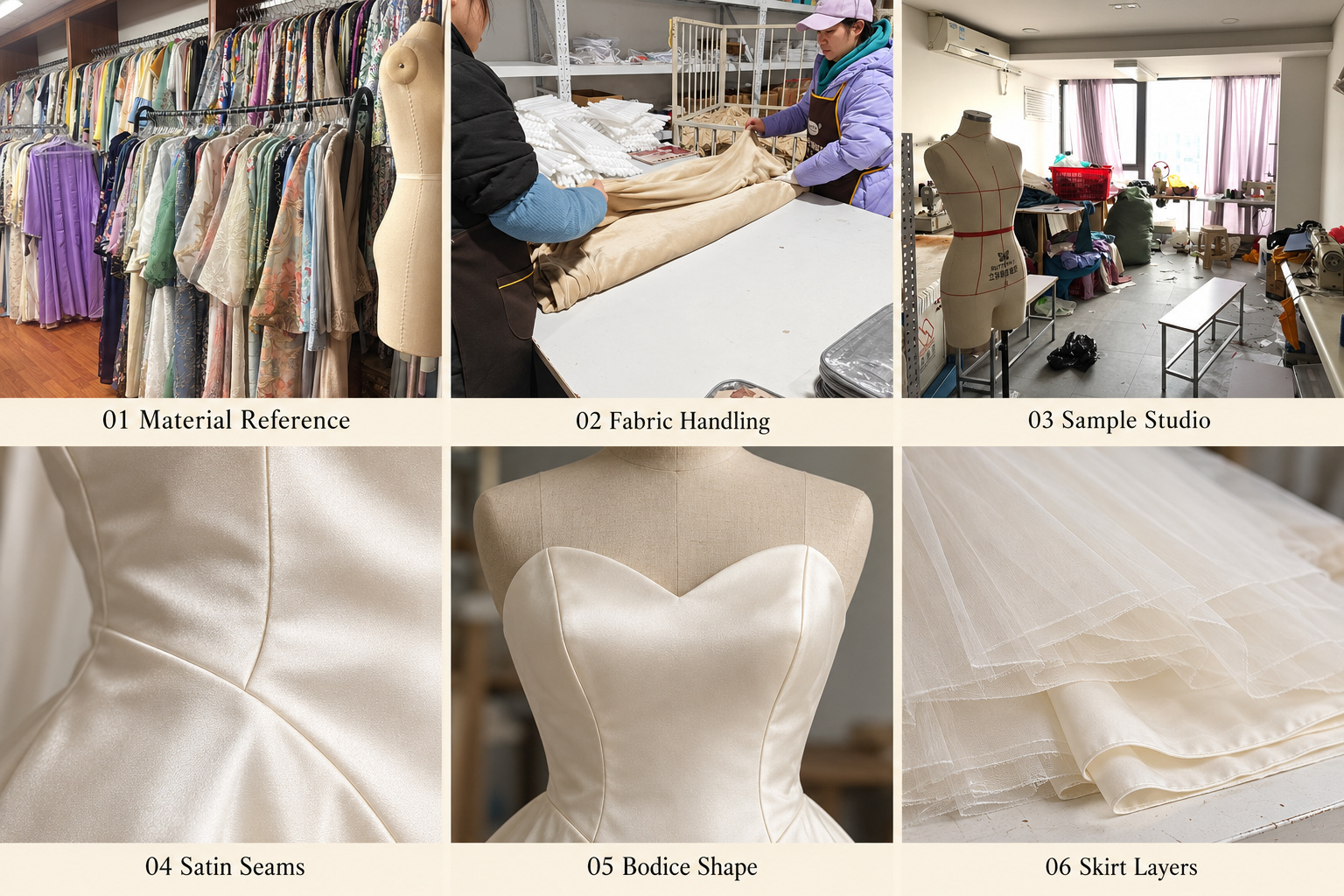
Satin requires attention to shine marks and seam impressions. Fine tulle and lace can distort if stretched during handling, while some decorative components may be sensitive to heat.
The finishing approach follows the materials confirmed through fabric and lace selection. A fabric substitution requires another review rather than automatically using the previous method.
 Preserve Bodice Shape and Skirt Drape
Structured bodices need support during finishing so shaped cups and curved seams are not flattened. We review neckline edges, waist joins and closure areas for visible distortion or impressions from underlying layers.
Skirt layers are arranged separately where necessary to avoid pressing unwanted folds into the outer fabric. The lining should sit correctly beneath the skirt without pulling at the hem.
Pleats and intentional folds follow the approved design. Buyers should identify any crease lines that must be retained rather than removed.
Protect Lace and Raised Decoration
Lace motifs, appliqués, pearls and sequins need handling that avoids snagging, crushing or transferring impressions onto adjacent fabric. Direct contact with raised decoration is assessed before finishing.
Areas completed through beading and hand embellishment are reviewed for displaced components or loose attachment after handling. If decoration needs repair, the affected area returns for correction before the garment proceeds.
Dense embellished sections may require additional finishing time and more careful packing.
Trim Threads and Review Visible Details
Final finishing includes removing loose threads and temporary positioning stitches, checking exposed seam ends and arranging lining and decorative edges. Trimming must avoid cutting attachment stitches or damaging fine mesh.
We also review the garment for handling marks, lint and visible residue. Any spot treatment needs to be suitable for the material; aggressive cleaning can create a larger visible difference.
Buttons, loops and zippers are checked again after finishing to confirm that fabric or decoration has not obstructed the closure.
Complete Appearance Review Before Packing
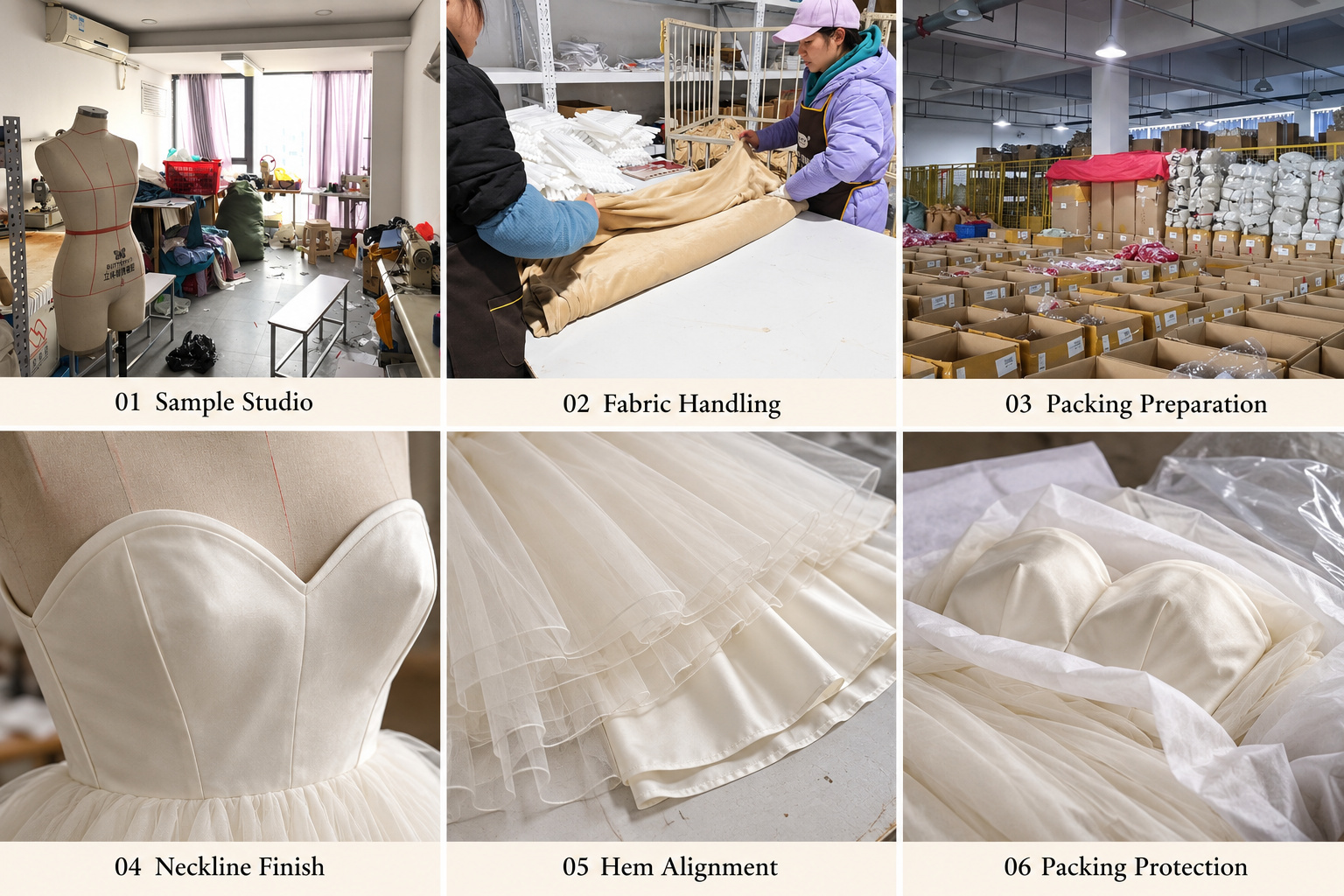
The finished dress is reviewed on a suitable form or hanger and laid flat where needed. Checks cover silhouette, layer alignment, neckline shape, hem appearance and visible workmanship against the approved sample.
Finishing is followed by measurement and appearance inspection. Outstanding construction or decoration issues should be resolved before packing.
 Agree on Presentation and Delivery Requirements
Please provide your required finished appearance, garment bag preferences, folding restrictions and any instructions for shaped cups or raised decoration.
Packing should protect the finished shape while fitting the agreed shipping arrangement. Transit can introduce creases, so any unpacking or gentle steaming guidance should match the confirmed materials. Extra handling and protective packing are reviewed when confirming the quotation and production schedule.