


Private Label Support for Bridal Collections
Vowmelle supports bridal boutiques, wholesalers and brands with private label wedding dress orders. Branding can include your main brand label, size identification and care labels, coordinated with the approved dress specification.
Start by confirming the garment styles and branding requirements together. Label materials, attachment positions and order quantities affect component sourcing and sewing arrangements. An existing dress style with your labels and a newly developed OEM style require different preparation, so identify your order type when requesting a quotation.
Choose the Main Brand Label
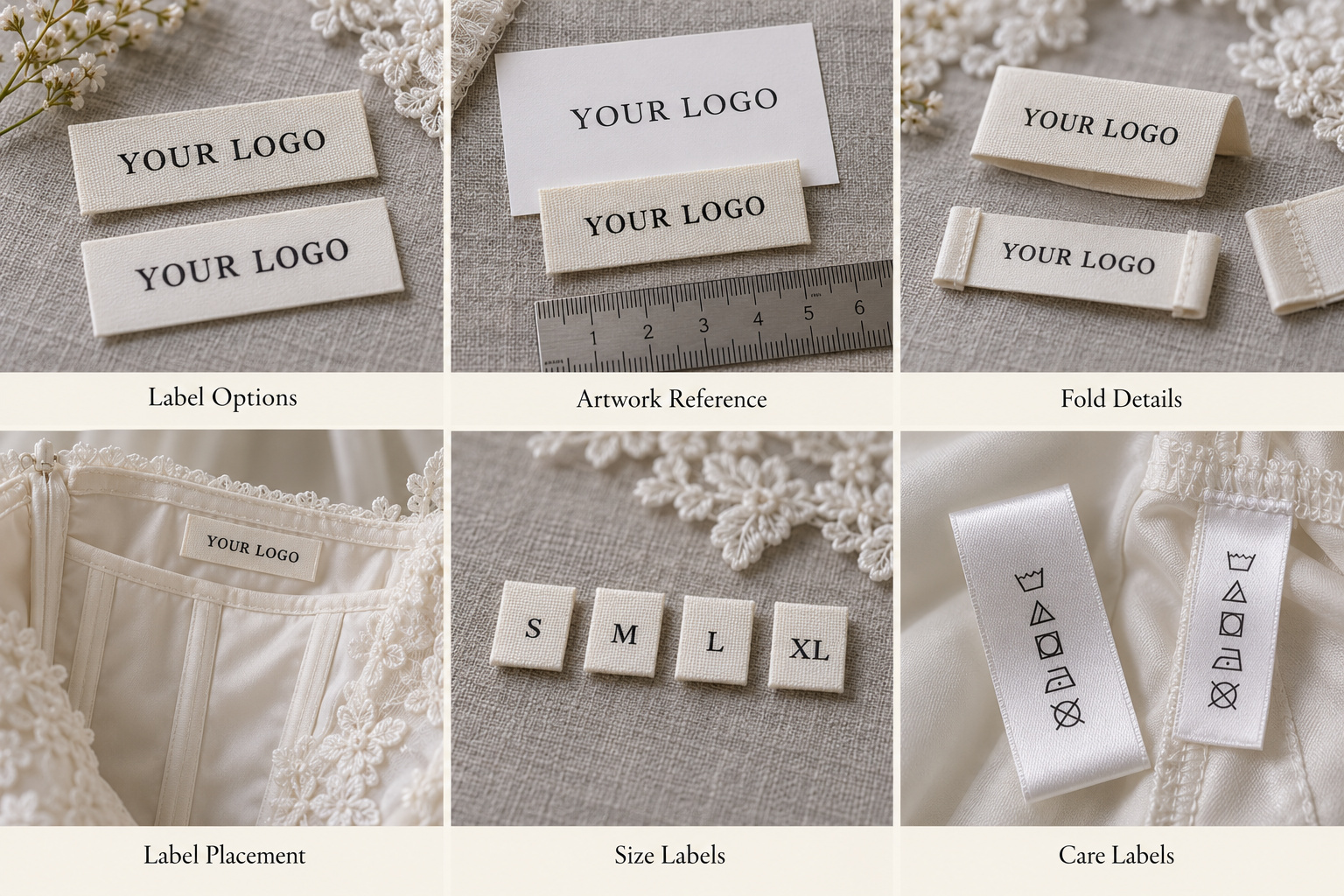
Woven labels suit many bridal branding applications. Printed alternatives can be reviewed where finer text, a softer surface or a different appearance is required. Send your logo artwork, intended label dimensions, background color and preferred finish.
Review legibility at the actual label size. Fine lettering may need adjustment for weaving, and artwork colors can appear different on textile materials. Confirm fold type, sewing allowance and exposed edges before preparing the label sample.
Labels placed against the body should also be assessed for stiffness, edge comfort and visibility through sheer fabrics.
 Confirm Placement on the Actual Dress
Label position needs to suit the dress construction. A back neckline placement may work on a covered bodice but remain visible through an illusion back. Waist or lining placement can be considered where neckline space is limited.
Provide a marked placement image and specify the attachment method. We review whether stitching could show on the outer fabric, interfere with a closure or sit against boning channels. Confirm orientation and placement on the actual sample rather than approving a loose label alone.
For new styles, coordinate these details with custom bridal dress development.
Align Size and Care Label Information
Size labels should follow your approved collection sizing. Confirm numerical or letter formats and ensure they match the buyer size chart and grading specifications.
Care label content needs to reflect confirmed garment materials and appropriate care instructions. Fabric names such as satin or tulle do not establish fiber composition. Provide the wording, languages and destination-market requirements for review. Do not add unsupported composition, certification or compliance statements.
Where separate labels are used, confirm their sequence and attachment position.
Approve Labels Before Bulk Sewing
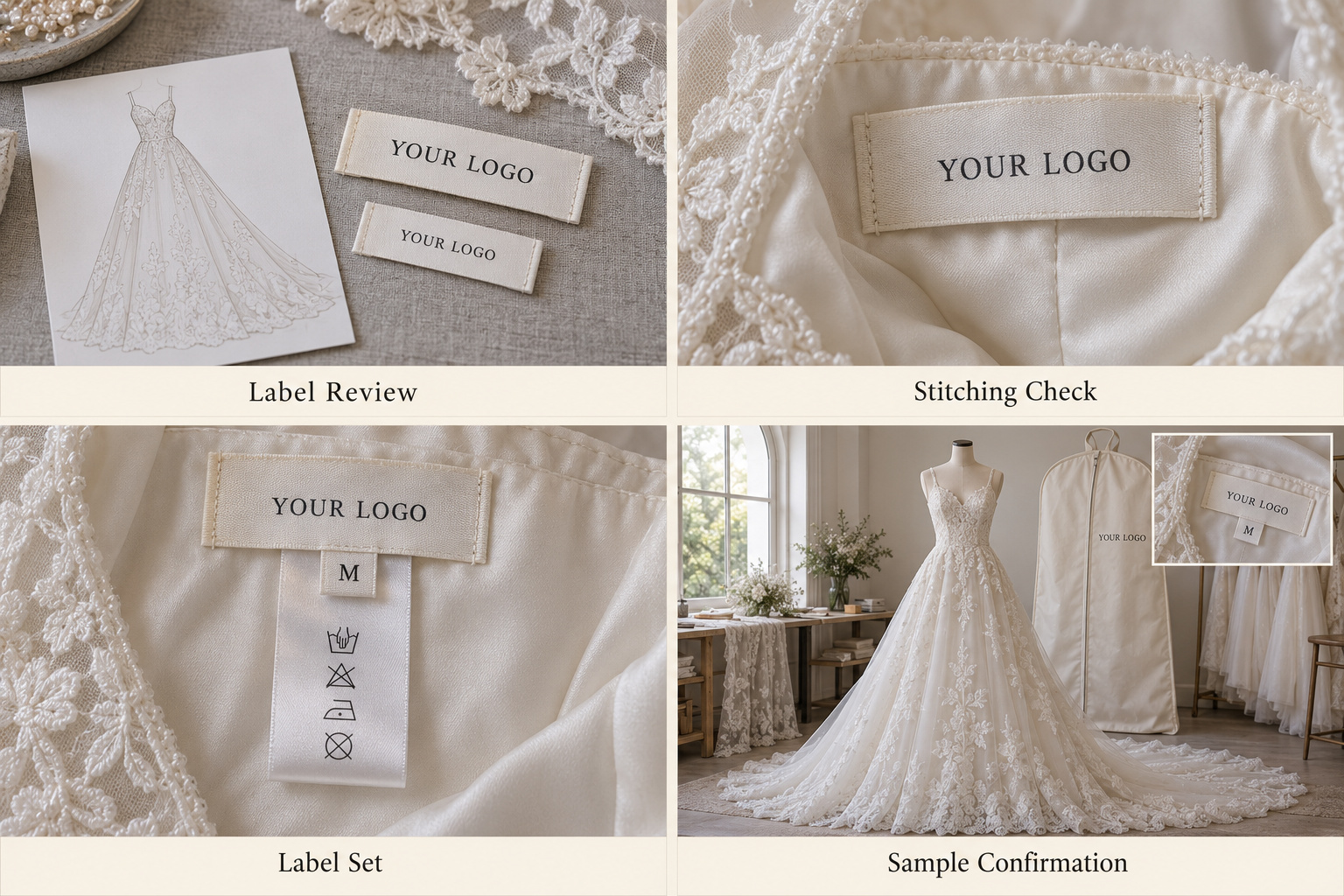
Approval should cover artwork, dimensions, colors, material, fold construction and the sewn placement. Photographs help review layout, while physical samples allow assessment of texture, stiffness and edge finish.
During sample development and approval, record the selected label reference and any revisions. Changes after label purchasing or garment sewing may require replacement components, rework and additional time.
 Match Branding with Packing and Order Quantities
Production checks should cover correct label versions, readable text, secure attachment and size identification. Packing instructions should match garment labels with SKU references and carton assortments.
Coordinate garment bags and other branded components through custom garment bags and packaging. Label and packaging suppliers may require component quantities above the garment order quantity; confirm this before purchasing.
Send Your Private Label Requirements
Provide dress references, quantities per style/color, size breakdown, logo files, label specifications, required wording and delivery destination.
New OEM or private label development generally starts at 50–100 pieces per style/color. New development samples usually take 15–25 days, depending on materials, branding components and revisions. Final costs and bulk schedules are confirmed against the approved garment and label requirements.