


Style Adjustments for Bridal Collections
Vowmelle Wedding Dresses supports bridal brands, boutiques and private label buyers with neckline, sleeve and train adjustments for existing styles and new OEM developments. These changes are reviewed against the gown’s pattern, materials, internal support and intended size range.
Send the original style alongside the proposed changes. Front and back references, sleeve details and a defined train measurement help us assess the development work. We review feasibility before confirming the quotation and sampling route for commercial orders.
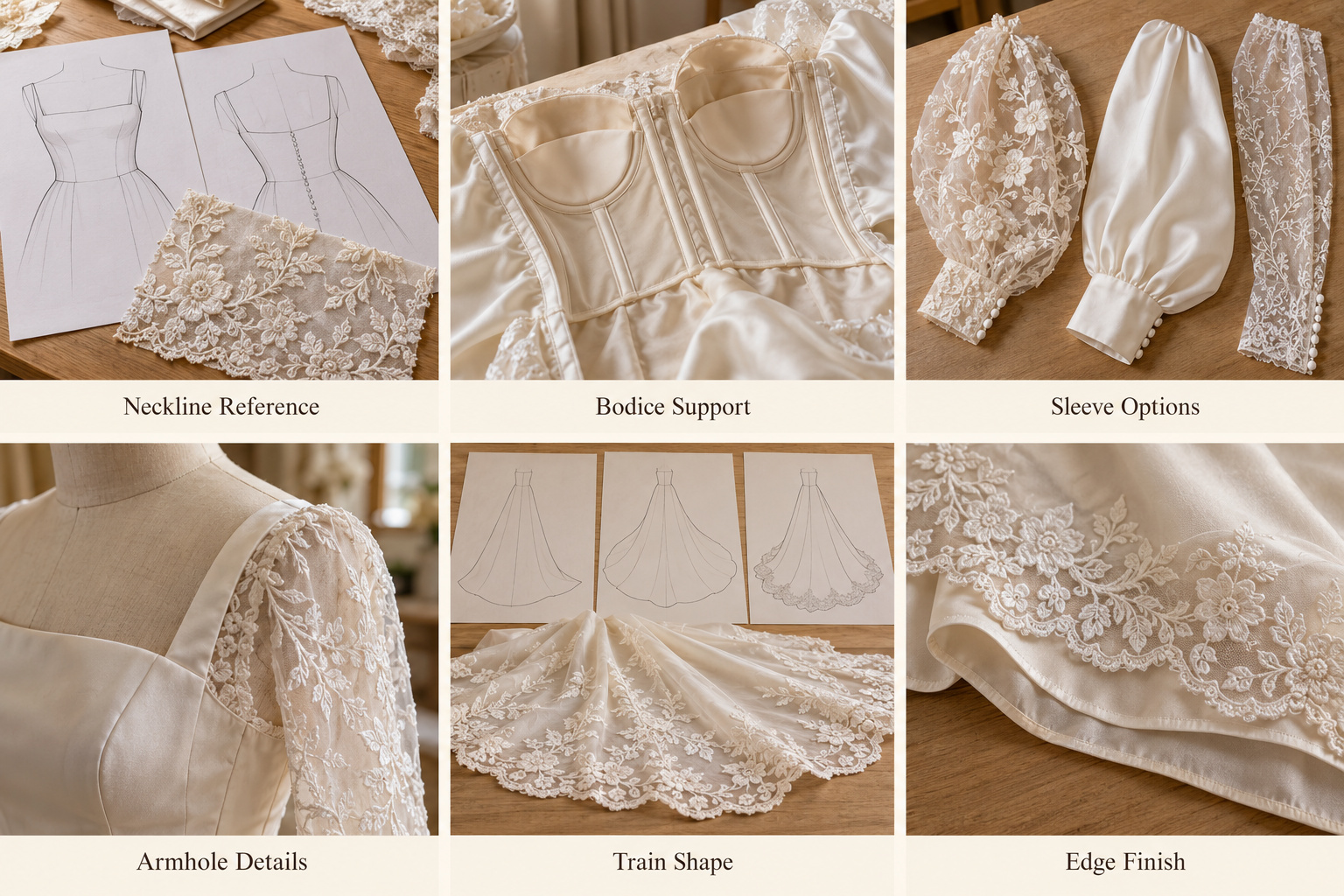
Define the Neckline and Supporting Structure
Neckline development can include changes to shape, depth, coverage and shoulder position. Buyers should identify the desired front and back neckline together, including straps, illusion mesh or lace edging where required.
Changing a neckline can affect bodice balance, lining coverage, cups and boning. A deeper opening or reduced shoulder coverage may require pattern and support adjustments rather than simply trimming the existing garment.
Specify which details must remain unchanged. During custom bridal dress development, we review the requested appearance alongside the construction needed to produce it.
 Develop Sleeves with the Bodice Pattern
Sleeve requests should define length, shape, coverage and cuff treatment. Lace, tulle, mesh and opaque fabrics create different appearances and need to be considered with the armhole and shoulder construction.
Adding sleeves to a sleeveless gown can require changes to the bodice pattern. Sleeve width, armhole shape and material flexibility affect movement and fit, particularly for fitted or long-sleeve designs.
Confirm whether decorative motifs should align across the shoulder or continue toward the cuff. These requirements influence lace consumption and handwork. Material suitability can be reviewed through fabric and lace selection.
Specify Train Length, Shape and Layers
Train requirements should include the measuring point, finished length and intended outline. Descriptions such as “long train” are insufficient for pattern development because buyers may interpret them differently.
We review the train with the skirt silhouette, lining, layer count and edge finish. Extending it can increase fabric consumption, lace placement work, garment weight and packing volume. A heavily embellished edge also requires attention to attachment and handling.
Provide back-view references and identify any required changes to the transition between the skirt and train. The sample allows the buyer to assess the overall shape before production.
Approve the Complete Sample
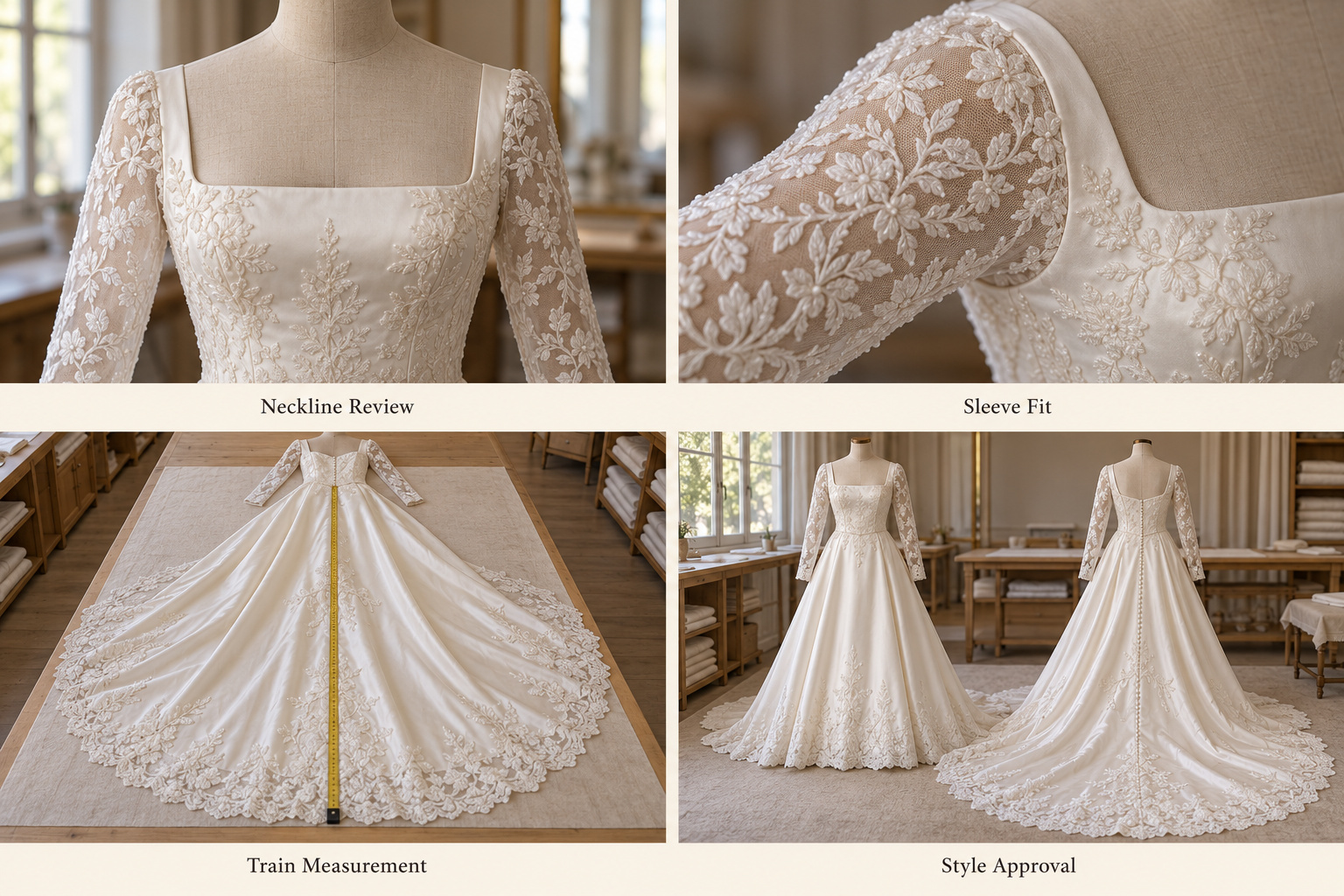
Review neckline balance, shoulder position, sleeve attachment, closures and train shape together. Measurements should follow the agreed specification, while lace and embellishment placement should be compared with the approved design references.
Revision comments should state the location and required adjustment, supported by marked photographs or measurement notes. Confirmed changes are recorded through sample development and approval before bulk production.
Production checks then follow the approved construction, dimensions and decorative layout. Packing requirements are reviewed to protect neckline structure, delicate sleeves and extended trains.
 Confirm Order Quantities and Development Timing
Modified styles commonly require around 30–50 pieces per style and color. New OEM or private label developments normally start around 50–100 pieces per style and color, subject to the specification and materials.
Modified samples generally take about 10–15 days; new developments commonly require 15–25 days. Costs depend on pattern changes, materials, lace consumption, handwork and revisions. OEM production commonly takes 35–45 days, while complex bridal programs may require 45–60 days.
Send your style references, requested changes, size chart, quantities and delivery destination so we can review sampling, production and shipment requirements together.