


Decoration Development for Bridal Collections
Vowmelle supports bridal boutiques, wholesalers and private label brands with lace, appliqué and embellishment development for wedding dress orders. We can review changes to existing styles or develop decoration details within an OEM project.
Send front and back references, close-up images and marked placement instructions. Identify which details must remain consistent and where alternative materials are acceptable. Lace coverage, motif scale, decoration density and attachment methods all affect sampling, unit cost and production time.
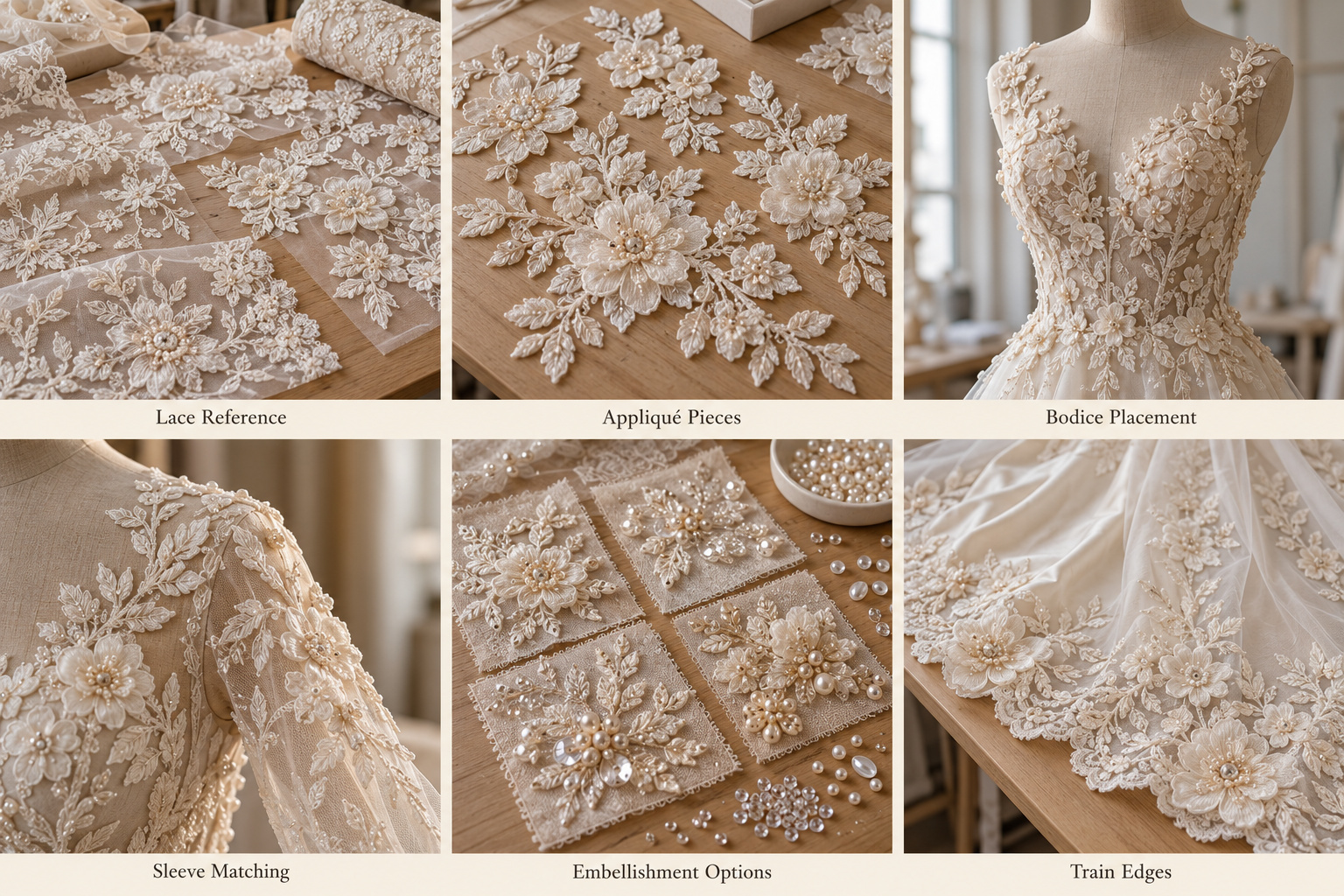
Select Lace for the Dress Construction
Lace should be reviewed against the actual base fabric and lining. The same motif can appear different over ivory satin, champagne lining or sheer tulle. Stretch, weight, transparency and edge shape also influence how it sits across the bodice, sleeves and train.
Through fabric and lace selection, we review available options against your reference. If an exact lace cannot be sourced, any proposed alternative needs approval before use. Confirm the selected reference and acceptable variation before material purchasing.
 Confirm Appliqué Placement and Coverage
Appliqué placement needs more detail than a general instruction such as “add more lace.” Mark the intended areas, coverage and spacing on front and back views. Specify whether motifs should be symmetrical or follow an approved asymmetric layout.
We review placement around neckline edges, bust shaping, waist seams and closures. Motifs may need adjustment where pattern pieces join. For different sizes, confirm whether decoration coverage should remain visually proportional or follow fixed placement points.
Define Beading and Other Embellishment
Beads, sequins, pearls and embroidery should be specified by appearance, location and density. A close-up reference helps distinguish a lightly decorated lace surface from a heavily embellished bodice.
Added decoration can change garment weight, flexibility and skin contact. We review attachment security, exposed thread and the reverse side of decorated areas. Dense work near seams or closures may require construction adjustments. Confirm acceptable component alternatives before sampling; substitutions can change color, shine and overall appearance.
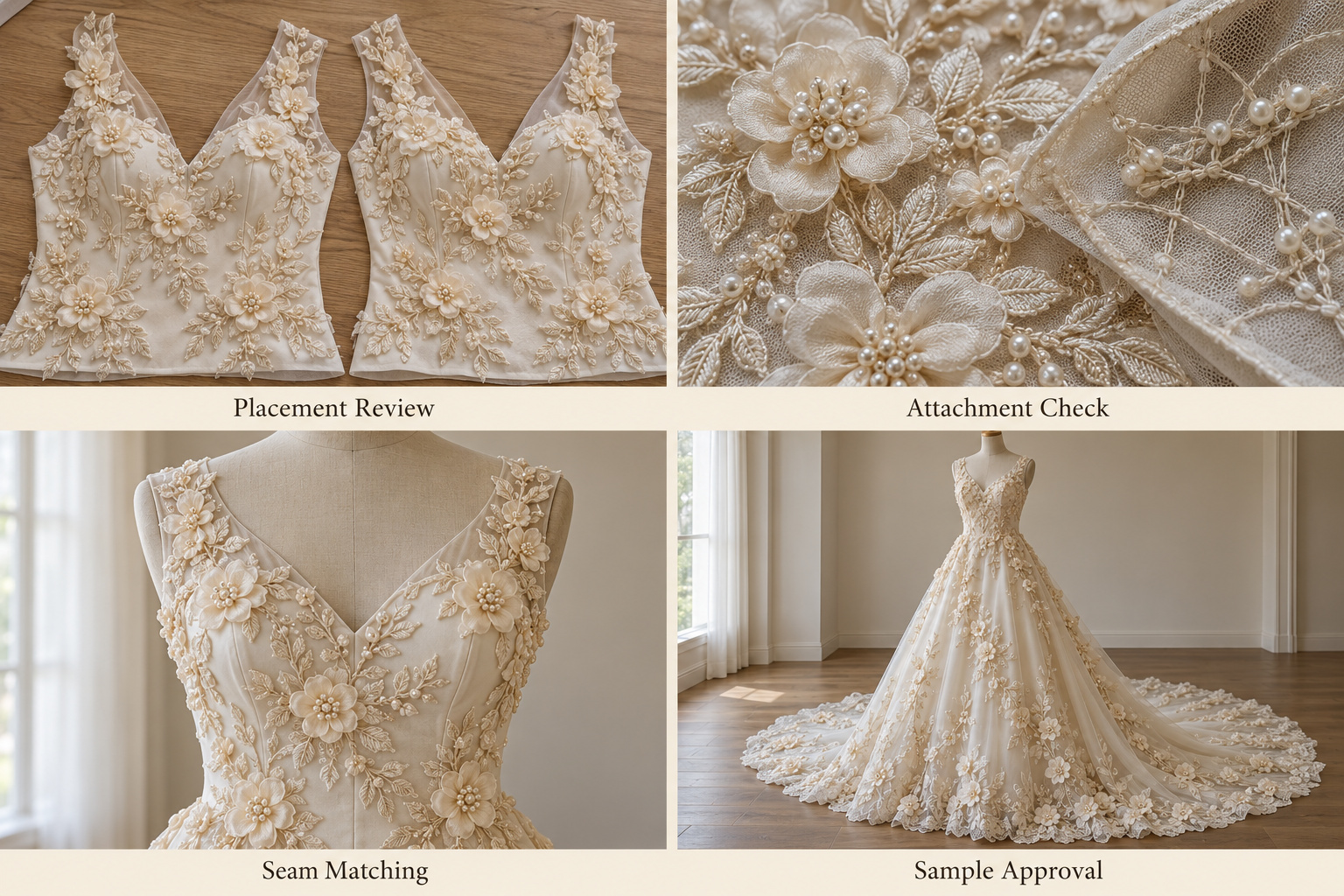
Approve Decoration on the Sample
Small decorated swatches help compare materials and attachment methods, but the complete dress sample is needed to assess placement across seams and curved areas.
During sample development and approval, review overall views and close-ups. Record changes to motif position, bead density, edge finishing and lining coverage. The approved sample and written specifications become the production references.
 Control Decoration During Production and Packing
Production checks should compare lace coverage, motif direction and embellishment density with the approved reference. Inspection also covers loose components, visible adhesive residue where applicable, pulled threads, damaged mesh and decoration obstructing closures.
Packing should protect raised embellishment and reduce snagging between garment layers. Buyers can specify garment bags, protective separation and folding requirements through custom garment bags and packaging.
Send Details for Quotation
Provide the dress reference, decoration close-ups, size range, quantities per style and color, target delivery date and packaging requirements.
Modified styles generally start at 30–50 pieces per style/color; new OEM or private label development generally starts at 50–100. Modified samples usually take 10–15 days, while new development usually takes 15–25 days. Final pricing and schedules depend on material availability, handwork, revisions and approved specifications.