


Product Identification for Bridal Orders
Vowmelle supports bridal boutiques, wholesalers, importers and private label brands with hangtags, barcode labels and SKU identification for wedding dress orders. These components help buyers match garments with collection records, receiving systems and packing lists.
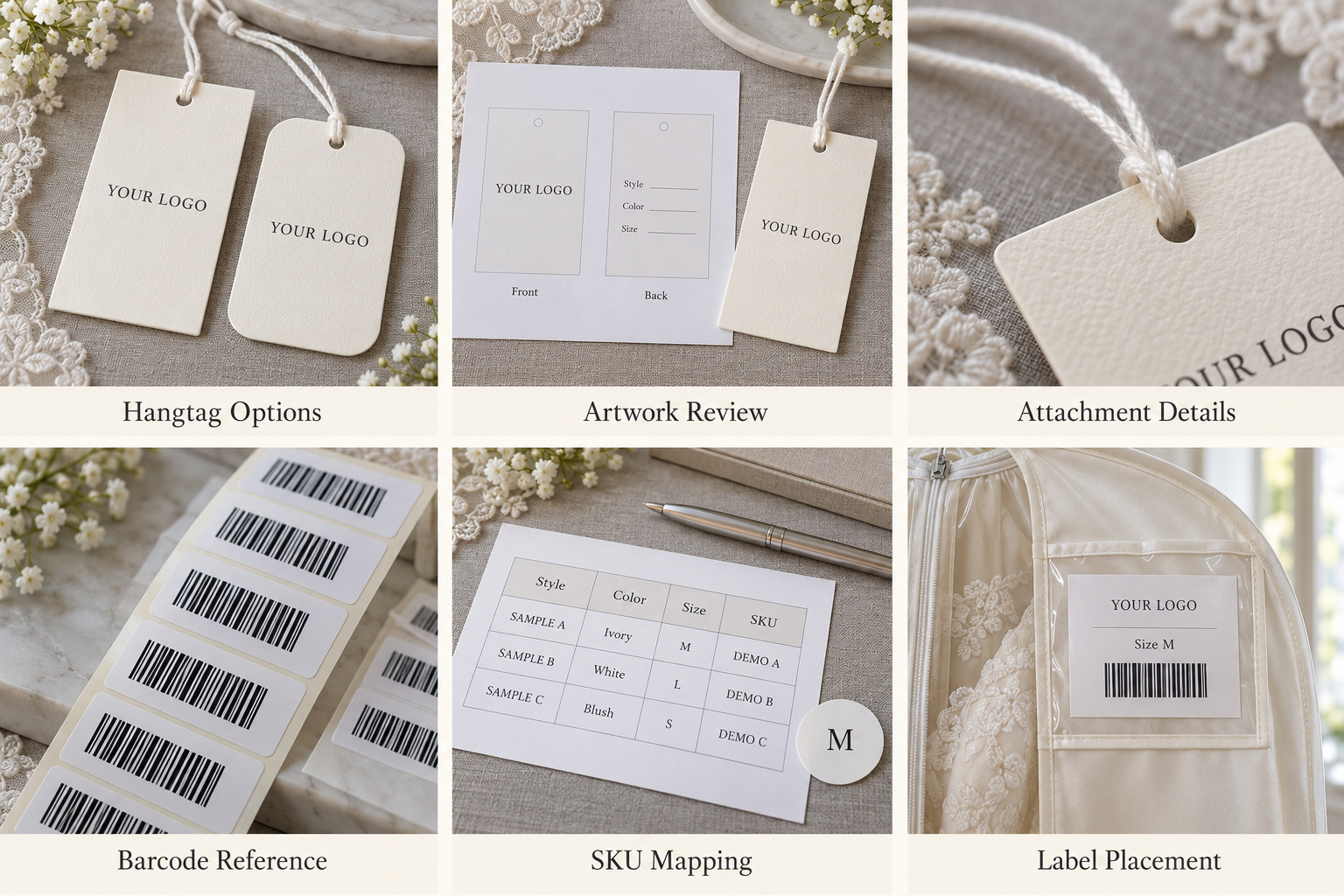
Each component has a different purpose. Hangtags present your brand and product information. SKU labels identify the specific style, color and size. Barcode labels encode buyer-approved item data for compatible scanning systems. Confirm which components your order requires before preparing artwork.
Define Hangtag Materials and Artwork
Send your logo file, tag dimensions, preferred paper stock, print colors and front-and-back layout. Include the required hole position, attachment cord and any finishing preferences for review.
Small text, pale printing and heavily textured stock can reduce legibility. Review the physical sample where paper feel and finish matter. Confirm whether tags require individual style information or use one common design across the collection.
Coordinate the visual identity with your private label and brand labels so garment labels and hangtags use the same approved branding.
 Supply Barcode Data and Format Requirements
Provide the barcode type, approved encoded values, human-readable text and intended label dimensions. If your system uses GS1 identifiers, supply the identifiers assigned to your business; these should not be invented during artwork preparation.
Barcode readability depends on print contrast, symbol size, clear margins and the label surface. Avoid placing codes across folds, seams or heavily textured areas.
Approve the printed sample using your intended receiving or inventory system. A photograph can confirm layout, but it cannot establish reliable scanning performance across your equipment.
Match SKUs with Style, Color and Size
Supply an item list that maps each SKU to its dress style, approved color reference and size. Keep naming consistent across the order sheet, labels and packing instructions.
Different size conventions can create receiving errors. Match size identification with the buyer size chart and grading specifications rather than relying on an assumed regional conversion.
Confirm how revised styles, replacement items and repeat orders should be identified. Any changes to item data need approval before printing or packing.
Confirm Attachment and Packing Positions
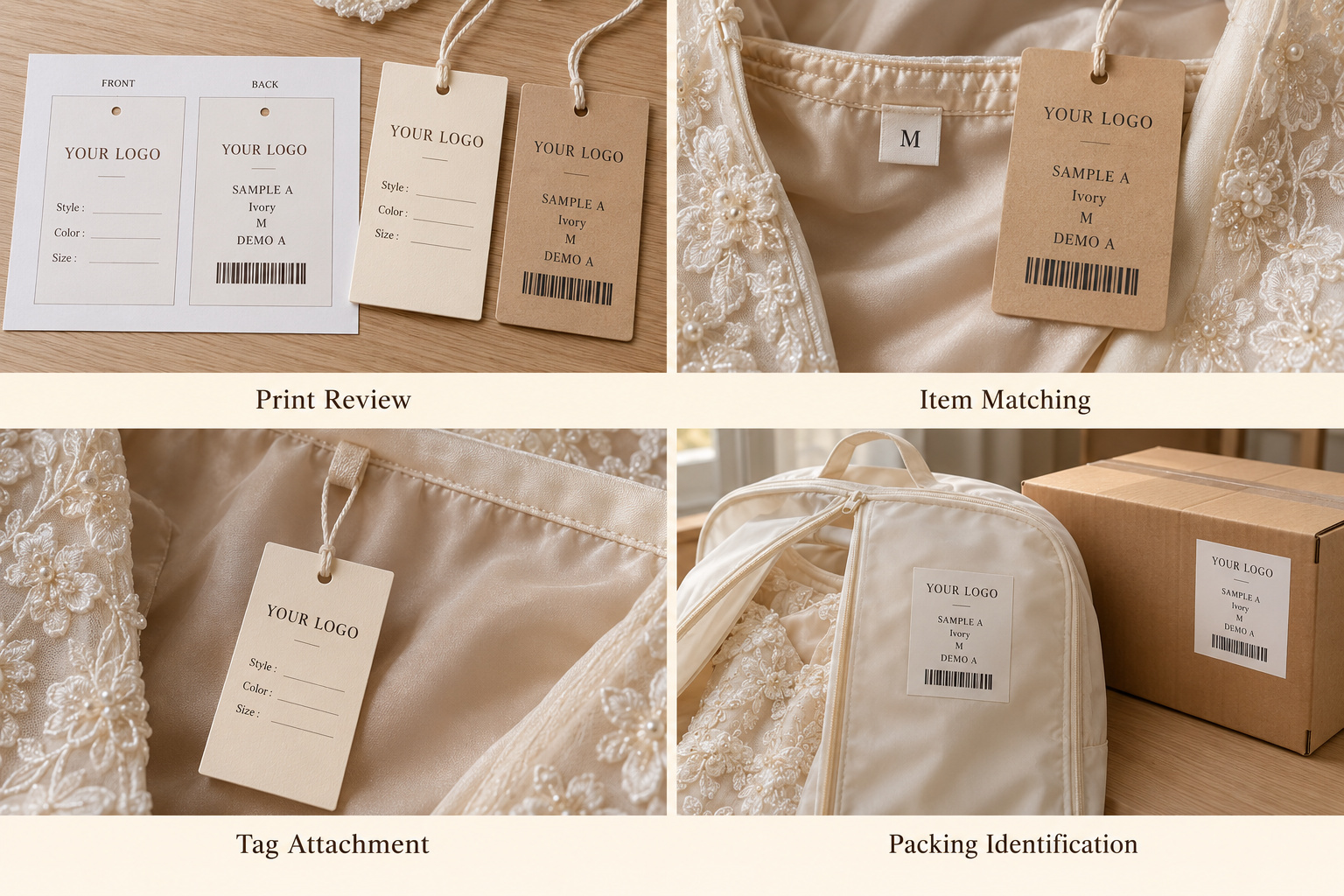
Hangtags should remain accessible without damaging lace, mesh or embellishment. Specify an approved attachment point, such as a suitable internal loop or label, and review it on the sample.
Garment bag stickers and outer identification labels need clearly defined positions. Confirm whether labels should remain removable and whether adhesive could contact the dress.
Coordinate these requirements with custom garment bags and packaging so identification remains visible after packing.
 Approve Components Before Bulk Packing
Confirm artwork, printed information, quantities and placement before purchasing components. Different SKU versions require separate allocation, even when the hangtag design remains unchanged.
Packing checks should compare garment identification with bag labels, carton assortments and packing lists. Keep approved artwork and item data under a clear revision reference to reduce mix-ups during repeat orders.
Send Identification Requirements for Quotation
Provide garment quantities by style, color and size, hangtag specifications, barcode data, SKU mapping, attachment instructions and delivery requirements.
Component minimums may differ from garment MOQ, particularly for multiple printed versions or special finishes. Sample costs and preparation time depend on artwork readiness, component sourcing and revisions. Confirm these details alongside the garment production schedule before placing the order.