


Packing Around the Garment and Order Requirements
Wedding dress packing needs to protect the finished garment while keeping each style, color and size identifiable. For bridal brands, wholesalers and boutique buyers, the packing arrangement also affects receiving, storage and unpacking.
We prepare packing against the confirmed order and approved packaging reference. A structured satin gown, a long tulle train and a heavily embellished dress require different handling. Garment bags, protective layers and carton quantities are reviewed before bulk packing begins.
Release Finished Garments for Packing
Garments proceed to packing after the agreed inspection and any required corrections. We confirm that the dress matches its order identification and that finishing is complete.
The garment should be dry before enclosure. Loose threads, temporary pins and unnecessary packing debris must be removed. Closures and decoration are reviewed so handling does not conceal an unresolved issue.
The release reference follows measurement and appearance inspection, including the agreed scope and acceptance requirements.
 Protect Cups, Decoration and Skirt Layers
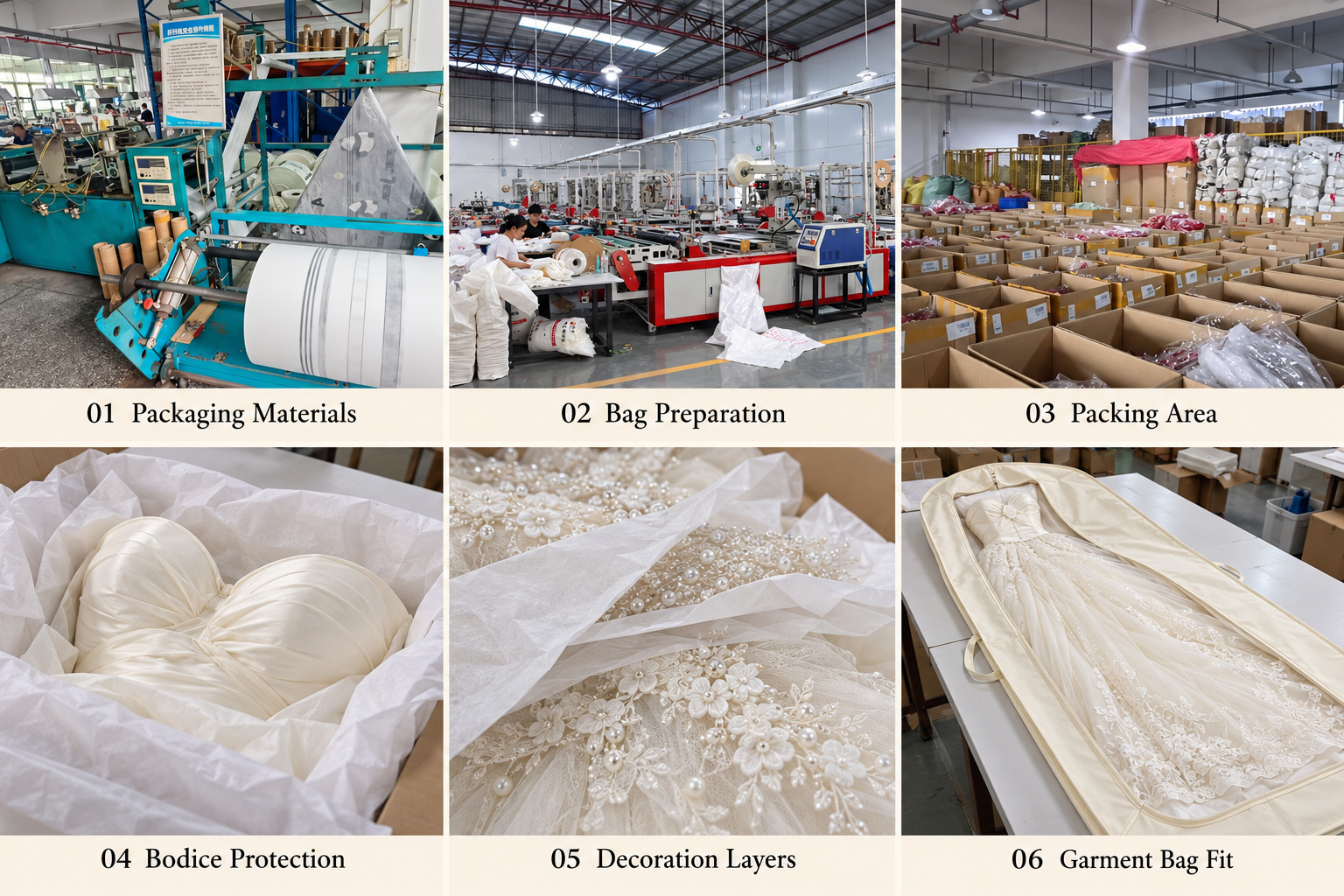
Shaped cups and structured bodices should not be forced into a fold that crushes their shape. Raised beads, appliqués and delicate lace may need suitable interleaving to reduce abrasion or snagging against adjacent fabric.
Skirt layers and trains are arranged to avoid unnecessary twisting and concentrated pressure. Folding positions depend on the silhouette, material and available packing space.
Protection is confirmed with the finished sample. A method suitable for a simple satin dress may not suit dense beadwork or a large layered skirt.
Confirm Garment Bags and Identification
Garment bag dimensions are checked against the dress length, volume and train. Buyers should specify whether bags are intended for individual delivery, boutique storage or another receiving arrangement.
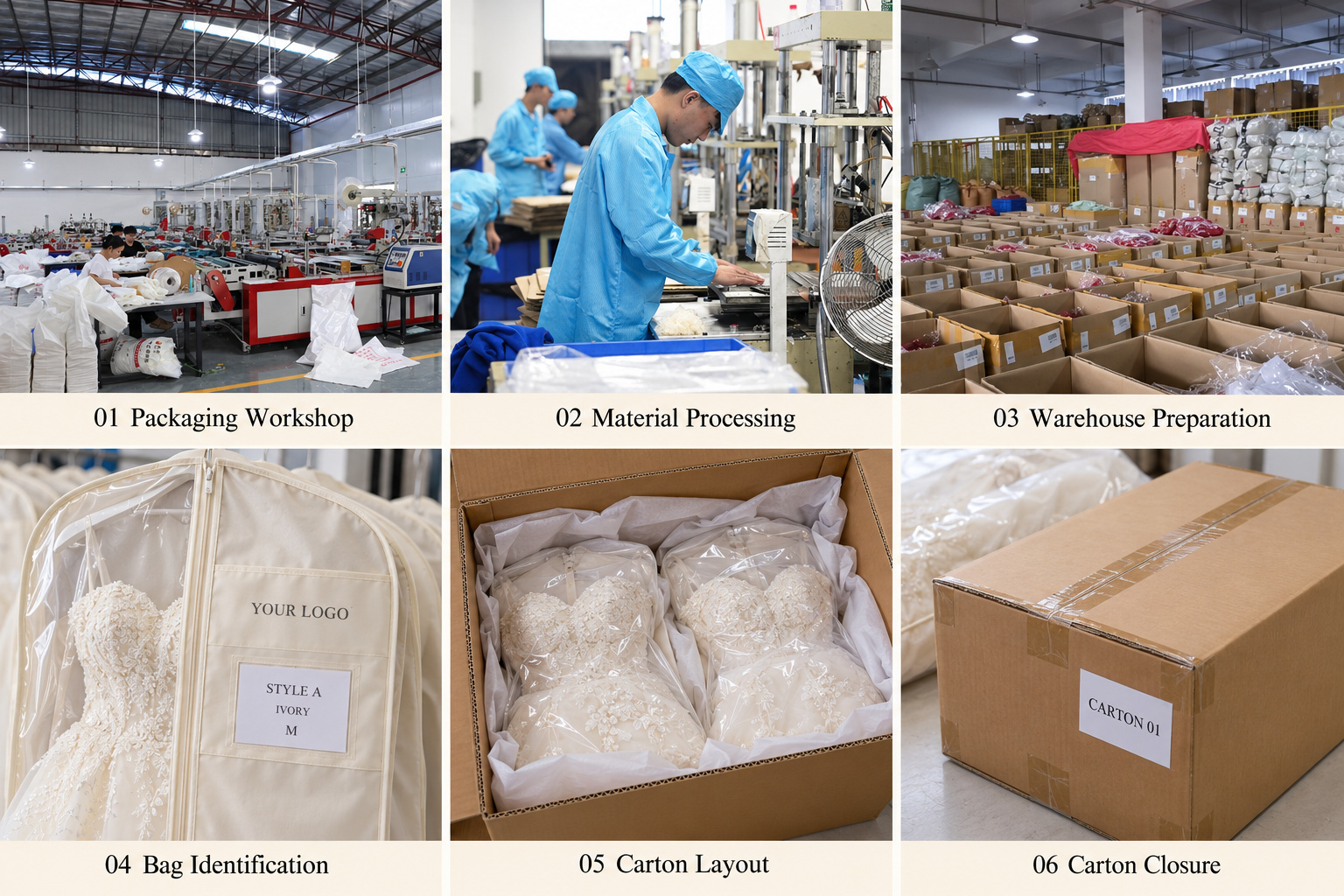
Branding, identification pockets and closure details are agreed through custom garment bags and packaging. Packaging availability and customization can affect MOQ and preparation time.
Style, color and size labels should remain readable without unnecessary unpacking. Buyer-supplied SKU information must match the garment, bag identifier and packing list.
Arrange Cartons Without Excessive Compression
Carton selection considers garment volume, protection and the agreed transport method. Packing quantity per carton is confirmed after reviewing representative packed garments.
Overfilling can compress bodices, damage decoration and make cartons difficult to close correctly. Empty space also needs appropriate management so garments do not shift unnecessarily.
We confirm carton numbering, shipping marks and size or style grouping instructions. Carton dimensions and gross weight are recorded after packing rather than assumed from garment quantities alone.
 Confirm Shipping Information and Documents
Before dispatch, buyers should provide the delivery destination, consignee information, agreed shipping terms and any forwarder instructions.
Commercial invoice and packing list details are checked against the confirmed shipment. Destination-specific labeling, document or import requirements should be raised before production and reviewed for the order.
Freight planning uses the actual packed volume and weight. Delivery timing includes transport arrangements as well as garment production; requested arrival dates should therefore be discussed early.
Send Packing Instructions Before Bulk Production
Please provide quantities by style and size, garment bag specifications, branding artwork, folding restrictions and carton identification requirements.
We review packaging cost, availability and packing labor alongside the production schedule. An approved packing reference helps maintain consistency across the order. Transit may introduce creases, so unpacking and finishing guidance should remain appropriate for the confirmed materials.