


Inspection Against Agreed Order Requirements
A wedding dress can look correct on a hanger while differing from the buyer’s measurements or approved construction. Measurement and appearance inspection brings these requirements together before packing.
For bridal brands, wholesalers and boutique collections, we review garments against the approved sample, size specifications and confirmed order details. Inspection covers dimensions, visible workmanship, decoration, closures and product identification. The scope and acceptance requirements should be agreed before bulk production.
Define Measurement Points and Tolerances
A size label alone does not establish whether a garment matches the order. Buyers should provide measurement points, units, the measurement method and acceptable tolerances for each relevant dimension.
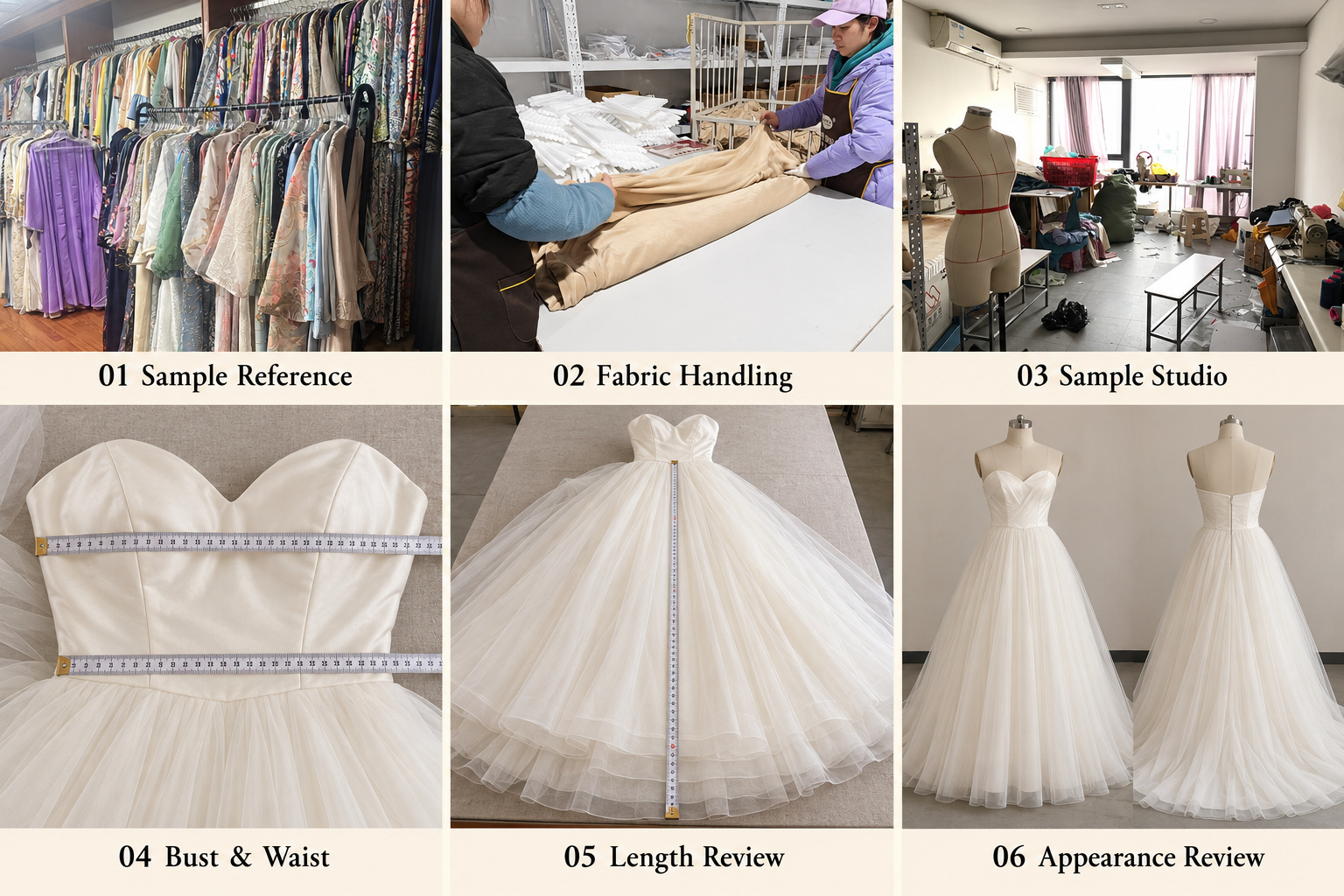
Depending on the style, checks may include bust, waist, bodice length, shoulder width, sleeve length, skirt length and train length. Measurements taken flat can differ from measurements taken around a shaped garment, so the method must remain consistent.
Requirements follow the confirmed buyer size chart and grading specifications. Structured cups, stretch sections and lace-up backs need specific instructions where they affect measurement.
 Review Silhouette and Visible Workmanship
Appearance review compares the finished dress with the approved design from the front, back and relevant detail views. We check neckline shape, bodice balance, skirt drape, layer alignment and hem appearance.
Visible issues include unintended puckering, uneven seams, loose threads, handling marks and damaged fabric. Lighting should allow surface differences to be seen without relying only on photographs.
A dress form helps show the silhouette, but it does not replace the buyer’s agreed fit approval or dimension checks.
Check Bodice Support and Closures
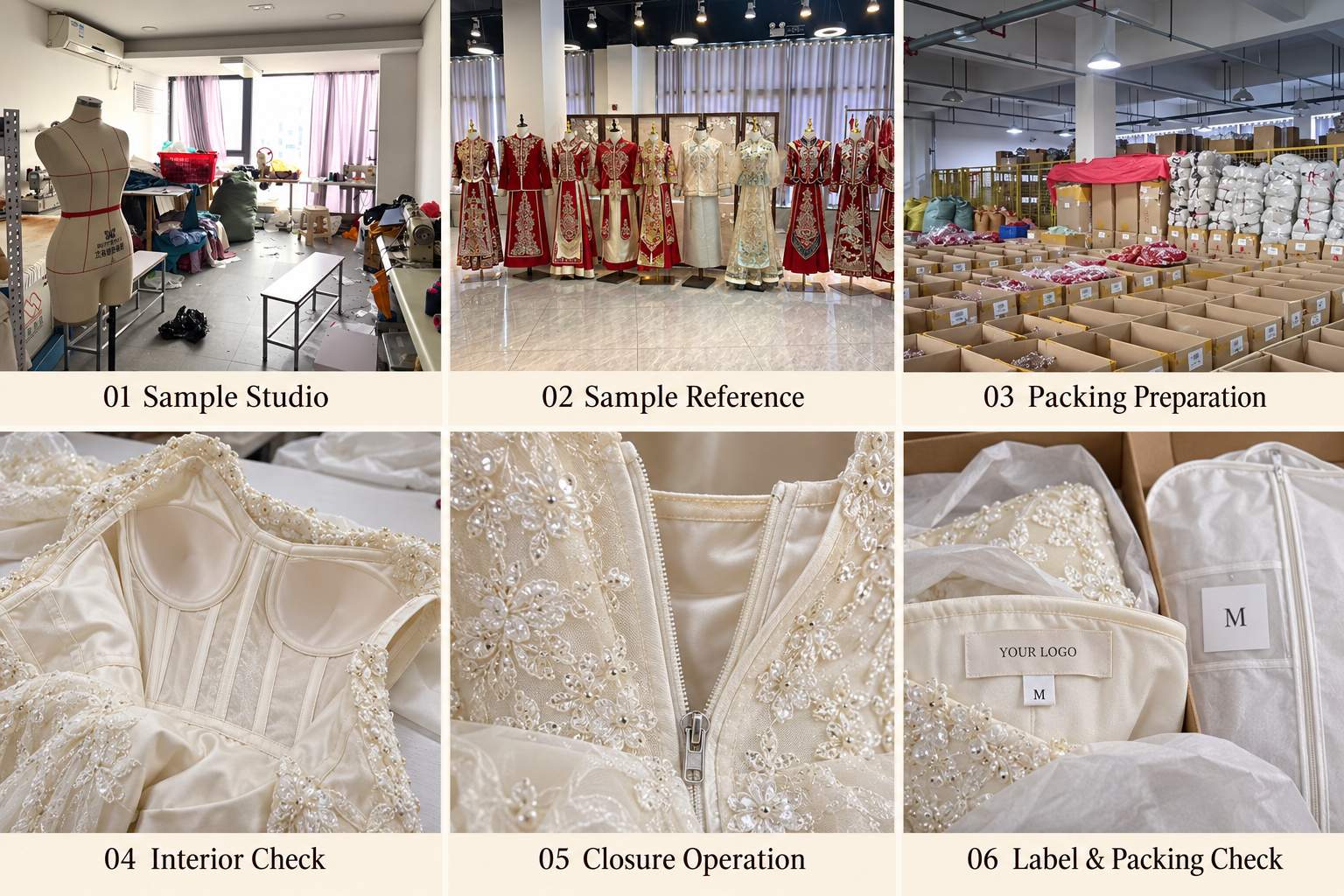
The interior is reviewed alongside the outer appearance. Checks include cup positioning, enclosed boning ends, lining attachment and exposed seam finishing.
Zippers, buttons, loops and lace-up openings are checked for alignment and operation. Decoration or lining should not obstruct the closure.
Issues identified in these areas return to the relevant sewing and garment construction stage for correction. Pressing should not be used to conceal a construction problem.
Inspect Lace, Appliqués and Beadwork
Decoration is compared with the approved placement reference, including coverage, symmetry and transitions across seams. We review attachment, missing components, loose edges and visible thread.
For hand embellishment, acceptable variation should be defined around the design’s main visual requirements. A minor difference in individual bead position is different from a missing motif or an unsecured decorative section.
Raised decoration also needs review for snagging risks before packing.
 Verify Labels, Quantities and Packing
Before shipment, style, color and size identification should match the order and packing instructions. Private labels, hangtags and garment bag identifiers are checked against the confirmed references.
Packing review covers garment protection, folding requirements and carton identification. Shaped cups and embellished sections may need additional protection through final packing and export preparation.
Agree on Inspection Scope Before Production
Please provide your size specifications, approved sample reference, priority checkpoints and any reporting requirements. Inspection coverage, sampling arrangements and acceptance criteria are confirmed for the order.
If third-party inspection is required, share the proposed checklist and timing early so access and shipment scheduling can be reviewed. Identified issues are recorded, corrected where applicable and rechecked before release. Additional inspection or rework can affect the delivery schedule.