


Hand Embellishment for Bridal OEM Orders
Beads, pearls and sequins can change the appearance, weight and handling requirements of a wedding dress. For bridal brands, wholesalers and boutique collections, the decoration needs an agreed material reference and placement plan before bulk work begins.
We review embellishment against the selected lace, base fabric and garment construction. A lightly decorated neckline and a densely beaded bodice require different attachment time and support. The development sample establishes the finish that production will follow.
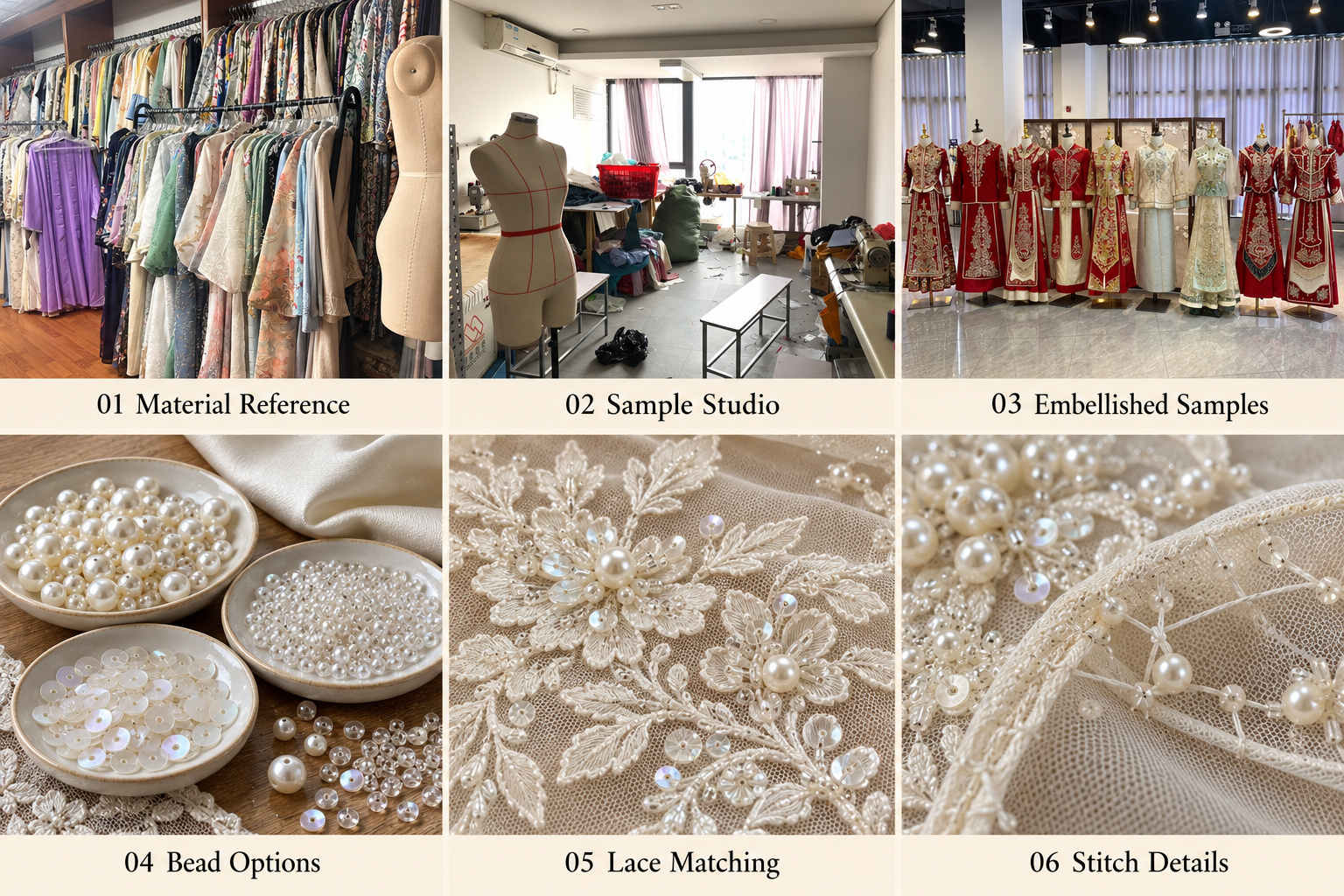
Confirm Beads, Pearls and Sequins
Buyers should specify the preferred component type, size, color, surface finish and decoration density. Reference photographs help communicate the direction, but physical samples are more useful for confirming sheen, transparency and color.
Available alternatives are reviewed before sampling. Similar-looking components can differ in weight, hole size and edge finish, affecting how they are sewn and how they sit on the fabric.
The selected components should also be reviewed alongside the approved materials through fabric and lace selection.
 Set Placement and Decoration Density
The layout defines where embellishment starts, ends and changes in density. Necklines, bust areas, waist seams and sleeve edges need clear references so the decoration remains balanced on the assembled garment.
We identify whether beadwork follows individual lace motifs, forms a separate pattern or creates a graduated effect. Left and right placement is compared where symmetry is required.
An approved lace and appliqué layout provides the foundation when embellishment follows floral motifs. Pattern or lace changes may require the beadwork to be repositioned.
Secure Decoration Without Distorting the Fabric
Attachment is reviewed according to component weight, fabric strength and placement. Thread tension should hold the decoration securely without pulling fine tulle or creating puckering.
We check vulnerable edges, exposed thread and the reverse side of decorated areas. Heavier clusters may need a suitable supporting layer or a revised arrangement.
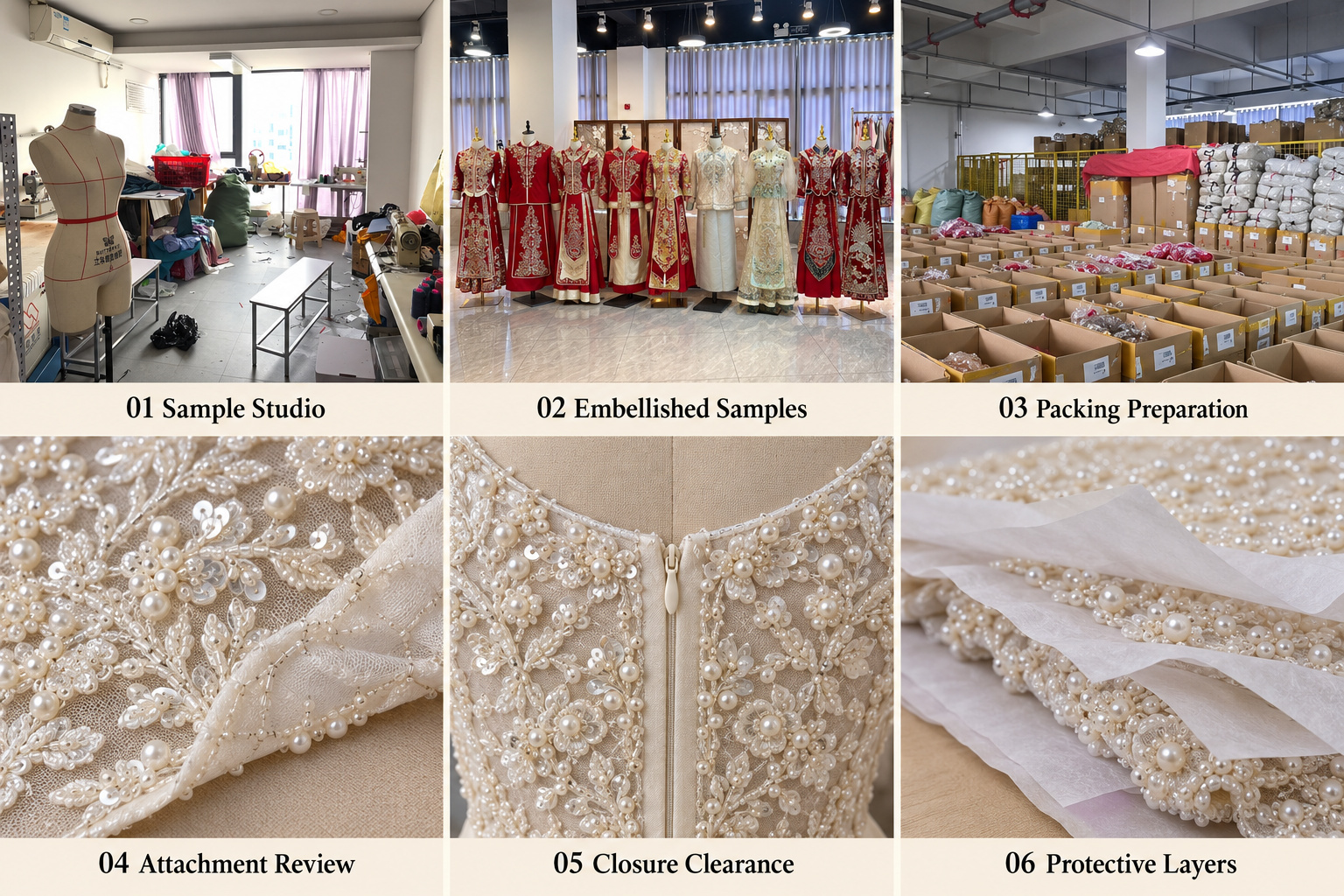
Components near zippers, button loops and openings require clearance. Decoration should also be considered at underarm areas and contact points where raised beads could rub against adjacent fabric.
Evaluate Weight and Garment Shape
Dense beadwork can affect bodice support, sleeve movement and skirt drape. A small decorative swatch confirms the finish, but the assembled sample shows how the weight behaves on the garment.
For heavily embellished styles, we review the decorated section on a dress form and compare it with the intended silhouette. Changes to coverage or component weight may require adjustments to the underlying construction.
Approve Workmanship Before Bulk Decoration
Sample review covers component selection, placement, density, attachment and the appearance of the reverse side. Agreed detail photographs and the approved physical sample provide references for production.
Checks during decoration focus on missing components, unintended gaps, loose attachment, thread visibility and fabric distortion. Handwork has natural variation; acceptable differences should be defined around the design’s main visual requirements.
 Plan Cost, Lead Time and Packing
Quotation depends on component sourcing, decorated area, density and attachment complexity. Repeated small beads or intricate clusters can require substantial handwork even when the finished decoration appears subtle.
Please send design references, detail images, quantities by style and size, and your target delivery date. MOQ, sample charges and production timing are confirmed after review through sample development and approval.
Packing should protect raised decoration from snagging and abrasion. Any protective interleaving or folding restrictions are confirmed with the finished sample before shipment.