


Lace Placement Based on the Approved Design
Lace placement affects how a wedding dress looks across the neckline, bust, waist, sleeves and train. For bridal brands, wholesalers and boutique collections, the arrangement needs to be defined clearly enough to reproduce across an order.
We review the buyer’s design reference together with the selected lace, garment pattern and base fabric. An all-over lace overlay and individually positioned appliqués require different preparation and attachment methods. The development sample establishes the layout before bulk production.
Review Motifs Before Cutting
The shape, scale and spacing of lace motifs influence where individual pieces can be positioned. Cutting through a flower or scalloped edge may change the intended appearance, while preserving complete motifs can increase material consumption.
We identify which areas require intact flowers, paired motifs or a continuous decorative edge. Buyers should confirm the preferred lace face, orientation and visible coverage through fabric and lace selection.
Material substitutions need a fresh layout review because a similar-looking lace may have a different repeat or usable width.
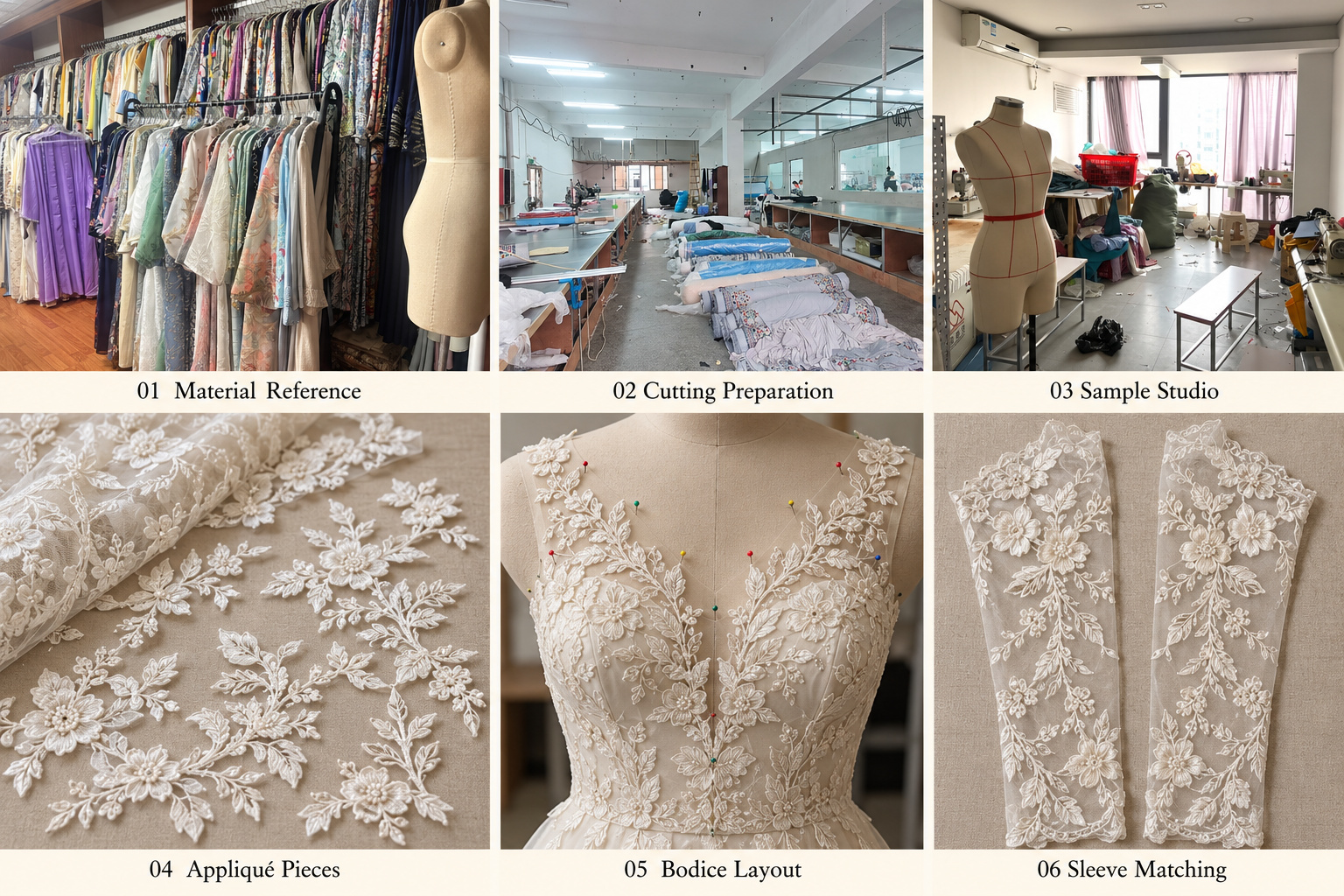 Establish Bodice Coverage and Balance
Bodice placement is reviewed on the assembled shape, where seams and curves can alter the appearance of a flat layout. Motifs should sit correctly around the bust, neckline and waist without creating unintended gaps or crowded areas.
For sheer bodices, the buyer should define coverage requirements and whether cups or support channels may remain visible. Symmetrical designs require corresponding left and right placement; intentionally asymmetric designs need clear reference images.
Changes to the underlying bodice construction may require the lace arrangement to be adjusted.
Match Motifs Across Seams and Openings
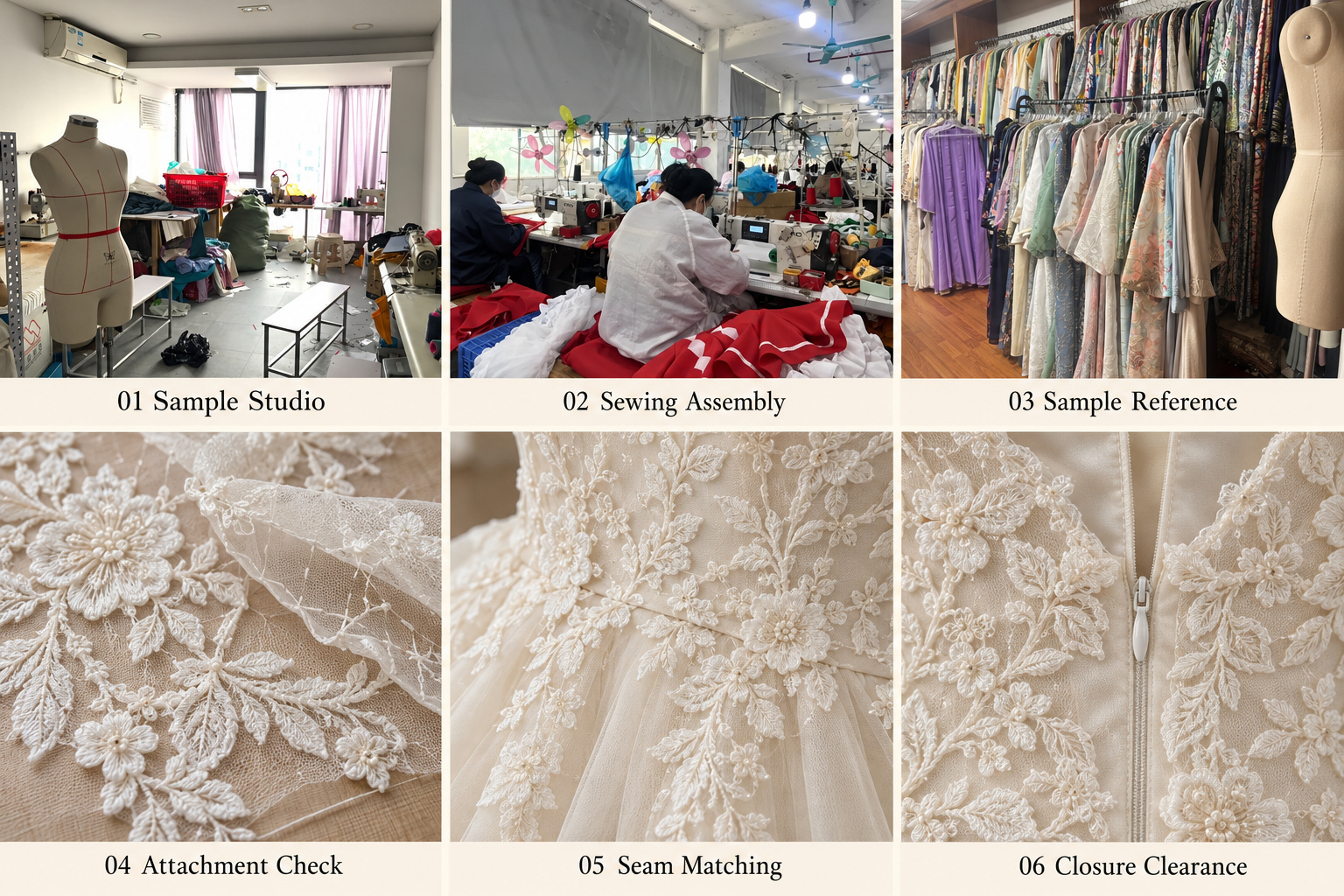
Side seams, waist joins and sleeve connections can interrupt the lace pattern. We review these junctions during sampling and determine where separate appliqués can bridge or soften the transition.
Decoration around zippers, buttons and sleeve openings must leave enough clearance for operation. Lace should not catch in a closure or restrict the opening.
Exact motif continuity is not always possible with every lace repeat and size. Priority matching areas should be agreed before production rather than assumed from a front-view photograph.
Secure Appliqués Without Distorting the Fabric
Attachment methods depend on the lace structure, base fabric and decorative weight. Machine stitching, hand stitching or a combination may be considered during sample development.
Stitching should secure vulnerable edges while avoiding unnecessary bulk, puckering or visible thread on sheer sections. Pins and temporary positioning stitches are removed after attachment.
Dense appliqué coverage and intricate hand attachment increase labor. Buyers requesting a target price should identify which decorative areas are essential and which can be simplified.
Confirm Placement Across Sizes
An approved base-size layout does not automatically fit every size. Larger or smaller pattern pieces may need changes to motif spacing, overlap or coverage while retaining the intended appearance.
Sample review records the main placement points, edge treatment and acceptable variation. During production, checks focus on visual balance, attachment security, seam transitions and closure clearance.
 Send References for Sampling and Quotation
Please provide front, back and detail images, preferred lace references, the size range and quantities by style. Mark areas requiring specific coverage, symmetry or edge placement.
Through sample development and approval, the agreed arrangement becomes the production reference. MOQ, sample cost and lead time depend on lace availability, material consumption and attachment complexity. Packing requirements should also account for raised motifs that may snag or crease during shipment.