


Bridal Samples Before Bulk Production
Vowmelle supports bridal boutiques, wholesalers and private label brands with sample development for existing styles, modified designs and new OEM wedding dresses. Sampling establishes the garment reference before bulk production.
Define what the sample needs to confirm: material appearance, fit, construction, decoration, branding or the complete specification. An existing-style sample may help assess workmanship, but it does not approve changes that have not yet been developed.
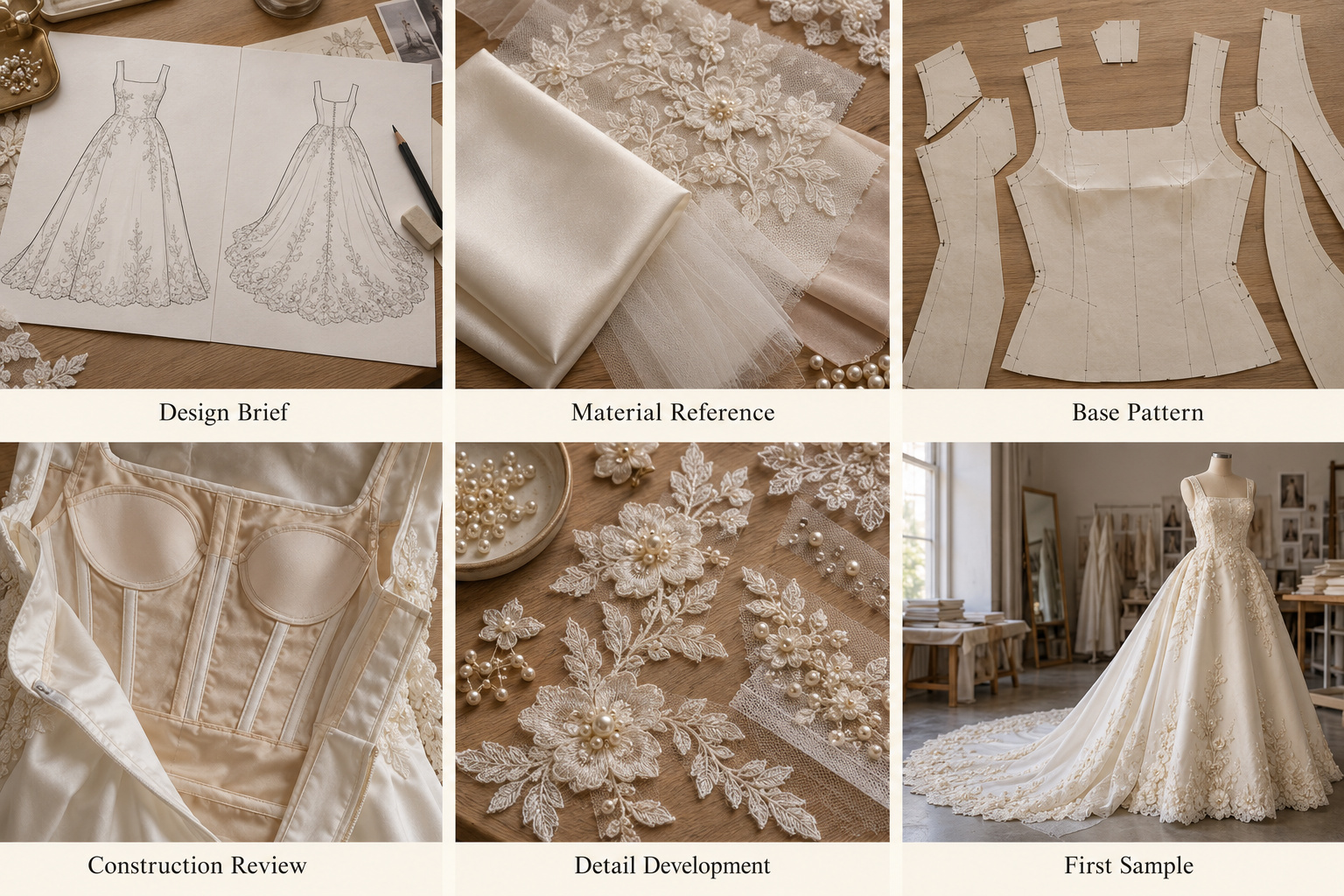
Provide a Clear Development Brief
Send front and back references, detail photographs, your size chart and marked design instructions. Include fabric preferences, lining color, closure type, train requirements and decoration coverage.
Identify essential details and areas where alternatives can be considered. Reference photographs may leave internal construction unclear, so cups, boning and lining arrangements need separate confirmation.
For new designs, coordinate the brief through custom bridal dress development. Confirm the base sample size and intended order quantities before development begins.
 Confirm Materials and Proposed Alternatives
Review main fabric, lace, lining and embellishment references before assembling the sample. Color should be assessed across the complete layering arrangement; ivory lace over champagne lining can look different from the same lace over ivory lining.
Where the requested material is unavailable, a proposed substitute needs approval. If temporary materials are used for an early construction sample, record them clearly. That sample cannot establish approval of the final material appearance.
Any material change after sampling may require further review before purchasing bulk quantities.
Review Fit, Construction and Decoration
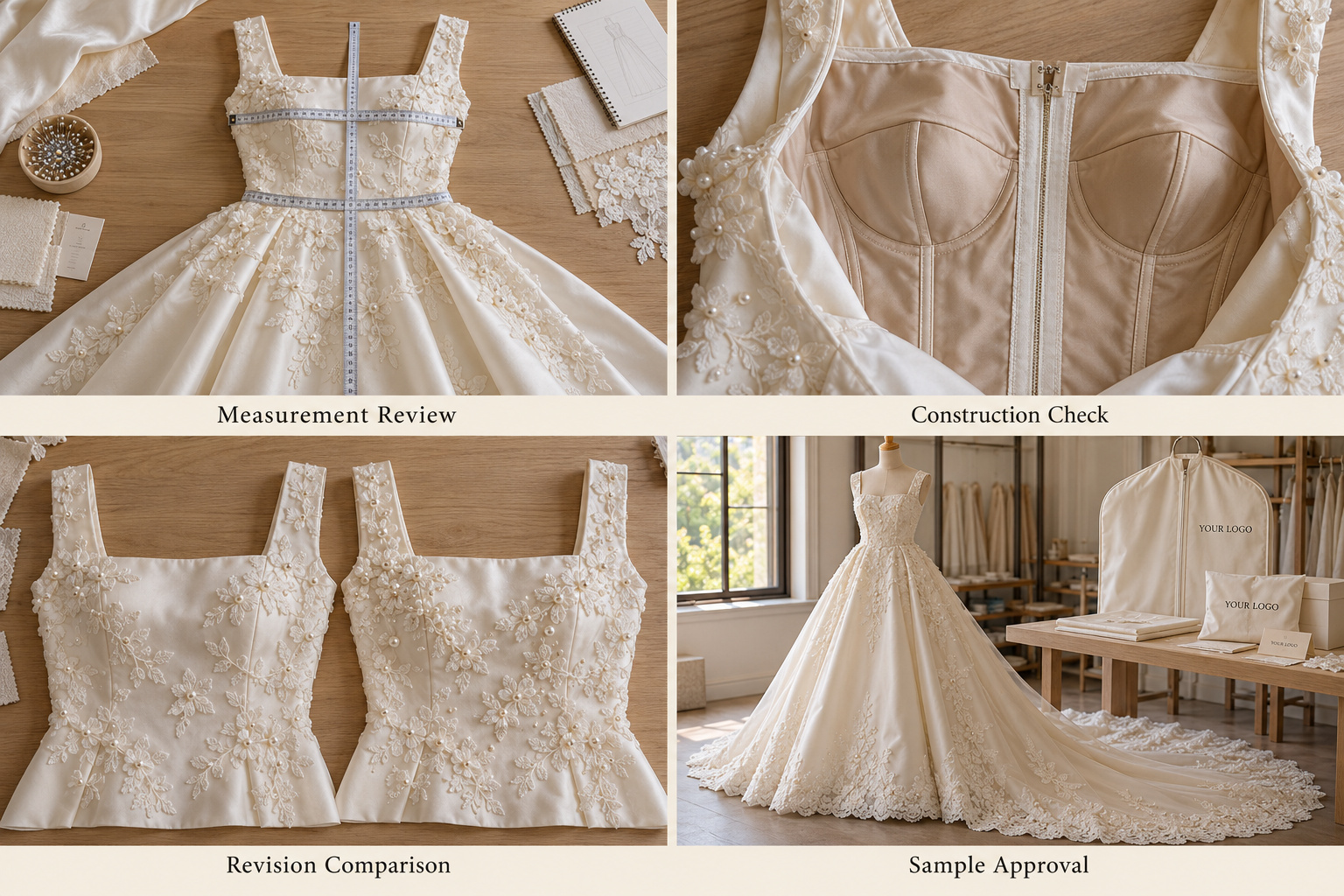
Compare the sample with the agreed measurements and measuring methods. During buyer size chart and size grading review, distinguish dimensional corrections from changes to the intended silhouette.
Check neckline coverage, bodice support, sleeve movement, closure operation and skirt proportions. Decoration review should cover lace placement, seam transitions, attachment security and exposed threads.
Photographs and video help assess appearance and details. Physical samples allow closer review of fabric feel, garment weight and construction. Fit assessment needs an appropriate fitting reference rather than a photograph alone.
Record Revisions and Final Approval
Consolidate comments into one marked document using the style reference and sample version. State the required change, its location and the expected result. Avoid conflicting instructions across separate messages.
We review whether revisions affect materials, patterns, decoration or packing, then confirm the next step and any additional cost or time. Some changes need a revised sample; others may be confirmed through agreed detail photographs or measurements.
Approval should identify the accepted sample version and any remaining written conditions. Keep a matching production reference; changes after approval need separate confirmation.
 Include Labels and Packing in the Approval Scope
Confirm brand labels, size identification and attachment positions where required. Review the actual garment bag and protective packing if these form part of the order specification.
Coordinate these details through custom garment bags and packaging. Production and packing checks should use the approved garment, component references and written requirements together.
Confirm Sample Costs and Scheduling
Existing-style samples usually take 5–10 days, modified samples 10–15 days and new development 15–25 days. Timing depends on material availability, construction complexity and revisions.
Sample costs depend on pattern work, materials, hand embellishment and the agreed approval scope. Additional versions or size samples may incur separate charges.
Send your development brief, quantity breakdown, delivery destination and target bulk delivery date. Confirm sample dispatch arrangements and allow time for review, revisions and shipping before agreeing to the production schedule.