


Packaging for Bridal Wholesale and Private Label Orders
Vowmelle supports bridal boutiques, wholesalers, importers and brands with garment bags and packaging coordinated with wedding dress orders. Requirements can include branded bags, protective inner packing, identification labels and export carton marks.
Packaging should suit the actual dress construction and your receiving process. A lightweight gown and a heavily embellished dress may need different protection and packing space. Send your packaging reference, garment specifications and preferred delivery arrangement so we can review suitable options.
Choose Garment Bag Dimensions and Construction
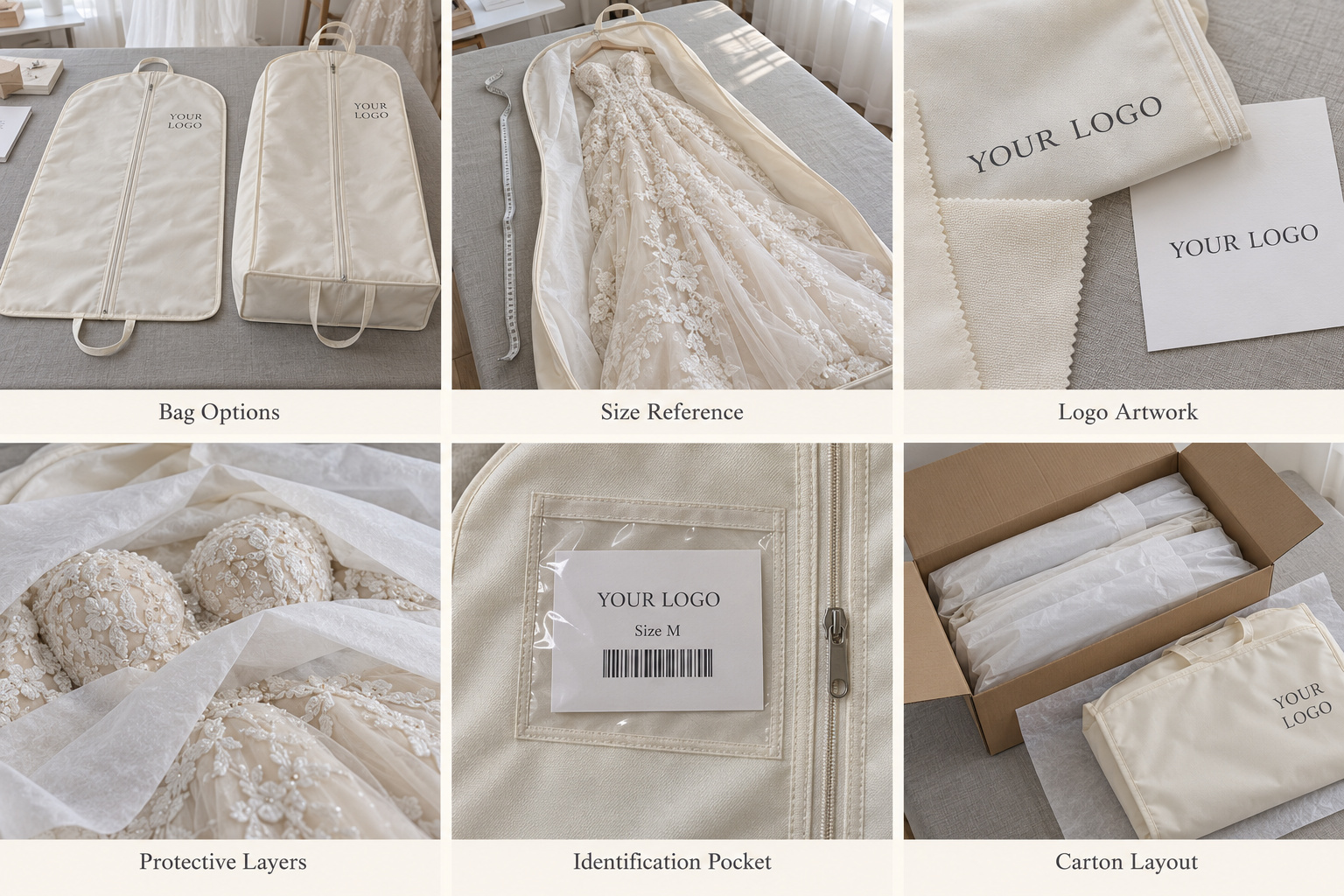
Confirm bag length, width and any required gusset against the finished dress. Skirt volume, train length and bodice structure affect how the garment fits inside. A bag that closes around a hanging dress may still compress it excessively during carton packing.
Material options, zipper construction, hanger openings, handles and identification pockets can be reviewed according to your requirements. Confirm whether the bag is intended for transport, showroom handling or storage.
Where an existing bag specification is supplied, provide a physical reference or clear dimensions and construction photographs.
 Confirm Logo Artwork and Identification
Provide your logo file, print dimensions, colors and marked placement. Logo appearance depends on the bag material and printing method. Review a sample on the selected material rather than approving artwork alone.
Keep branding consistent with your private label and brand labels. If identification pockets or stickers are required, confirm their position and the information they should display.
Style, color, size and SKU references should follow the approved order data. Coordinate these details through hangtags, barcode and SKU labels.
Protect Lace, Embellishment and Bodice Shape
Packing needs to reduce snagging, crushing and contact between decorated surfaces. Review protective separation for raised beads, sequins and appliqué, particularly where the dress is folded.
Structured cups and boning should be considered when choosing the folding arrangement. Train layers need orderly handling so lace edges do not become trapped in zippers or compressed against embellishment.
Specify any restrictions on folding or compression before quoting. Avoid assuming that tighter packing is suitable simply because it reduces carton volume.
Approve the Complete Packing Sample
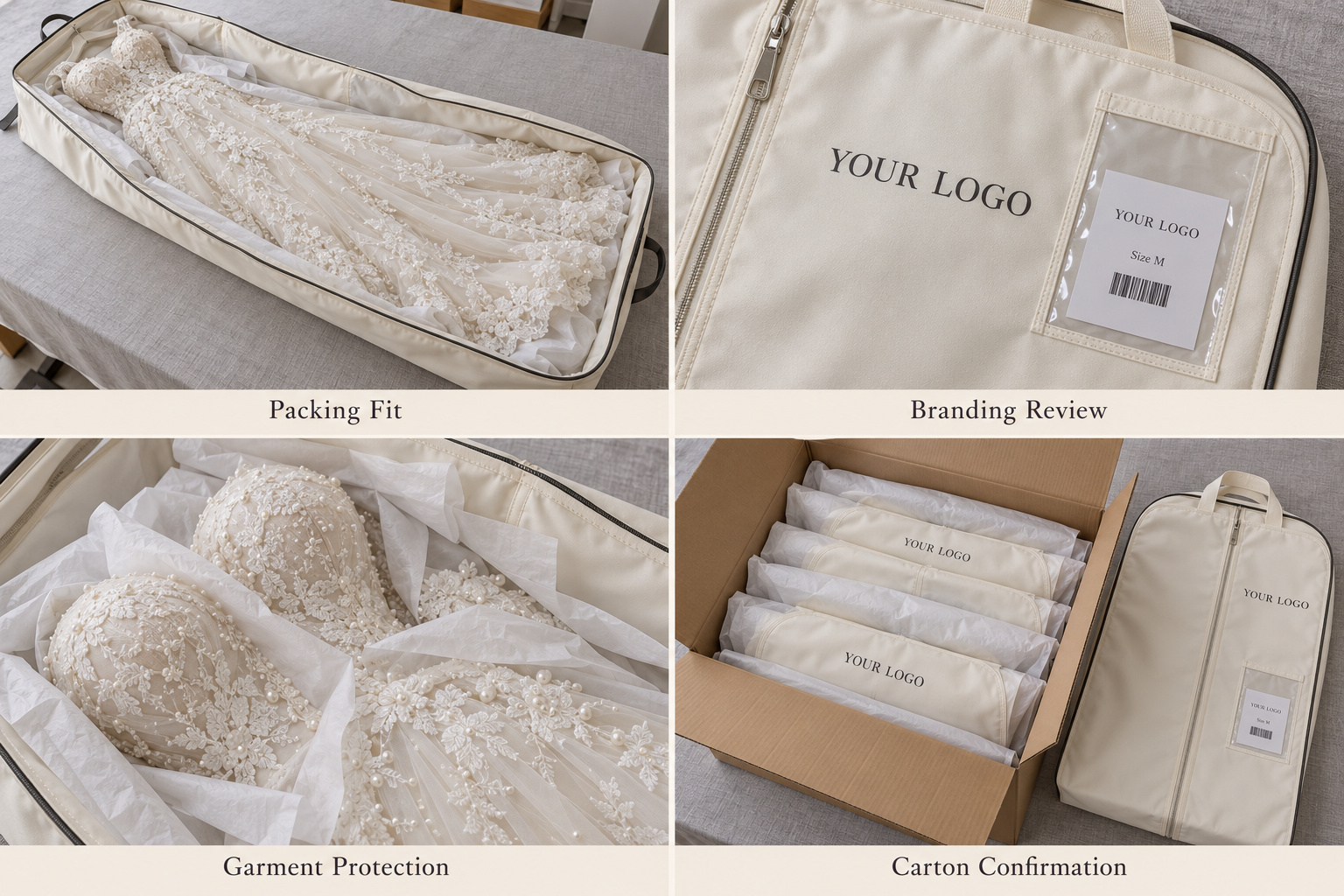
The packing sample should include the actual dress, selected garment bag, protective materials and proposed outer carton. Check bag fit, zipper clearance, logo appearance and identification visibility.
Review the unpacking sequence as well. Labels should remain accessible, and protective layers should be removable without catching delicate decoration. Photographs can document the arrangement, while a physical packed sample helps assess handling and space requirements.
Record the approved materials and packing method before bulk preparation.
 Plan Carton Assortments and Export Preparation
Confirm pieces per carton, size assortments, carton marks and any buyer receiving requirements. Carton dimensions and packed weight influence freight estimates, so these should be based on the agreed packing arrangement.
During final packing and export preparation, garment identification, bag labels and packing lists should match. Any special carton or handling requirements need agreement before shipment preparation.
Send Packaging Details for Quotation
Provide dress styles, quantities, garment bag dimensions, material preferences, logo artwork, protective requirements and delivery destination.
Custom bag or printed packaging minimums may differ from garment MOQ. Special materials, additional artwork versions and revised dimensions can affect component costs and preparation time. Confirm packaging approval and purchasing schedules alongside garment production so all components are ready for final packing.