


Develop Bridal Sizes Around Your Collection
Vowmelle works with bridal boutiques, wholesalers and private label brands to develop wedding dress sizes around buyer-approved specifications. This supports consistent collection sizing, sample development and repeat orders.
A size label alone does not define fit. Send your size chart, measurement instructions and intended size range. Identify whether the chart describes body measurements or finished garment measurements. We review these references with the dress construction before preparing patterns or confirming grading requirements.
Confirm Measurement Points and Fit Allowance
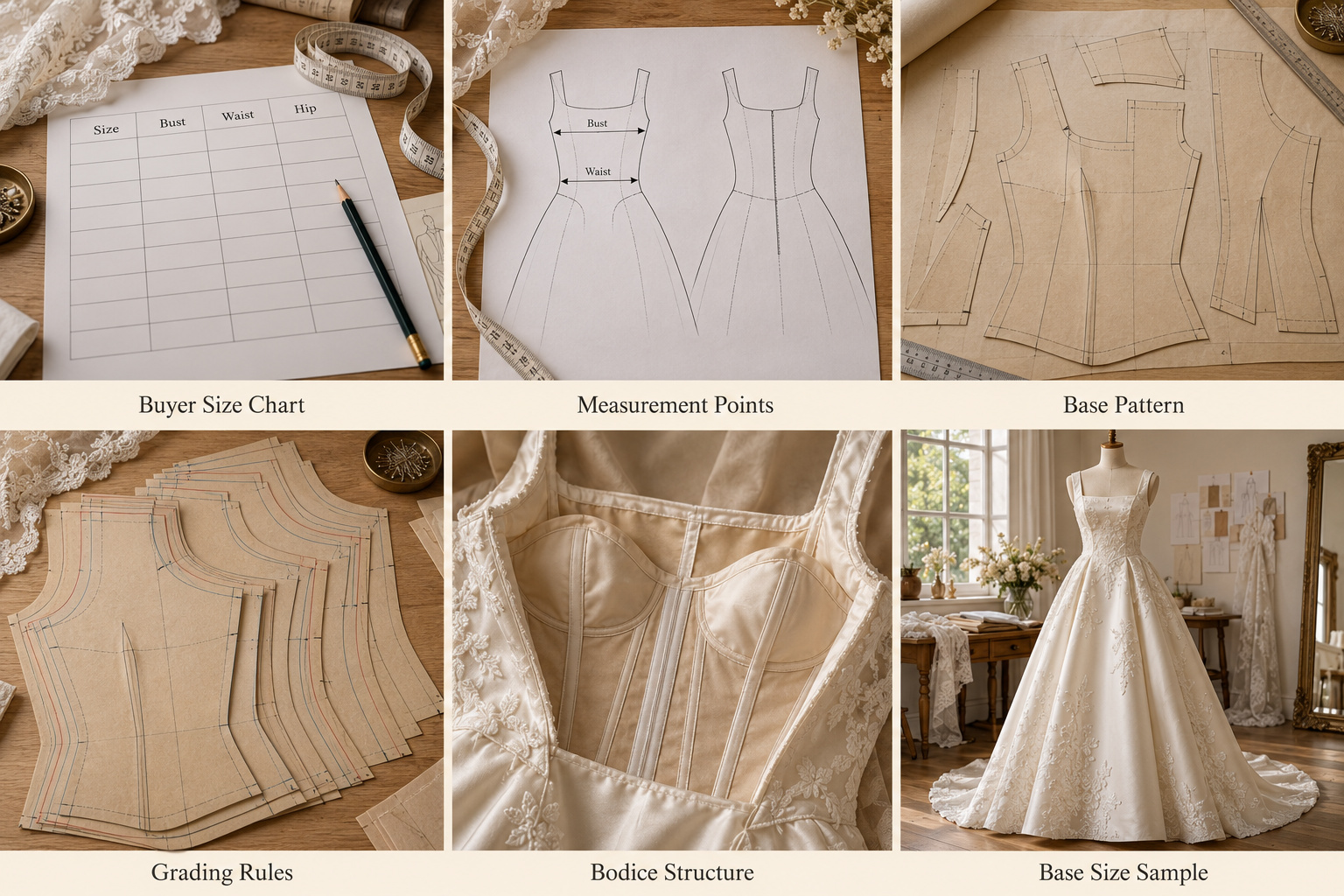
Bust, waist and hip measurements need clearly defined measuring positions. Depending on the style, the specification may also include shoulder width, bodice length, armhole, sleeve circumference, skirt length and train length.
Body measurements must be translated into finished garment dimensions with appropriate fit allowance. Structured satin, stretch lace and layered tulle require different treatment. Cups, boning, lining and closures also affect fit.
Use diagrams or marked photographs to clarify measuring methods. State units and agreed tolerances for each relevant point; avoid applying one tolerance to every part of the dress.
 Approve the Base Size Before Grading
Select a base size and develop its sample before extending the pattern across the collection. During bridal pattern development, we review proportions, seam positions and construction against the supplied specification.
Sample comments should distinguish measurement corrections from design changes. Increasing bust coverage, changing waist position or adjusting neckline depth can affect several pattern pieces. Confirm these revisions on the base pattern before using it as the grading reference.
Define Grading Rules Across the Size Range
Size grading adjusts pattern dimensions between sizes. It requires agreed increments and proportion rules rather than enlarging every pattern piece by the same amount.
Confirm how bust, waist, hip, shoulder and garment lengths should change. Cup coverage, strap position, sleeve width and armhole shape may need separate review. Lace placement and appliqué coverage also need consideration as panel dimensions change.
For an extended size range, discuss additional representative samples. Measurements can confirm dimensions, but fit assessment requires an appropriate fitting reference; one mannequin cannot demonstrate fit across every size.
Review Samples and Record Approval
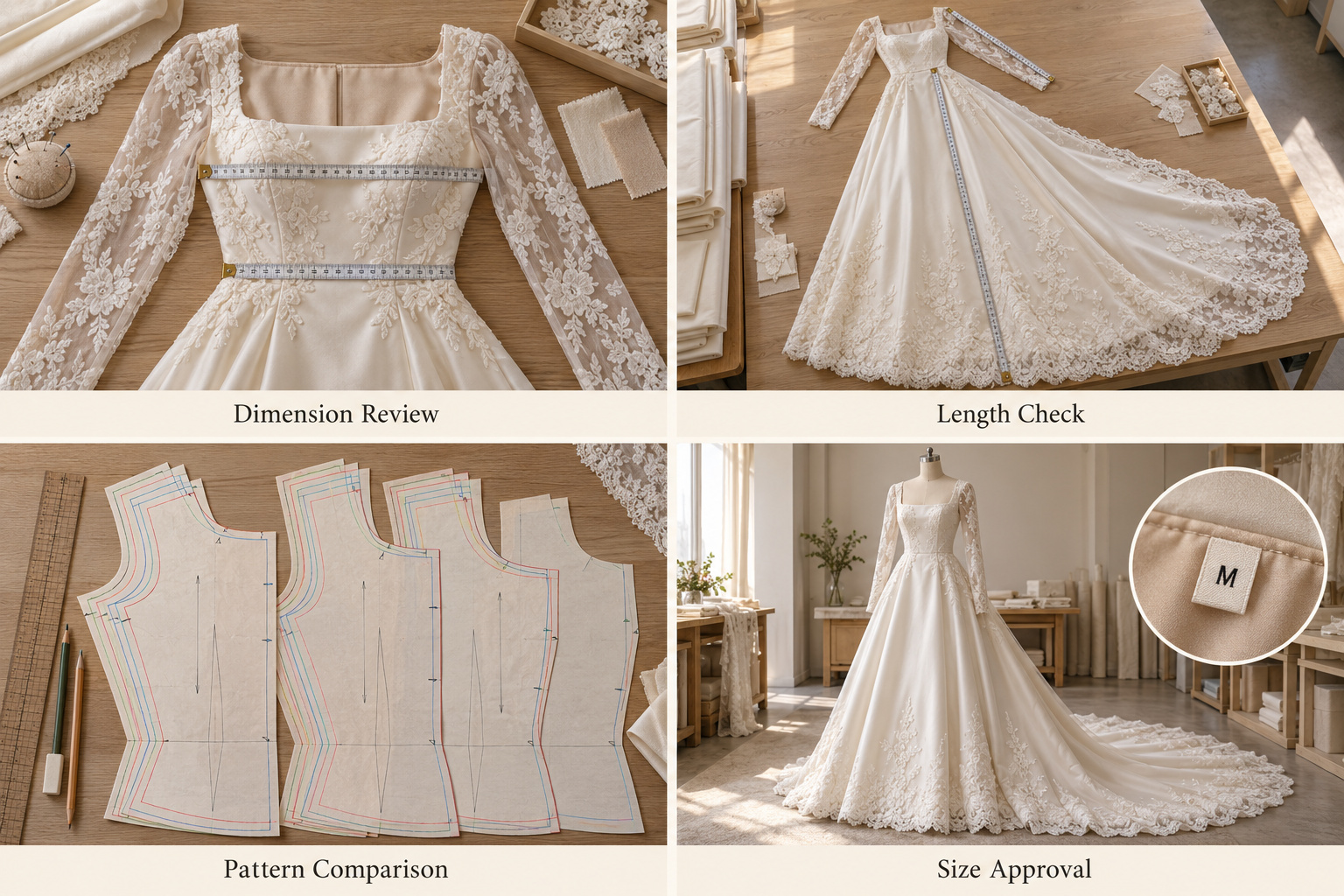
During sample development and approval, compare measured dimensions with the specification and record comments by measurement point. Keep the approved chart, pattern revision and sample comments under the same style reference.
Confirm the final size labels and order quantities by size. A buyer’s numerical or letter sizing should follow the approved chart rather than an assumed regional conversion.
 Check Production Measurements and Size Identification
Bulk production checks should follow the approved measuring method, size chart and tolerances. Structured bodices, layered skirts and lace sleeves need consistent handling during measurement.
Through measurement and appearance inspection, dimensions are reviewed alongside construction and appearance. Packing checks should match garment size labels with SKU references, garment bags and carton assortment instructions.
Provide Sizing Details for Quotation
Send your style references, size chart, base size, grading requirements, quantity breakdown and target delivery date. Include any requested additional size samples.
Modified styles generally start at 30–50 pieces per style/color; new OEM or private label development generally starts at 50–100. Confirm how quantities may be distributed across sizes. Modified samples usually take 10–15 days, while new development usually takes 15–25 days. Additional sample sizes and revisions can affect costs and scheduling.