


Color and Size Options for B2B Collections
Vowmelle Wedding Dresses supports bridal brands, boutiques, wholesalers and private label buyers with color and size customization for commercial collections. We review changes to existing styles and buyer specifications for new OEM developments, including coordinated bridesmaid and flower girl programs.
Color and sizing are confirmed against the actual garment, materials and intended order. A color name or standard size label alone does not provide enough information for sampling or repeat production. Buyers should supply physical color references where practical, a measurement chart and quantities by style, color and size.
Confirm Color Across All Visible Materials
Bridal whites, ivory shades and champagne tones can look different across satin, tulle, lace and lining. We review the proposed combination so the finished gown reflects the approved color direction, including sheer sections where the backing remains visible.
For bridesmaid collections, specify whether different styles need a coordinated shade in the same fabric or across several materials. An identical appearance across different fabric surfaces should not be assumed.
Screen images help communicate preferences, but physical swatches provide a clearer approval reference. Material availability and suitable alternatives are reviewed through fabric and lace selection.
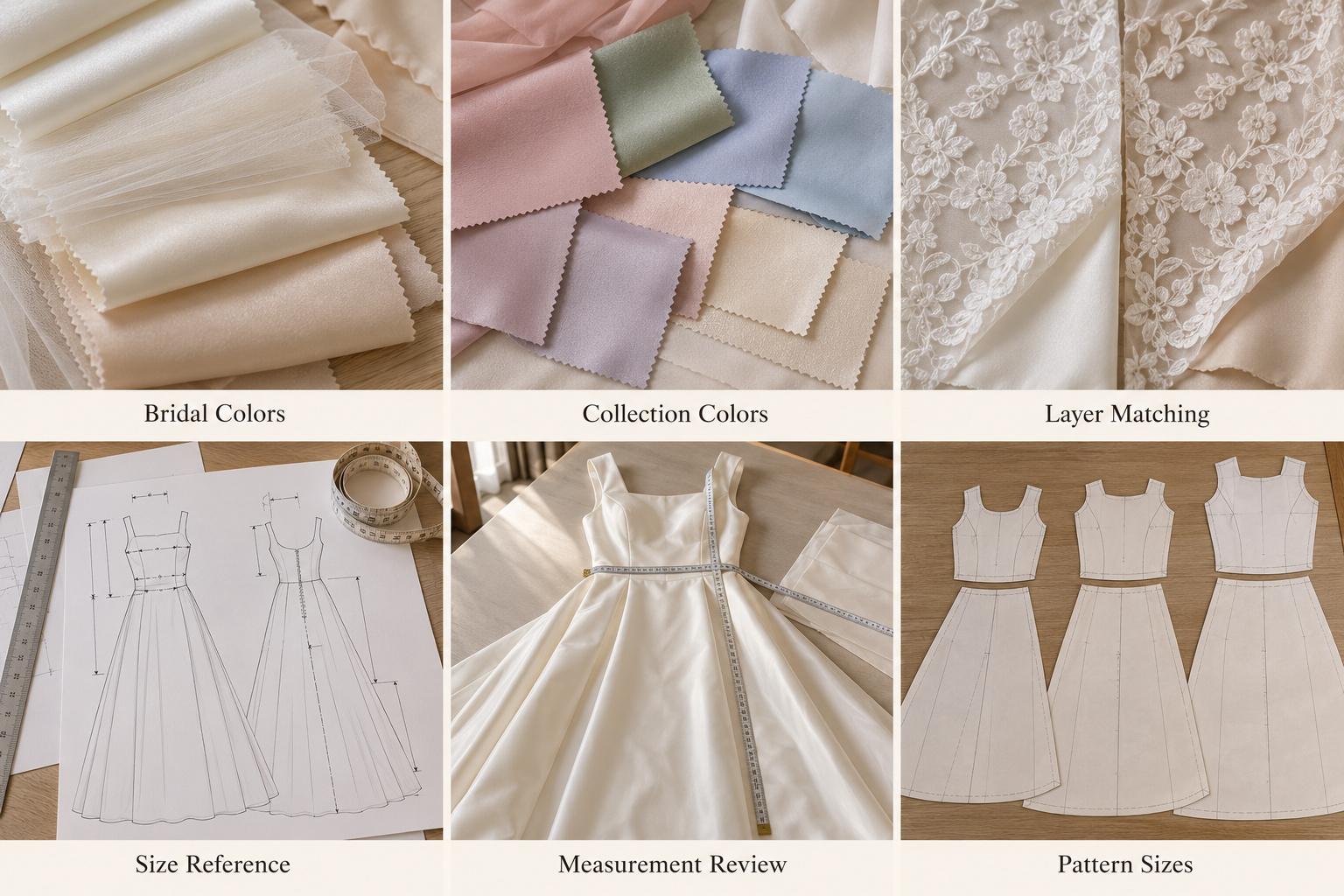 Establish the Size Chart and Measurement Method
Buyers can submit their own measurement charts for review. Confirm whether the figures describe body measurements or finished garment measurements, and identify the units and measuring points. Mixing these references can lead to incorrect pattern adjustments.
The required information depends on the design. Bust, waist, hip, bodice length, garment length and sleeve measurements may be relevant, together with closure and train specifications. Size labels such as US, UK or EU should be supported by the actual chart.
Extended or plus-size programs require review of proportions and construction. Detailed grading requirements belong in buyer size chart and size grading.
Review Color and Fit in the Sample
The sample brings the approved materials and measurements together. Buyers should assess the visible shade, lining coverage, silhouette, bodice support, closure and key dimensions before confirming production.
Send revision comments with marked photographs and measurement notes. Identify whether the requested change concerns the pattern, construction or measurement method. Approving one sample size does not automatically confirm fit across every size in the order.
The agreed revisions, color references and specifications are consolidated through sample development and approval before bulk production proceeds.
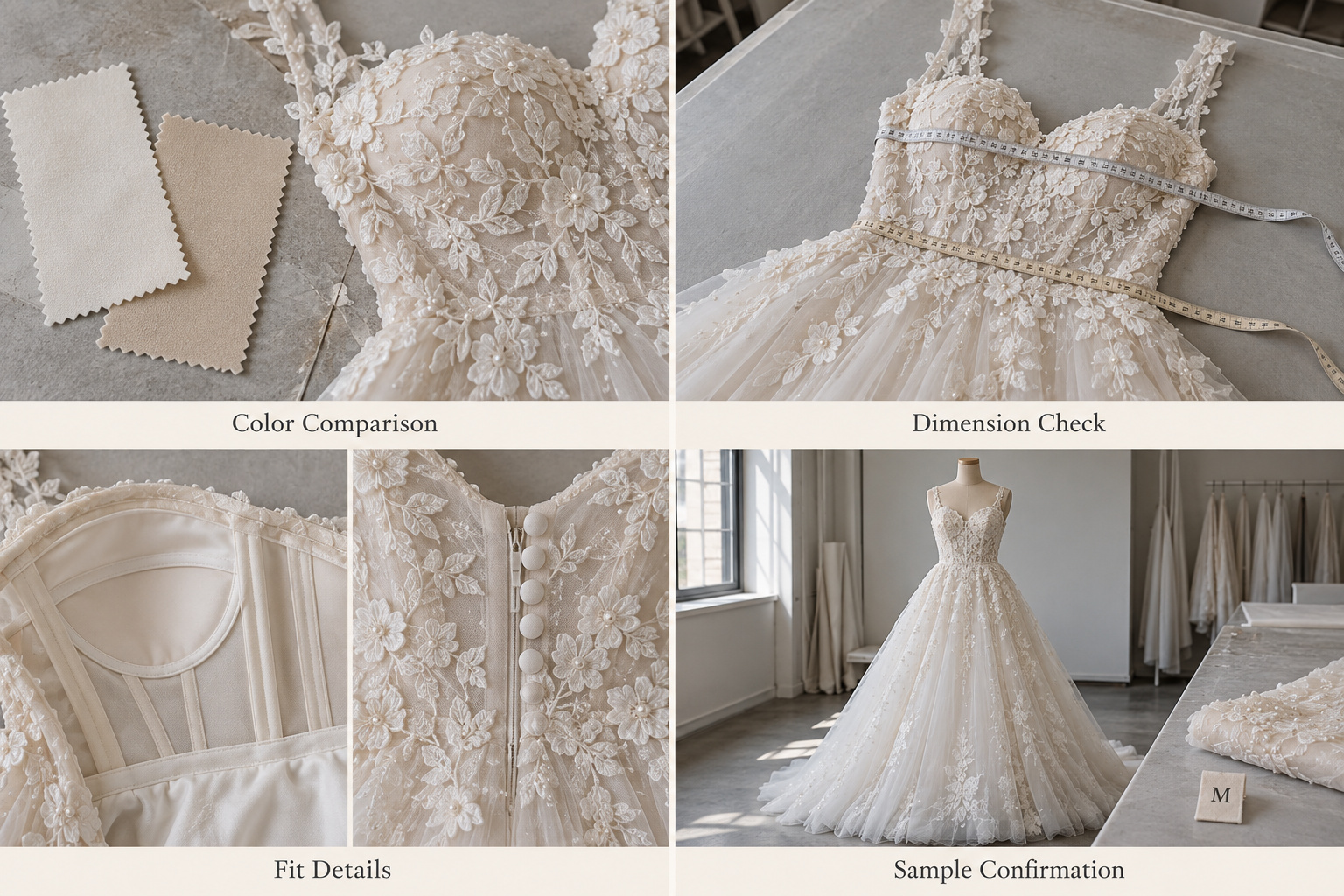 Maintain Approved References During Production
Material preparation and garment checks follow the confirmed color and size requirements. Inspection includes key measurements, construction, symmetry, closures and appearance, with size labels checked against the order breakdown.
Repeat orders require another review of material availability and the current specification. If a fabric or lace changes, the proposed replacement should be confirmed before use. Packing quantities and SKU information also need to match the approved style, color and size allocation to support receiving and stock identification.
Plan Quantities, Timing and Quotation Details
Modified styles commonly require around 30–50 pieces per style and color. New OEM or private label developments normally start around 50–100 pieces per style and color. Size distribution and material requirements are reviewed with the actual order.
Modified samples generally take about 10–15 days; new developments commonly require 15–25 days. Sample costs depend on materials, pattern adjustments and revisions. OEM production commonly takes 35–45 days, while complex bridal programs may require 45–60 days.
Send the style reference, color swatches, size chart, quantities, labeling requirements and delivery destination. These details help us review feasibility, pricing, protective packing and production timing, with shipping considered separately.