


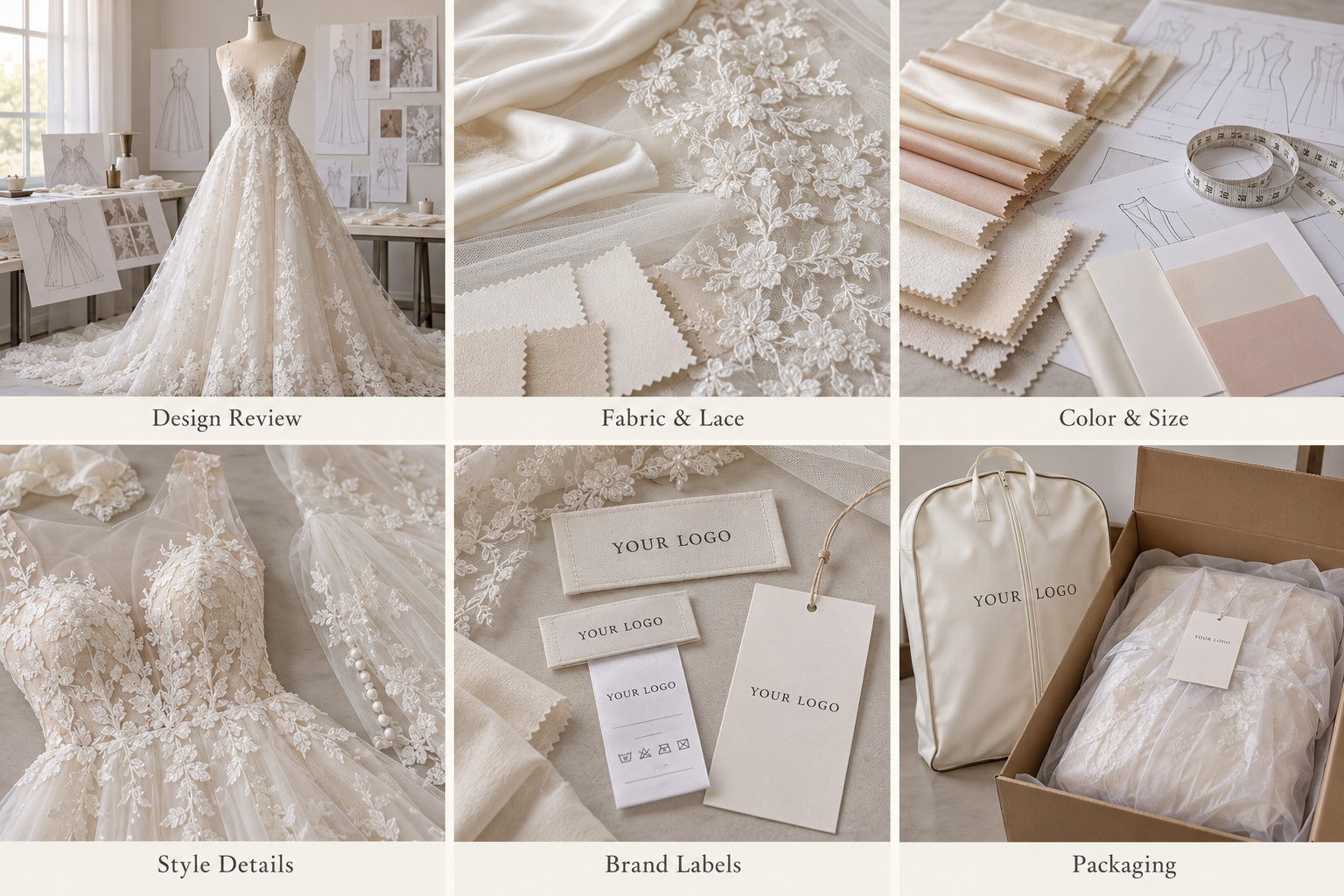
 Bridal Development for Professional Buyers
Vowmelle Wedding Dresses supports bridal boutiques, wholesalers, bridal brands and private label buyers with custom development and OEM production from Suzhou, China. Projects can begin with an existing style that needs adjustment or a buyer design requiring pattern and sample development.
Our core development work covers bridal dresses, with coordinated bridesmaid and flower girl programs also available. We review the product, intended size range, materials, construction and order quantity before confirming what can be developed. Our focus is commercial collections and repeat B2B orders rather than individual consumer made-to-measure purchases.
Start with Clear Design and Order Requirements
Send a tech pack, sketch, reference images or an authorized physical sample, together with your estimated quantity and target delivery window. Useful details include the silhouette, neckline, sleeves, train length, lining, closure and decorative requirements.
We review these details alongside your target price range. A heavily beaded bodice, layered skirt or detailed lace layout can change the sampling work and production time considerably. Missing specifications should be resolved before treating a quotation as the basis for production.
For projects starting from an original concept, custom bridal dress development explains how design references move into patterns and working samples.
Confirm Fabrics, Lace and Color
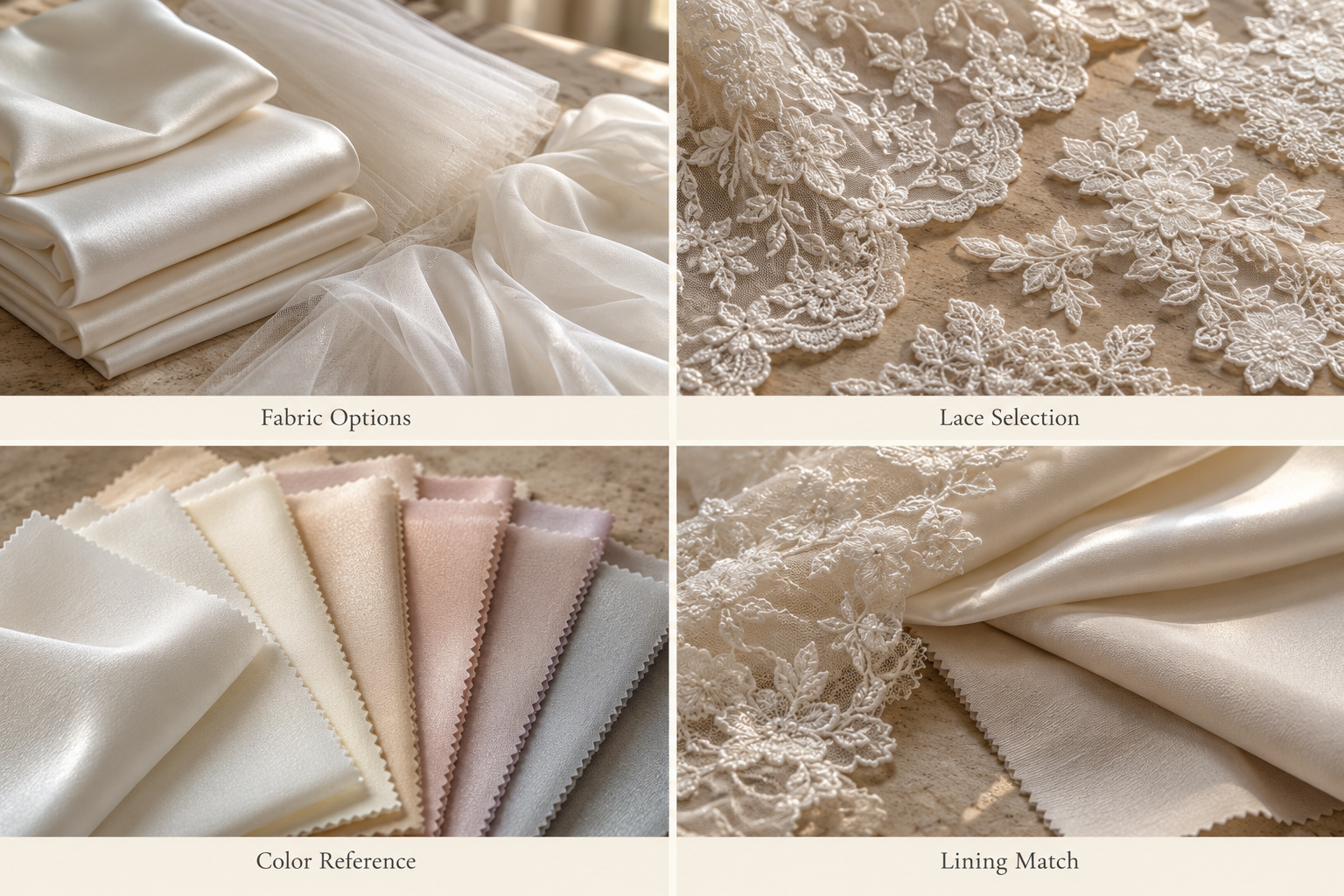
Material selection affects the gown’s shape, weight, opacity and finishing requirements. Options discussed on our production programs include satin, Mikado, tulle, lace, organza, chiffon, crepe and mesh, depending on the design.
Buyers should confirm the main fabric, lining, lace pattern and color reference together. Ivory shades can differ between materials, while a replacement lace may alter the appearance of an otherwise unchanged style. Screen images help communicate direction, but physical references are more useful for approval.
Our fabric and lace selection process connects material choices with the intended construction and sample requirements.
 Develop Size, Fit and Construction Details
Buyer-specific size charts can be reviewed for pattern development, fit correction and size grading. Identify the required size range and measurement method early, especially for extended-size collections.
Neckline, sleeve and train changes need to be considered with the underlying garment structure. A different neckline may require adjustments to the bodice, cups or boning. Additional skirt layers can affect weight and packing volume. Changes are therefore reviewed as construction decisions, rather than isolated decorative requests.
Lace placement, appliqué, embroidery, beads, sequins and pearls can also be developed against the sample. Position, symmetry and attachment details need clear approval references for repeat production.
Use Sample Approval to Set the Production Reference
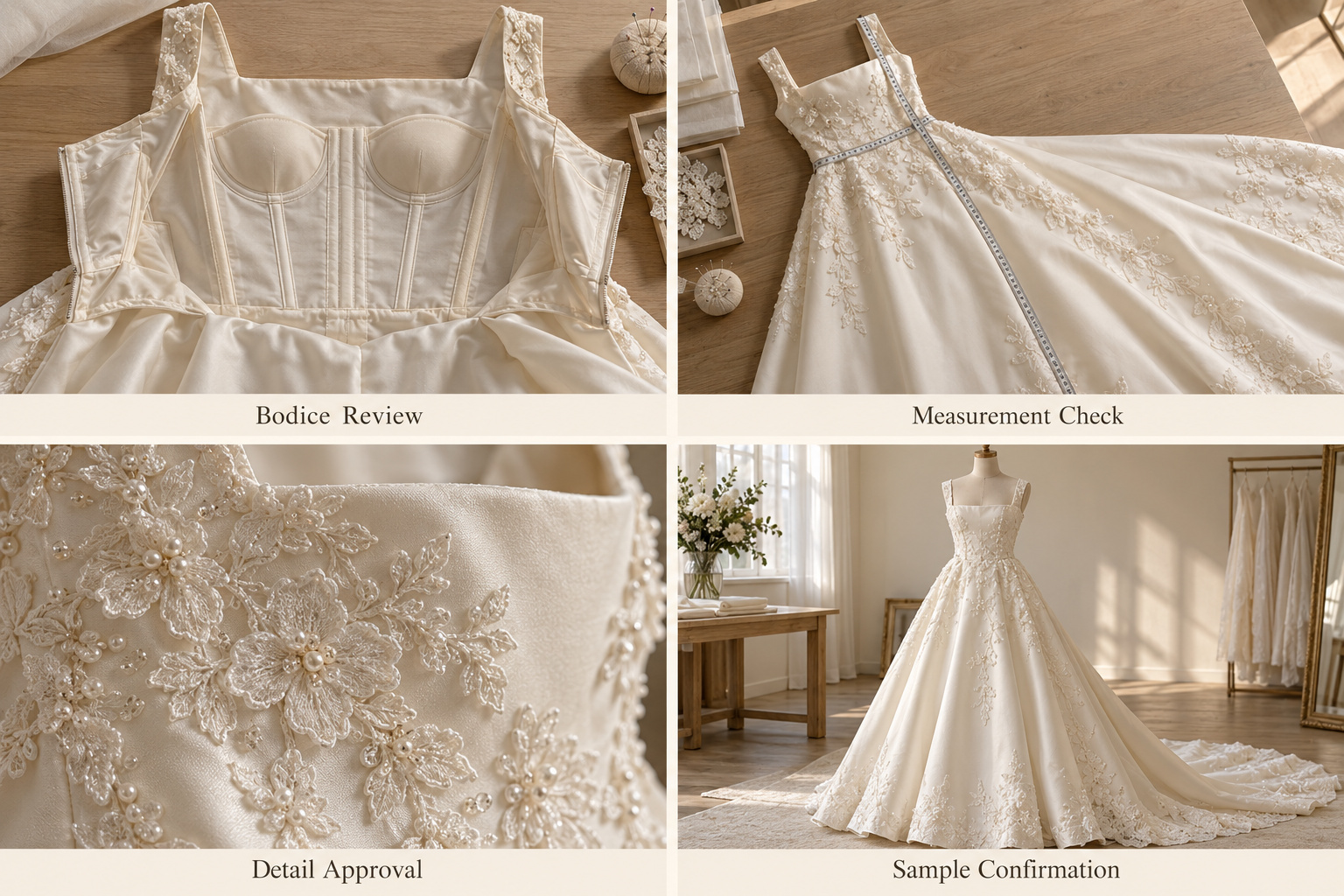
Sampling allows buyers to review materials, measurements, fit, closures and decorative placement before committing to bulk production. Revision comments should identify the affected area and the required change, supported by marked photographs or measurement notes where practical.
The approved sample and confirmed specifications become the working reference for production. Material substitutions or further design changes should be reviewed before proceeding, as they may affect price and timing.
Our sample development and approval process helps buyers organize these decisions before production begins.
 Coordinate Private Labels and Protective Packaging
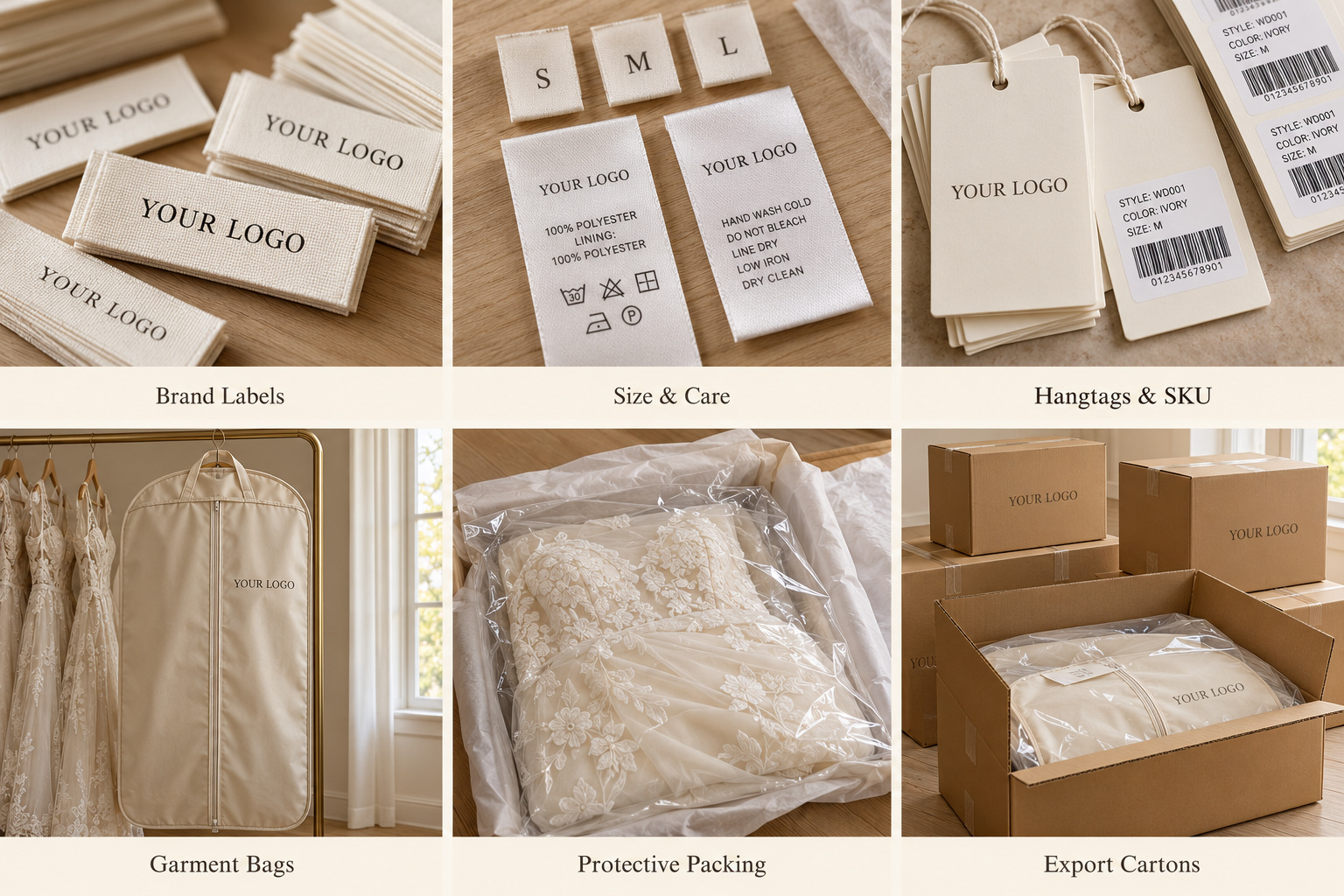
Private label support covers main labels, size and care labels, hangtags, barcodes, SKU information and branded garment bags. Logo applications are primarily coordinated through these branding items and packaging.
Buyers should provide artwork, placement requirements and the information assigned to each style or size. Packaging also needs to reflect the garment: long trains, structured bodices and heavy embellishment may require additional protection.
PE bags, garment bags, export cartons and buyer-specified carton marks can be coordinated through custom garment bags and packaging.
 Plan MOQ, Production and Delivery
Existing wholesale styles generally start around 20–50 pieces per order. Modified styles commonly require 30–50 pieces per style and color, while new OEM or private label developments normally start around 50–100 pieces per style and color.
Existing-style samples generally take about 5–10 days, modified samples 10–15 days, and new OEM / ODM samples 15–25 days. Sample costs depend on materials, construction, handwork and revision requirements.
Standard wholesale and repeat production generally takes 25–35 days. OEM and private label orders commonly require 35–45 days; complex bridal programs may need 45–60 days. These ranges depend on approved specifications, material availability, quantity and seasonal workload.
Production checks cover materials, construction, measurements, embellishment, appearance, labels and packing. Share your destination and required delivery date when requesting a quotation. EXW, FOB, CIF and applicable DDP arrangements can be discussed, with shipping time considered separately from production.